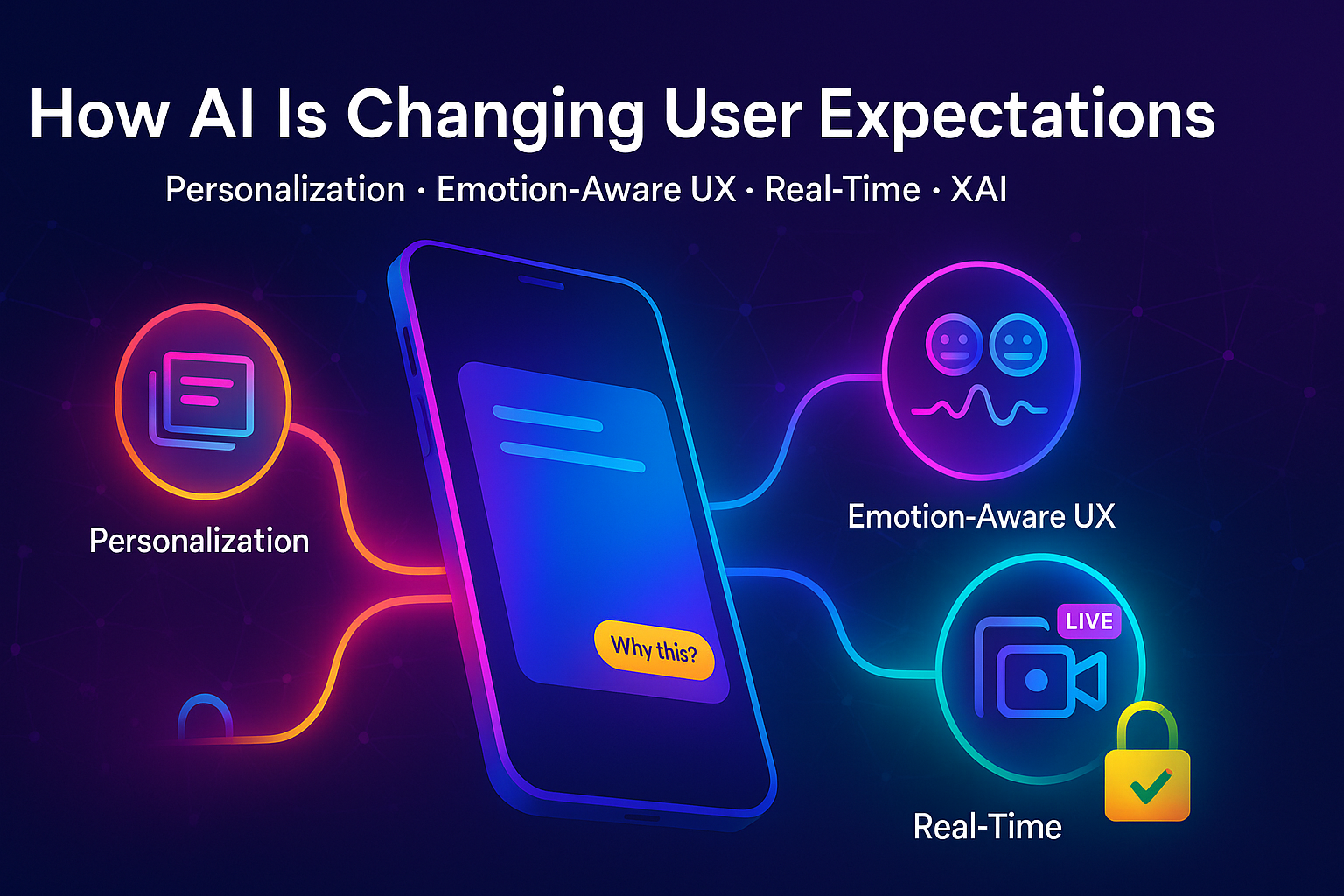
How AI Is Transforming User Expectations in Social Networking Apps
The year is 2025, and social networking is no longer about just staying connected. It’s about experiences — hyper-personalized, emotionally intelligent, and seamlessly interactive. Thanks to GenAI, edge computing, and smarter language models, social apps are now becoming real-time systems that predict what users want — instead of just reacting to their actions.
Looking further ahead, we mapped the AI trends redefining social platforms through 2026.
At Trembit, we specialize in building AI-enhanced platforms, especially where video streaming, real-time engagement, and dynamic user experiences intersect. Whether you’re building a new social platform or looking to enhance an existing one, this article is a must-read. It explores how AI is redefining user expectations in social apps — and what it means for teams building the next generation of social platforms.
1. From Trending to Tailored
What’s Changing:
Modern users are flooded with content — but attention is scarce. AI has become the core engine behind relevance and retention. From TikTok’s For You feed to Spotify’s Discovery playlists, users now expect machine-curated content that feels individually tailored.
Real Use Cases:
- Dynamic Feeds Using Reinforcement Learning: Platforms like Nextdoor have implemented AI-powered features, such as the Faves chatbot, which leverages user data to provide personalized local recommendations. This approach aims to enhance user engagement by delivering more relevant content and improving overall user experience.
- Behavioral Clustering for Onboarding: Research indicates that a strong onboarding process can significantly boost employee retention and productivity. For instance, a study found that effective onboarding improved new hire retention by 82% and productivity by over 70%.
- Personalized Community Suggestions: AI-driven personalization is reshaping online community management. Platforms are utilizing AI to monitor and moderate online discussions, ensuring a safe and respectful space for users. This approach enhances user engagement and fosters a positive community environment.
Product Tip:
Leverage AI not just to show “what users like,” but to help them discover who they are becoming — interests change, and your algorithm should too.
Trembit perspective: Drawing on our extensive experience in integrating AI-driven features across various platforms, we empower clients to build adaptable personalization engines with modular AI components. This flexible architecture enables teams to seamlessly test and deploy different strategies — such as collaborative filtering, neural networks, and graph embeddings — without the need for costly infrastructure overhauls, accelerating innovation and improving user relevance.
2. AI-Powered Content Creation and Moderation
The Evolution:
User-generated content is the heartbeat of social platforms. But in 2025, users expect AI-augmented creativity—tools that enhance their expression with minimal effort. Simultaneously, platforms must scale AI moderation to manage the sheer volume of text, image, video, and live content.
Tools Users Now Expect:
- Generative AI filters that adapt to your environment and mood
- AI co-creators that draft video scripts, captions, or music tracks
- Auto-editing of long videos into shareable 30-second clips with highlights
On the moderation side:
- Real-time flagging of synthetic media: By 2025, platforms like Meta and YouTube employ AI tools capable of detecting AI-generated hate speech, deepfakes, and impersonations within seconds. These tools achieve detection accuracy rates exceeding 90%, enabling swift removal and minimizing harm. This rapid response helps reduce the spread of harmful synthetic content by up to 40% on moderated platforms.
- Multimodal moderation: Leading platforms leverage multimodal AI systems that analyze text comments, audio streams, and video frames together to improve moderation accuracy. For instance, TikTok’s AI integrates speech sentiment, visual content analysis, and text captions, reducing false positives by 25% and increasing harmful content detection rates by 35%.
- Hybrid Systems Using Large Language Models (LLMs) & Human Review: Complex moderation cases such as satire, dark humor, or cultural context require nuanced judgment. Platforms now use LLM-powered triage systems that flag borderline cases for human moderators, cutting down human review time by 50%while maintaining 95% accuracy in appropriate content classification.
- Creator-Friendly Moderation Tools: To balance safety and creator experience, platforms like YouTube and Twitch have introduced moderation dashboards that clearly explain flag reasons, provide actionable suggestions, and enable fast appeals. These tools have improved creator satisfaction scores by 30% and reduced appeal processing times by 40%
Best Practice: Build creator-friendly moderation tools that clearly explain why content was flagged and offer simple options to appeal or make changes.
Trembit advantage: We build systems that process video and audio streams in real time, allowing moderation and editing tools to work as users create, not just after the fact.
3. Emotion-Responsive User Experiences
The AI Shift Toward Empathy:
Emotionally aware systems are no longer futuristic — they’re expected. Users want platforms that adapt to their mental state and communicate with emotional intelligence.
What This Looks Like in 2025:
- Apps Detect Emotional Tone from Speech: Advanced AI models, such as those developed by Affectiva and Microsoft Azure Cognitive Services, analyze vocal patterns to classify emotional states like calm, anger, or excitement with over 85% accuracy in real-world settings. This enables chatbots and virtual assistants to dynamically adapt their tone and responses, improving user satisfaction by up to 20%
- Video Avatars Mimic Real-Time Expressions in AR/VR: Leading metaverse platforms like Meta Horizon and NVIDIA Omniverse utilize facial tracking and AI-driven expression synthesis to create avatars that mirror user emotions live, increasing social presence and engagement by 35% according to recent immersive technology studies
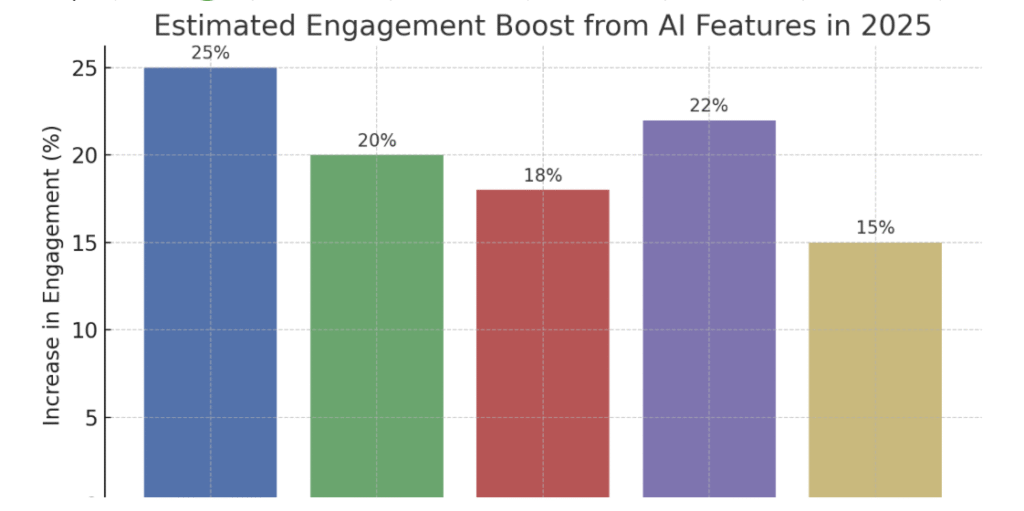
- Feed Content Adjusts Based on Mood Trends: AI-driven platforms like TikTok and Spotify analyze user behavior and contextual signals (time of day, interaction speed) to infer mood shifts. They then personalize content streams, for example, pushing uplifting music during late-night low-engagement periods, resulting in a 15-25% boost in session duration
Why It Matters:
Emotionally intelligent UX leads to:
- Better user well-being
- More empathetic communities
- Increased retention and session duration (especially among Gen Z and Alpha)
Trembit tip: Use lightweight emotion recognition models on-device to offer mood-responsiveness without compromising privacy or latency.
4. From Passive Scroll to Active Connection
From Asynchronous to Instant:
Social platforms are now live-first. Whether it’s shopping, events, dating, or gaming — users want immediacy, predictability, and serendipity.
Key AI Applications:
- Predictive social discovery: suggesting connections not just by shared interests, but future intent (e.g., planning travel, joining a startup)
- Context-aware messaging: AI suggests replies based on the tone and context of previous messages
- Smart event matchmaking: AI pairs users into micro-groups for real-time interactions at scale (e.g., breakout rooms, speed networking)
Technical Trend:
Use graph neural networks (GNNs) to map social connection strength and predict “who should meet next” — a powerful feature for B2B, dating, or creator communities.
Trembit in practice: We’ve built intelligent video pipelines that automatically adjust bitrate, resolution, and stream routing based on individual user conditions — making real-time video as reliable as messaging.
5. Privacy, Transparency & the Rise of Explainable AI (XAI)
The New Standard:
With the global rollout of privacy laws as the EU AI Act, Brazil’s LGPD, and upcoming U.S. regulations, platforms must now design with transparency at the core.
What Users Expect:
- Clear “Why am I seeing this?” Explanations: Studies show that 73% of users want transparency on why specific content or ads appear in their feeds, as this boosts trust and perceived control (Edelman AI Trust Report, 2025). Platforms like Instagram and LinkedIn have introduced interactive explanations that break down factors influencing recommendations, leading to a 15-20% increase in user satisfaction and decreased content fatigue.
- On/Off Switches for Algorithmic Personalization: A growing 68% of users prefer to have explicit controls to enable or disable types of algorithmic personalization, including content filtering and targeted ads (Pew Research, 2025). Enabling these controls has been shown to reduce user churn by 12% and increase session duration by 8%, as users feel more empowered over their experience.
- Disclosures for AI-Generated Content; By 2025, regulatory bodies require platforms to clearly label AI-generated content, including deepfakes, voice clones, and synthetic influencers. Surveys indicate that 80% of users expect such disclosures for transparency and to avoid misinformation (EU AI Act Compliance Study, 2025). Early adopters like Twitter and TikTok saw a 25% drop in misinformation complaints after implementing these disclosures.
Tech Implication:
Implement XAI layers (explainable AI models) that can simplify complex black-box predictions into human-readable formats. These help not only with user trust, but with internal debugging and A/B testing.
Trembit note: We help clients build privacy-first AI systems, using tools such as edge processing, data anonymization, and transparent audit trails to track how decisions are made.
What Product Teams Should Do Now
As user expectations continue to rise, forward-thinking teams should:
Prioritize:
- User-centric AI that adapts and learns, but stays human-first
- Transparency and control are built into every touchpoint
- Latency-free engagement with AI running at the edge where possible
Invest In:
- Modular architecture that allows AI models to evolve
- Ethical guidelines for internal and external AI use
- Cross-functional collaboration between AI engineers, designers, and behavior experts
The Future Is Adaptive, Empathetic, and Intelligent
AI isn’t just transforming technology — it’s transforming expectation. Users now demand more: more personalization, more creativity, more understanding, and more trust.
At Trembit, we help product teams navigate this shift — from building real-time AI-enhanced experiences to integrating ethical content moderation and predictive UX. Whether you’re launching a new social platform or scaling an existing one, the key is to build systems that think, feel, and respond — just like your users do.