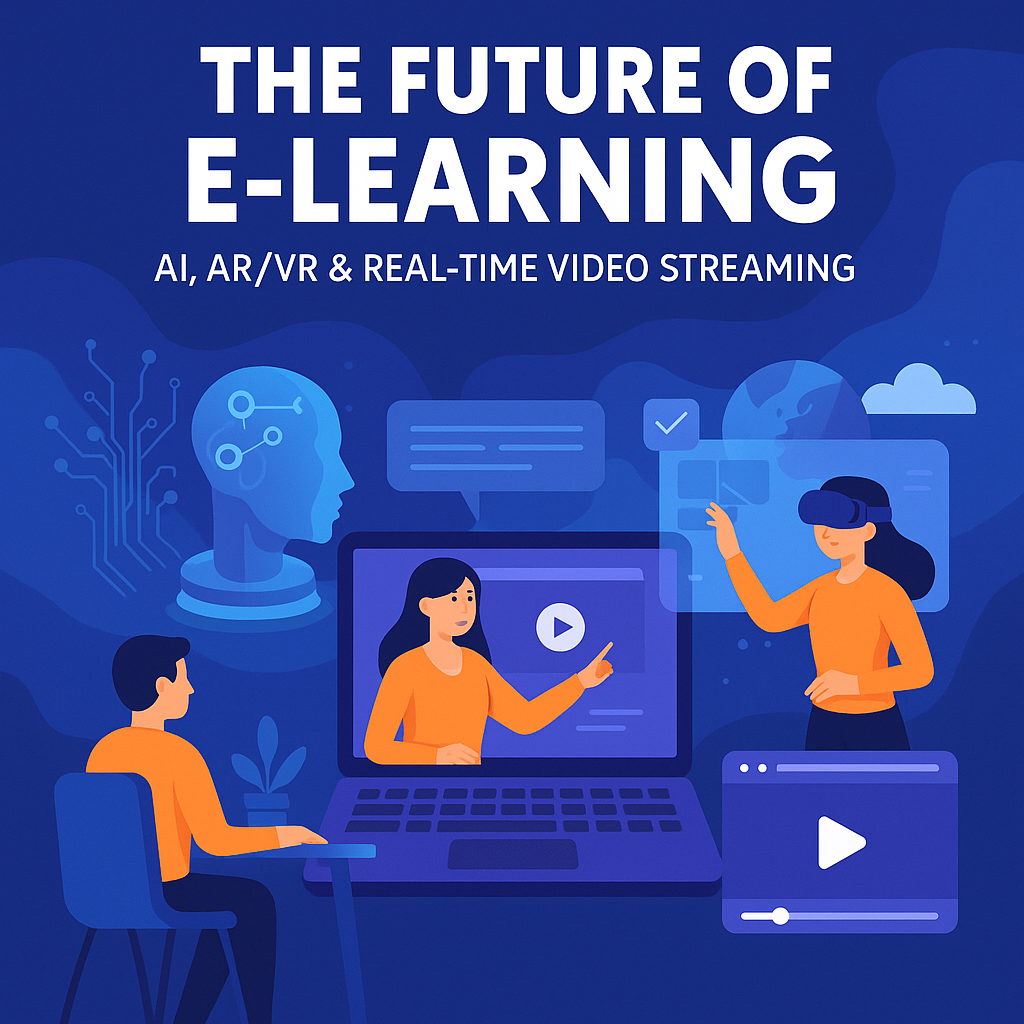
The world of education is undergoing a revolution as technologies like Artificial Intelligence (AI), Augmented Reality (AR), Virtual Reality (VR), and real-time video streaming converge to redefine e-learning.

This convergence not only elevates knowledge delivery but also reinvents the learner experience. For educators, developers, and decision-makers, grasping these advancements is essential to creating engaging, effective online environments.
Trembit, a trusted technology partner with deep expertise in AI, AR/VR, and video streaming, helps organizations leverage these innovations to future-proof education and training.
AI in E-Learning – Intelligent Personalization and Automation
AI has become a cornerstone of modern e-learning, enabling personalization and automation at scale.
Through machine learning algorithms and data analytics, AI-powered platforms:
- Analyze learner data to identify strengths, weaknesses, and learning styles.
- Adapt course content dynamically to fit individual needs and pace.
- Provide real-time feedback via intelligent chatbots.
- Automate grading and reporting, freeing educators to focus on strategy and creativity
📊 Key Statistics:
- 60% of educators already use AI daily
- AI adoption in education is projected to grow by over 40% annually (2024–2030)
Best practices for AI-driven e-learning:
- Define clear learning objectives before introducing automation.
- Use verified and diverse datasets for personalization accuracy.
- Continuously monitor AI outcomes and retrain models.
- Ensure transparency and explainability in AI recommendations.
Trembit’s expertise in AI integration helps clients implement adaptive learning engines, intelligent chat assistants, and automated assessment tools that elevate engagement and performance.
AR and VR – Immersive Learning Redefined
AR and VR technologies bring immersion and interactivity to e-learning, creating memorable, hands-on experiences that go beyond text and video.
| Technology | Core Feature | Example Use | Benefit |
| Virtual Reality (VR) | Fully simulated environments | Virtual labs, historical re-creations | Safe, repeatable practice |
| Augmented Reality (AR) | Digital overlays on real-world views | Interactive textbooks, 3D anatomy models | Context-rich learning |
Benefits of immersive learning:
- Improves knowledge retention by up to 75%
- Enables skill transfer through experiential training
- Reduces risks in medical or technical simulations
- Encourages curiosity and deep understanding
Implementation tips:
- Align experiences with learning goals.
- Ensure accessibility across devices.
- Focus on user comfort and intuitive navigation.
Trembit supports seamless AR/VR integration into custom e-learning platforms, helping clients build scalable and immersive training modules.
Real-Time Video Streaming – Bridging Distance and Enhancing Interaction
Live video streaming has become the backbone of online education — enabling virtual classrooms, interactive webinars, and real-time collaboration.
Advantages of live video learning:
- Immediate instructor feedback
- Stronger peer-to-peer connection
- Higher learner attentiveness
- Dynamic discussions and Q&A sessions
However, maintaining low-latency, high-quality streams globally can be a challenge. Trembit’s deep video streaming expertise ensures:
- Scalable cloud infrastructure
- Adaptive bitrate streaming for diverse network conditions
- Smooth experiences even for large audiences
Combining AI analytics with live video also allows educators to track engagement and personalize lessons on the fly.
The Synergy of AI, AR/VR, and Real-Time Video Streaming
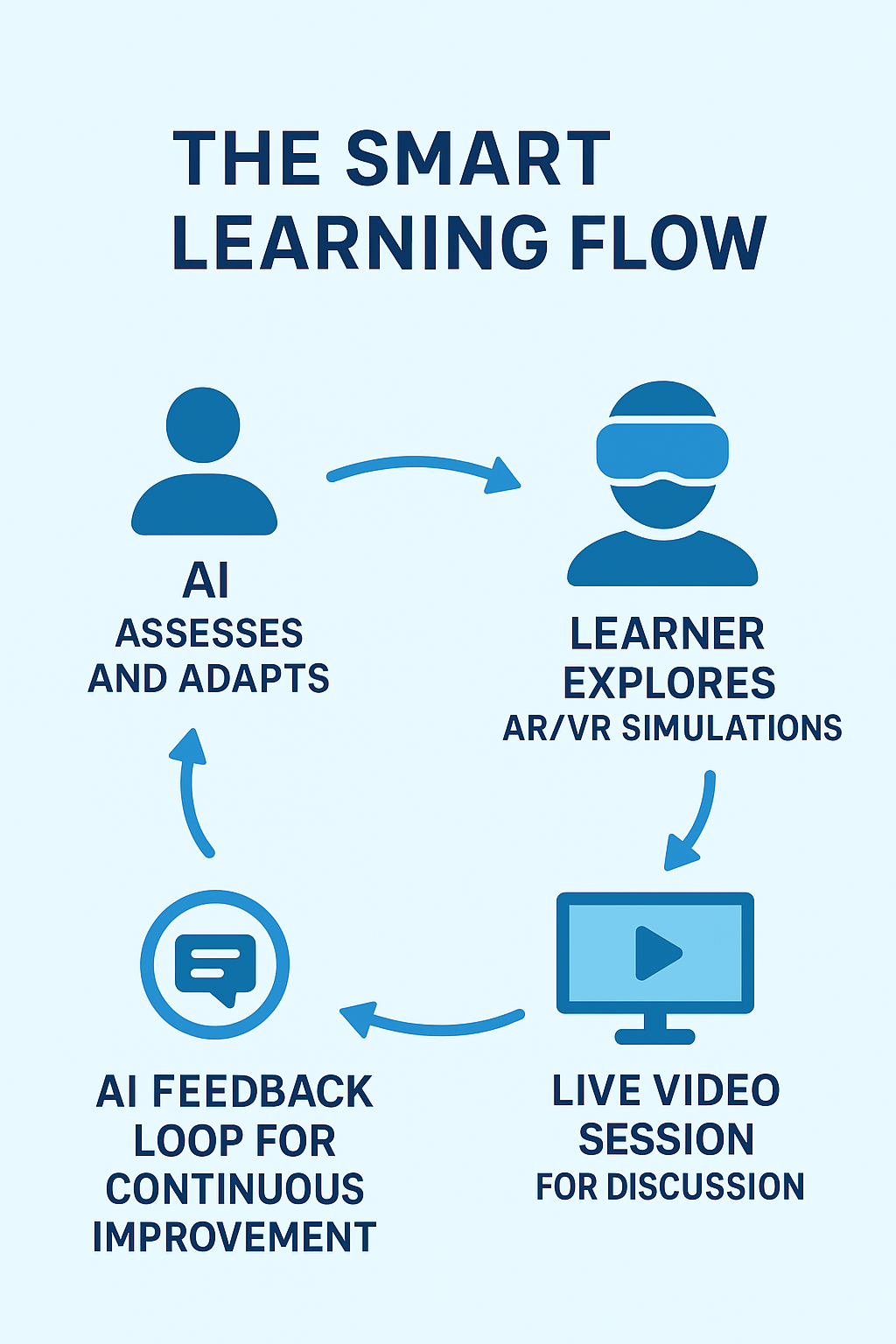
The future of e-learning lies in combining these technologies into unified, interactive systems:
| Technology | Core Contribution | Example in Action |
| AI | Personalizes content and automates assessments | Adaptive learning paths |
| AR/VR | Immerses learners in practical environments | Virtual surgery, lab simulations |
| Live Streaming | Connects instructors and peers in real time | Live discussions, Q&A sessions |
Example: Medical Training
- AI tailors content to the learner’s skill level.
- VR simulates surgery with step-by-step interactivity.
- Live streaming enables real-time instructor supervision and debrief.
Emerging Trends to Watch:
- AI-generated adaptive content
- Affordable AR/VR headsets for mass adoption
- Cloud streaming with ultra-low latency
- 3D avatars and digital twins in virtual classrooms
Trembit’s holistic development approach combines these technologies into cohesive, high-performance learning ecosystems.
Conclusion
The integration of AI, AR/VR, and real-time video streaming is redefining e-learning by making it more:
- Adaptive (personalized through AI)
- Immersive (powered by AR/VR)
- Interactive (via real-time communication)
These technologies unlock new potential for engagement, retention, and mastery — the hallmarks of successful learning.
Trembit stands as a reliable technology partner, guiding clients in creating next-generation e-learning platforms that are scalable, secure, and future-ready.