In today’s globalized world, video conferencing has become an essential tool for remote work and collaboration. Yet, language barriers continue to pose significant challenges, limiting effective communication and engagement. Real-time translation, powered by advanced AI, is set to revolutionize this landscape, enabling seamless global interaction and opening up new avenues for growth and innovation.
This article delves into the transformative power of real-time translation for video conferencing platforms. We’ll explore its impact on key metrics, define the technical aspects of AI real-time translation, and showcase how it can propel your platform to the forefront of the global market.
Enhancing User Engagement: The Impact of AI Real-Time Translation
Imagine a world where international collaboration happens seamlessly, with participants from all corners of the globe engaging in productive discussions without language limitations. Real-time translation makes this a reality, offering numerous benefits that significantly enhance user engagement and platform success.
- Increased User Retention: Language barriers often cause user churn on video conferencing platforms. By integrating AI-driven real-time translation, you can dramatically reduce drop-off rates, particularly among international teams.
- Enhanced User Engagement: Real-time translation creates a more inclusive environment where all participants can actively contribute. This leads to higher levels of engagement, as seen through increased chat message activity, poll participation, and overall meeting duration.
- Boosted Meeting Satisfaction Rates: Communication breakdowns due to language barriers often result in unproductive meetings and missed information. Real-time translation ensures everyone receives crucial information in real time, leading to higher meeting satisfaction and improved productivity.
- Expansion to Untapped Markets: Eliminating language barriers allows you to reach a global audience. This opens up new customer segments and revenue streams, enabling you to tap into previously inaccessible markets.
The Technical Powerhouse Behind AI Real-Time Translation
The magic of real-time translation is powered by advanced AI technology and WebRTC solutions. Here’s a look behind the scenes:
- Advanced AI Engines: At the heart of real-time translation is a next-generation machine translation engine, trained on vast datasets of multilingual text and speech. This engine analyzes spoken language in real time, accurately translates it, and delivers the translated text or speech with minimal latency.
- Speaker Diarization: In multi-participant conferences, AI employs speaker diarization to identify and differentiate individual speakers. This ensures accurate attribution of translated speech, resulting in a more natural and cohesive communication experience.
- High Accuracy and Fluency: Leading AI real-time translation solutions prioritize accuracy and fluency. Advanced algorithms ensure that the translated content reflects the original speaker’s intent and maintains a natural conversational flow.
- Continuous Learning and Adaptation: AI translation solutions for video streaming and WebRTC application development incorporate mechanisms that allow the engine to adapt to domain-specific language and us
- er behavior, improving accuracy over time.
Beyond Real-Time Translation: The Future of Global Communication
The potential of AI-powered video conferencing extends well beyond real-time translation. Here’s a glimpse into the exciting future of global communication:
- Sentiment Analysis and Personalized Insights: AI can analyze the sentiment of translated conversations to provide deeper meeting insights. Imagine understanding the overall mood of a meeting across different languages, enabling you to optimize platform features and enhance the user experience for diverse audiences.
- Voice Accent and Dialect Adaptation: As AI technology evolves, the future promises real-time translation that adapts seamlessly to regional accents and dialects. This will further enhance communication by providing natural-sounding translations that not only bridge language barriers but also preserve the unique characteristics of each speaker.
- Voice Cloning and AI Voiceover: Advanced AI voice cloning and AI voiceover technologies have the potential to revolutionize multilingual presentations. Presenters could deliver their messages in multiple languages simultaneously, using synthetic voices that closely resemble their own, but with real-time translations.
- A Holistic Approach to Global Growth: By embracing AI-powered features such as real-time translation, voice cloning, and AI video localization, you can develop a truly global video conferencing platform. This comprehensive approach fosters a more inclusive and engaging user experience, eliminates language barriers, and unlocks a world of new growth opportunities.
Leading AI Solutions for Real-Time Translation in Video Conferencing
Leading AI translation solutions like Wordly AI, Interprefy, and VidVoice enable people to communicate in their native languages during video conferences and meetings.
These solutions offer a wide range of capabilities for enhancing video conferencing experiences:
- Accurate, Low-Latency Translation: Provides real-time translation of audio, captions, subtitles, and transcripts with minimal delay.
- Support for Multiple Languages: Offers simultaneous translation for 30 to 100 languages, accommodating diverse user needs.
- Native-Sounding Translation with Lip Sync: Ensures that translations sound natural and are synchronized with the speaker’s lip movements.
- Seamless Integration: Compatible with major video platforms like Zoom, Microsoft Teams, Google Meet, and Cisco Webex.
Although AI translation is not yet perfect, it has achieved a level of accuracy close to that of human translators in many contexts. The technology is capable of handling some cultural nuances and idiomatic expressions, although this remains an ongoing challenge.
Leveraging AI: How Video Conferencing Platforms Implement Real-Time Translation
Video conferencing platforms are increasingly incorporating AI language models to provide real-time translation capabilities.
For instance, Vonage offers real-time translation through the Vonage Video API. This feature allows users to translate conversations during video meetings, displaying translations as captions or subtitles for participants.
By integrating AI translation, these platforms are dismantling language barriers, fostering more inclusive and productive global collaboration. As technology continues to evolve, real-time translation is likely to become a standard feature across all major video communication solutions.
Meta’s Seamless: Revolutionizing Real-Time Cross-Lingual Communication
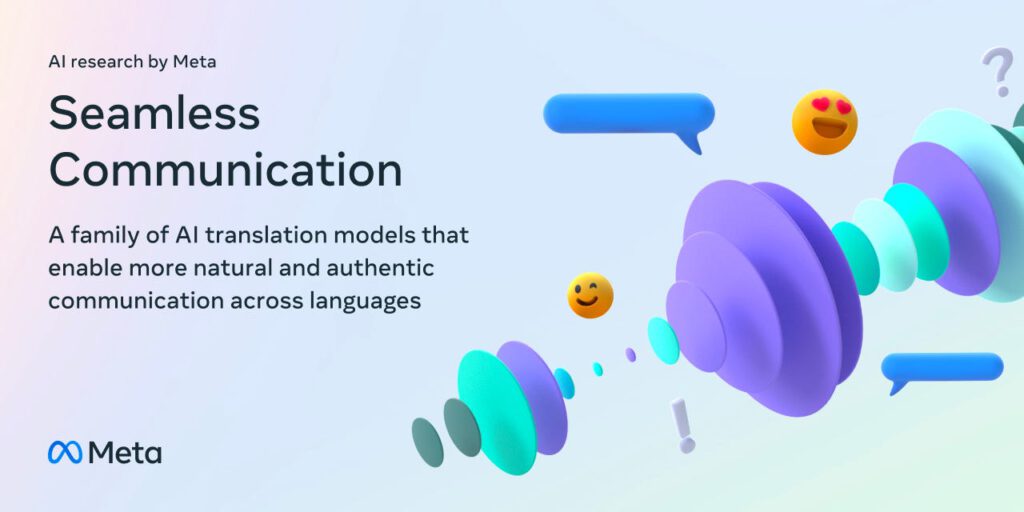
Meta has recently unveiled Seamless, a groundbreaking system designed to enhance real-time cross-lingual communication. Seamless consists of two key models: SeamlessExpressive and SeamlessStreaming. SeamlessExpressive focuses on preserving the expressive elements of speech, such as tone, pauses, and emotion, ensuring that translated speech maintains the original speaker’s intent and style. SeamlessStreaming offers state-of-the-art streaming translation with minimal latency, supporting nearly 100 input and output languages for automatic speech recognition and speech-to-text translation, and 36 output languages for speech-to-speech translation.
By incorporating AI translation, video conferencing platforms are dismantling language barriers, fostering more inclusive and productive global collaboration. As technology continues to evolve, real-time translation is likely to become a standard feature across all major video communication solutions.
Pros and Cons of AI-Powered Real-Time Translation
Advantages of AI-Powered Real-Time Translation:
- Breaking Down Language Barriers: Facilitates global collaboration by eliminating language obstacles.
- Inclusivity and Productivity: Promotes more inclusive and productive multilingual meetings.
- Scalability and Cost-Effectiveness: Offers a scalable and affordable alternative to human interpreters.
Challenges in Achieving High Accuracy:
- Complexity and Nuance of Human Language: Managing the intricate details and subtleties of different languages.
- Contextual Understanding: Ensuring accurate comprehension beyond literal word-for-word translation.
- Supporting Diverse Languages and Dialects: Scaling to accommodate a broad spectrum of languages and regional dialects.
- Bias and Errors: Reducing biases and errors, particularly with less common language pairs.
- Data Privacy and Security: Navigating regulations to ensure data privacy and security.

Selecting the Optimal AI Real-Time Translation Solution
Selecting the optimal real-time translation solution hinges on your unique requirements. Here are key factors to consider:
- Required Languages: Ensure the solution supports all the languages you need to accommodate your global audience effectively.
- Accuracy and Budget: Balance your need for high translation accuracy with your budget constraints. Some solutions offer premium accuracy at a higher cost, while others provide satisfactory performance at a more affordable rate.
- Deployment Options: Decide between cloud-based solutions for greater scalability and flexibility or on-premise solutions for enhanced data privacy and control.
- Integrations: Verify that the solution seamlessly integrates with your existing video conferencing platform and any third-party services you rely on. Compatibility is crucial for a smooth user experience and operational efficiency.
Expand Your Video Streaming Reach with Trembit’s AI Solutions
Trembit is a leading provider of video streaming development services, specializing in advanced AI features such as real-time translation, voice cloning, and AI video localization. As a WebRTC application development company, our solutions are designed to help your video communication platform overcome language barriers and expand its global reach.
Schedule a consultation with our AI experts to discuss your specific needs and discover how Trembit’s solutions can enhance your video conferencing platform.
Don’t let language barriers limit your platform’s growth. Take the first step towards a global future. Contact Trembit today to unlock the full potential of your video conferencing platform.
Conclusion: Embrace AI for Global Communication
Embrace the power of AI to transform your video conferencing platform. Real-time translation is just the beginning – as technology evolves, the possibilities for global communication are boundless. By integrating these innovative features and leveraging WebRTC application development, you can create an inclusive, engaging, and globally competitive platform. Contact Trembit today to explore how we can help you unlock this potential.