In recent years, the video streaming industry has witnessed remarkable advancements in technology, transforming the way we consume video content. Among these innovations, voice recognition Artificial Intelligence (AI) has emerged as a powerful tool that is rapidly revolutionizing. With the ability to understand and interpret human speech, voice recognition AI is reshaping the future of video content. In this blog post, we will explore how Trembit works with voice recognition AI that makes streaming smarter and the impact it is having on the way we interact with video content.
Enhancing User Experience
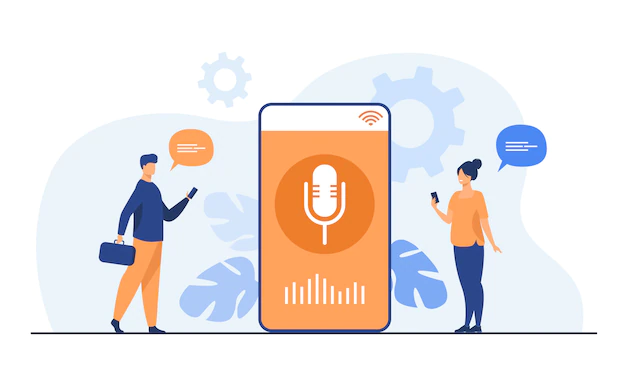
Enhancing the user experience is one of the primary ways that voice recognition AI is transforming the streaming landscape. Remember the days of manual searching for content or navigating through menus? With voice recognition technology, you can now simply speak commands to find their favorite movies, TV shows, or even specific scenes within a video. This seamless and intuitive interaction makes the streaming experience more convenient. People of different ages and professions enjoy this opportunity in their everyday lives.
User experience has been enhanced in many features of the software development as well, these are voice commands within the app, voice messages in the chat, speech-to-text options, and many more. This is not only a technical revolution, but a desired step forwards in the AI field, helping everybody to benefit from new opportunities. At Trembit we welcome new ideas of the voice recognition AI and implement them in our own video conferencing solution, called Vatra.
Improved Content Discovery and Efficient Navigation
Discovering new content has always been a challenge for both streaming platforms and users. However, voice recognition AI is changing the game by providing personalized recommendations based on individual preferences. By analyzing user behavior, viewing history, and preferences, streaming services can leverage voice recognition AI to suggest content that aligns with the user’s interests. This not only enhances content discovery but also enables users to explore a wider range of options that they may have otherwise overlooked.
Voice recognition AI also simplifies content navigation by enabling users to control playback and navigate through videos using voice commands. Whether it’s pausing, rewinding, or fast-forwarding, users can effortlessly control their streaming experience with voice recognition technology. This hands-free approach eliminates the need to manually interact with menus or search for specific moments in a video, making the overall experience more efficient and convenient.
Accessibility for All
This is one of the major outstanding features, since voice recognition AI has opened new avenues for accessibility in the streaming industry. By providing voice-based interaction, individuals with visual impairments or motor disabilities can easily access and enjoy video content. This inclusive approach ensures that streaming services are accessible to a wider audience, promoting equality and diversity in the world of entertainment.
Helping all individuals – that is the appreciable goal of the AI, in our understanding at Trembit. We aim for implementing and running this option of AI in video streaming solutions accessible by everybody.
The Future Possibilities
As voice recognition AI continues to evolve, its potential in the streaming industry is boundless. We can expect more advanced natural language processing algorithms, improved accuracy, and increased language support. Furthermore, the integration of voice recognition AI with other emerging technologies, such as augmented reality (AR) and virtual reality (VR) can further enhance the immersive streaming experience.
In 2023 we’ve already investigated these services:
- Google Cloud Speech-to-Text: Google Cloud provides a powerful speech-to-text API that can convert spoken language into written text in over 120 languages. It offers real-time and batch processing options, as well as customizable models for specific use cases. Our test case studies included transcription of the interviews in Ukrainian, Romanian, and Hungarian languages between two and more people, that were later transcribed by roles. The platform generally covered the test case and provided a voice-to-text transcription.
- Amazon Transcribe: Amazon Web Services (AWS) offers Amazon Transcribe, a fully managed automatic speech recognition (ASR) service. It can convert speech to text with high accuracy and supports several audio formats and languages. The most prominent finding was about Amazon Transcribe to handle video files in English mainly, without having Ukrainian and other languages in the setting list.
- Microsoft Azure Speech Services: Microsoft Azure provides Speech Services, which include Speech-to-Text capability among other features. It offers real-time and batch transcription and supports a variety of languages and audio formats. What’s interesting about the Speech Services of Microsoft Azure, is that it covered other languages, except for English in a rather good manner, providing readable and meaningful transcription of the video and audio files.
- OpenAI API: OpenAI’s API offers Speech-to-Text capabilities, powered by the GPT-3.5 model. It can transcribe spoken language into written text with high accuracy and is suitable for various applications. This opportunity really covered our test case and aimed to distinguish the interview speakers, along with providing transcription and summary of the conversation.
All in all, there’s a list of other promising services for AI voice recognition to consider:
- IBM Watson Speech to Text: IBM Watson provides a speech-to-text service that converts audio into written text. It offers advanced features like speaker diarization, custom language models, and real-time streaming capabilities.
- Otter.ai: Otter.ai is a popular AI-powered transcription service that supports automatic speech recognition and provides accurate real-time transcription. It’s commonly used for meetings, interviews, and other audio recordings.
- Rev.com: Rev.com is a transcription service that offers both human and automatic transcription options. They provide high-quality transcription services for various industries, including media, legal, and academic.
- Trint: Trint is a web-based platform that uses AI to transcribe audio and video files. It also offers features like automated subtitles and the ability to edit transcripts easily.
- Sonix: Sonix is an online transcription service that utilizes AI technology to convert audio and video files into text. It supports multiple languages and provides a user-friendly interface for editing and collaboration.
- Speechmatics: Speechmatics is an automatic speech recognition (ASR) engine that can be integrated into various applications and platforms. It supports a wide range of languages and dialects.
Conclusion
Voice recognition AI is revolutionizing the streaming landscape by making it smarter and more intuitive. From enhancing user experience and content discovery to improving content navigation and accessibility, the impact of voice recognition AI is undeniable. As this technology continues to evolve, we can anticipate a future where interacting with video content through voice commands becomes the norm. The streaming industry is embracing this transformative technology to provide users with a seamless, personalized, and immersive viewing, listening, and reading experience. The future of video content is being shaped by voice recognition AI, and we are only beginning to witness its potential. Contact us today to discuss the possibilities of integrating Voice Recognition into your business!