By Stanislav Zayarsky, CEO · Last updated 12 November 2026 · Platform facts checked 12 November 2026
Live shopping platforms, also called live selling platforms or live video shopping software, are the software and marketplaces that let a seller stream live video and sell the products on screen in the same session. Live stream shopping comes in two main forms. SaaS tools such as Bambuser, Channelize, CommentSold, Smartzer and Firework embed on your own site or app; what checkout and data you keep depends on the vendor, so ask in writing. Marketplaces such as TikTok Shop, Whatnot, Amazon Live and eBay Live bring their own buyers and set the terms. YouTube Shopping sits between the two: it lets you tag products in streams to your own followers. Trembit builds custom live-commerce platforms and has no reseller or affiliate tie with these platforms, so this list is unranked and every fee on it is dated.
Key takeaways
- Two types, one decision. A SaaS tool puts the experience on your site or app; confirm in writing who owns the checkout and the data. A marketplace brings buyers but keeps most of the relationship.
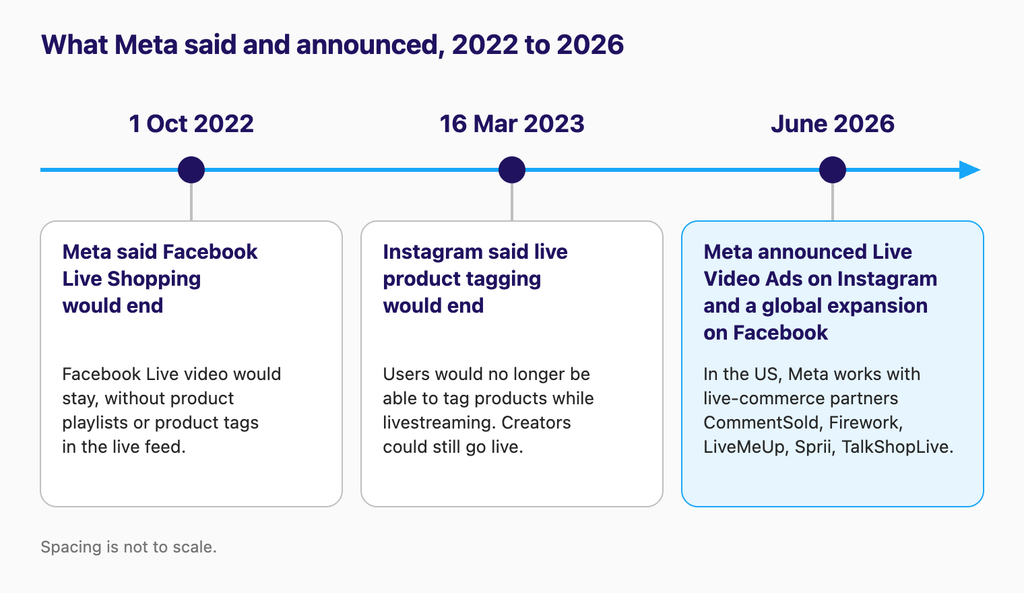
- The market has changed since 2022. Meta said Facebook Live Shopping would end in October 2022 and Instagram’s live product tagging in March 2023. In June 2026 it announced Live Video Ads on Instagram and a global expansion on Facebook, with US live-commerce partners.
- Fee models differ in kind. Marketplaces take a percentage of each sale (TikTok Shop 6% for most categories). SaaS tools charge a subscription, metered by usage or with a share of sales on top (CommentSold). All as read on 12 November 2026.
- “Free” means a limited tier or an eligibility gate. Bambuser’s free tier covers 250 views a month. YouTube states no fee but requires the YouTube Partner Program.
- Rent first. Build when live selling is the product, when buyers must act on the same moment the host shows (auctions), or when fees at your volume cost more than a team would.
Brand or e-commerce lead? Go straight to the comparison table and “Which live shopping platform fits which seller?”. CTO or product owner? Start at “Should you buy a live shopping platform or build your own?”.
What is a live shopping platform, and how does live stream shopping work?
Live selling, or live stream shopping, is selling through a live video broadcast: a host shows a product, answers questions in chat and takes orders while the stream runs. A live shopping platform supplies four parts: a broadcaster, a player for viewers, a product layer (cards, pinned items or an in-stream cart over the video) and a checkout. To a shopper, this usually arrives as a live shopping app: your own branded app or website player, or the marketplace’s app. For the tactics of running a show, see our guide to live commerce tactics.
Which live shopping formats work for which products?
There are five common formats: direct selling (the host demonstrates and viewers buy), auctions (price set by live bidding), influencer streams (a creator sells to an audience that trusts them), tutorials (the product shown in use) and live events (a launch or drop built around scarcity). The fit with a product follows from what each format needs (our editorial reading, not sales data):
| Product type | Format that fits | Why |
|---|---|---|
| Beauty and personal care bundles | Tutorial-led | The bundle sells when the viewer sees each item used in sequence |
| Fashion | Direct selling or live events | Fit needs demonstration; drops need a fixed moment |
| Collectibles and one-off items | Auctions | Each item has one buyer and no list price |
What types of live shopping platforms are there?
There are two main types, and social platforms sit between them. The difference that matters is who owns the audience, the checkout and the customer data.
- SaaS embeds (Bambuser, Channelize, CommentSold, Smartzer, Firework). The live selling software runs on your site or app and you bring the audience. What checkout and data you keep depends on the vendor, so ask in writing.
- Marketplaces (TikTok Shop, Whatnot, Amazon Live, eBay Live). You sell to the marketplace’s buyers through its checkout, under its rules, for a commission or an advertising fee. The marketplace owns the buyer relationship.
- Social platforms (YouTube Shopping; Facebook and Instagram changed, see below). You stream to your own followers and tag products. The platform owns the audience, and for your own products the sale completes through your store or merch retailer.
The fourth option, building your own live selling platform, is covered in the buy-or-build section. If you want a team to build it for you, see our list of development agencies that build for you.
How did we compare these live shopping platforms?
We checked every platform against five criteria:
- Still operating as of 12 November 2026.
- Type and where the sale happens.
- Fee model as published on the vendor’s own pricing or help page, dated. Where no price is published, we say so.
- Live features as the vendor states them. We did not test the products.
- Integrations and eligibility as the vendor states them.
The list is unranked and grouped by type: no ratings, no scores, no winner. “Best for” lines follow from these criteria, not from performance data. Fees change (Whatnot’s new commission structure took effect on 21 September 2026), so check the current page before you sign.
Disclosure: Trembit has no affiliate or partner relationship with the platforms listed. We build custom live-commerce platforms, and we wrote this list.
Removed since the 2022 version: Facebook Live and Instagram Live, after Meta said it would end product tagging in live streams (see the Facebook and Instagram section). NTWRK, whose site showed “This store is unavailable” when we checked. Livescale, whose domain no longer resolves.
Live shopping platforms compared
Live shopping platforms compared. Fees and eligibility read from each platform’s own pages on 12 November 2026. Grouped by type, not ranked.
| Platform | Type | Where the sale happens | Live features (as the vendor states them) | Fee model as published (read 12 Nov 2026) | Integrations / eligibility | Best for |
|---|---|---|---|---|---|---|
| SaaS embeds | ||||||
| Bambuser | SaaS embed | Your website, apps and social channels | Live Shopping, Shoppable Video, Video Consultation; live and on-demand player | Free tier: 250 views/month (confirm the free tier includes live shopping and what counts as a view). Paid plans priced by monthly views, billed annually. $0.25 per overage view | Shopify, Salesforce, Magento, BigCommerce, Wix | Brands that want live and on-demand video on their own store |
| Channelize.io | SaaS embed | Your website and apps | Shoppable livestreams; chat, reactions, giveaways; recordings; analytics | No free plan; 14-day trial. Start $97 per month, or $81 per month billed annually, 180,000 viewing minutes. Grow $297 or $248, 600,000. Pro $497 or $414, 1,200,000. Overage $12 / $9 / $7 per 1,000 minutes | Shopify, WooCommerce, Magento, PrestaShop, Wix, Shoplazza | Stores that want a fixed monthly plan with a minutes allowance |
| CommentSold | SaaS live-selling platform | Facebook, Instagram, TikTok, your website and branded app, at the same time | Auto-invoicing from comments; waitlists; express checkout; multi-platform simulcast | Monthly plan plus a share of sales: Starter $149/mo + 6%; Starter with AI $249/mo + 6%; Small Business $499/mo + 5%; Large Business $999/mo + 4%. 15-day free trial | Shopify (Videeo for Shopify); Meta Live Video Ads partner in the US | Boutiques that sell by comment across several social channels |
| Smartzer | SaaS embed (Shopify app) | Your Shopify store | Live shopping with shoppable products; hotspots on existing video; shoppable short-form; playlists; analytics | Free to install. $0.003 per second watched, or Smartzer Plus $2,999/month with 5,000,000 seconds included, then $0.0005 per second | Shopify | Shopify stores starting with shoppable video and adding live |
| Firework | SaaS embed (shoppable video first) | Your website and other channels | Live appears as “Scheduled live events” and “Social Media Simulcast” in a Pro tier | Free pilot for shoppable video. Extra views $10 (Starter) or $5 (Growth) per 1,000. The tier with live features has no published price | Social platforms such as Instagram and TikTok; Meta Live Video Ads partner in the US | Brands whose main need is shoppable video, with occasional live events |
| Marketplaces and social platforms | ||||||
| TikTok Shop | Marketplace inside a social app | Inside TikTok | Shoppers browse and buy during your livestream (per TikTok’s LIVE Shopping Ads help page) | Referral fee 6% for most categories; 5% for some jewellery and pre-owned; 3% on the part of a collectibles sale above $10K. Page updated 10/08/2026 | A TikTok Shop account | Sellers with an audience or creators already on TikTok |
| Whatnot | Marketplace | Inside Whatnot | Selling in live shows on Whatnot | Tiered commission since 21 Sep 2026, by four-week sales, category and market, “as low as 3%”. Processing 2.9% + $0.30 (US, Canada, Australia) or 2.42% + €/£0.25 plus VAT (EU, UK) | Rates vary by category and market | Sellers who want a live-first marketplace audience and accept a commission |
| YouTube Shopping | Social platform | Your own products: through your merch retailer or store platform | Tag and pin products in a live stream; tags show in replays | No fee stated on its help pages | YouTube Partner Program and subscriber threshold; a listed country to tag other brands’ products | Creators who already meet YouTube’s eligibility |
| Amazon Live | Marketplace / retail media | On Amazon | Real-time video shopping on Amazon; Creator app or managed service | No price stated; contact Amazon Ads | US: available to businesses that do not sell on Amazon. amazon.com/live: India and the US only | US brands that don’t sell on Amazon and want its shopper audience |
| eBay Live | Marketplace | Inside eBay | Livestream shopping where sellers offer items to buyers in real time | 6% commission (4% coins, bullion, sneakers), capped at $100 per item, plus 2.9% + $0.30 per order processing. No insertion fee | Selling on eBay | eBay sellers, especially of high-value single items (the cap) |
Which SaaS live shopping platforms can you embed on your own site?
These are the live selling platforms and live video shopping software you add to a store you already run. The experience lives on your site or app; what checkout and data you keep depends on the vendor, so ask in writing. You also have to bring the audience.
Bambuser
Bambuser’s paid plans are set on a views slider, so its pricing page gives no single tier price.
Best for: brands that want live and on-demand shoppable video on their own store. Limit: cost follows views, so a show that beats its expected audience goes over the allowance. Confirm the free tier includes live shopping and what counts as a view.
Channelize.io
Channelize.io pairs live shopping with shoppable versions of video you already have, such as TikTok and Instagram Reels. For stores outside its listed platforms it offers a custom-cart option.
Best for: stores that want a fixed monthly price and can estimate viewing minutes. Limit: long shows to large audiences use up a minutes allowance quickly.
CommentSold
CommentSold is built for retailers who sell by comment. Its site says you can sell live on “Facebook, Instagram, TikTok, website, and your branded mobile app — simultaneously”, and it turns comments into invoices. Meta named it a US partner for its 2026 live video ads.
Best for: boutiques whose buyers already order by comment on social channels. Limit: a monthly fee plus a share of sales means cost grows with revenue, not only with time.
Smartzer
Smartzer is a Shopify app, “Smartzer Live & Video Shopping”. Its listing leads with shoppable video, putting hotspots on footage you already have, and includes live shopping on your Shopify store.
Best for: Shopify stores that start with shoppable video and add live later. Limit: per-second billing makes long live shows expensive on pay-as-you-go (see the cost section).
Firework
Firework calls itself an “all-in-one-platform” for shoppable video and an AI shopping agent, and its homepage does not mention live streams. Live features appear only in a Pro tier with no published price. Meta named Firework a US partner for its 2026 live video ads.
Best for: brands whose main need is shoppable video, with occasional live events. Limit: the free pilot does not show you what live costs.
Which marketplaces and social platforms can you sell live on?
A marketplace solves the hardest problem in live commerce, which is getting buyers to show up. In exchange, the buyer relationship, the checkout and most of the data stay with the marketplace.
TikTok Shop
TikTok Shop is TikTok’s in-app marketplace. Shoppers can “browse and buy your products during your livestream”, as TikTok’s help page for LIVE Shopping Ads puts it. Its Seller University fee page says “Most other listed categories remain at 6%”. Plan on 6% for most categories and confirm yours on TikTok’s page; the page we read on 12 November 2026 does not show 8%.
Best for: sellers, or brands working with creators, whose audience is already on TikTok. Limit: the buyer and the customer data stay with TikTok.
Whatnot
Whatnot is a marketplace where sellers sell in live shows. Its new commission structure took effect on 21 September 2026. The rate is tiered by your sales over four weeks, varies by category and market, and goes “as low as 3%”, and the page gives no single top rate.
Best for: sellers who want a live-first marketplace audience and accept a commission. Limit: your rate depends on your volume, so price it before you commit stock.
YouTube Shopping
Eligible channels tag products in YouTube Studio and pin them from the Live Control Room; products tagged after the stream “will show during replays”, according to YouTube’s help page. Tagging other brands’ products is limited to listed countries.
Best for: creators who already meet YouTube’s eligibility rules. Limit: a new brand channel can’t sell live until it qualifies.
Amazon Live
Amazon Live streams can appear in Brand Stores, on amazon.com/live and on a free ad-supported TV channel on Prime Video and Fire TV.
Best for: US brands that don’t sell on Amazon and want its shopper audience. Limit: it is sold as advertising, so cost and terms come from Amazon Ads.
eBay Live
eBay Live’s commission stops at $100 per item, which starts to matter above about $1,667 at the 6% rate.
Best for: sellers already on eBay, especially of high-value single items. Limit: processing is charged on top of the capped commission.
Can you still sell live on Facebook and Instagram?
Yes, but not with the tools this article described in 2022. Meta said it would end Facebook Live Shopping on 1 October 2022. Facebook Live video would stay, but without product playlists or product tags in the live feed, as Marketing Dive reported on 4 August 2022. Instagram said users would no longer be able to tag products while livestreaming from 16 March 2023, though creators could still go live, as TechCrunch reported on 14 February 2023.
A post dated 18 June 2026 on Meta’s Latin American newsroom (in Spanish; this summary is our translation) announces Live Video Ads on Instagram and their global expansion on Facebook. In the US, Meta works with live-commerce partners CommentSold, Firework, LiveMeUp, Sprii and TalkShopLive. On Facebook, advertisers can combine Live Shopping tools with live video ads, so viewers browse and find items to buy without leaving the live video. Meta’s June 2026 announcement presents live selling as an advertising format, delivered with partner tools in the US.
If you are weighing these platforms against building your own, the decision test below is where we would start. If you want a second opinion on your case, a free 30-minute call with our live streaming engineers is open.
Which live shopping platforms handle peak shopping traffic?
Marketplaces take the load for you: when a show on TikTok Shop, Whatnot or eBay Live spikes, scaling is their problem, and you neither size nor control it. On a SaaS embed, the vendor’s infrastructure carries your peak. But the pricing pages we read meter views, minutes or seconds watched and say little about concurrent load per stream. Ask before your biggest show, and get the answers in writing:
- What is the peak number of concurrent viewers per stream you have run in production, and what is the contractual limit?
- What latency tier does the player deliver, and does it change under load?
- What degrades first when a stream is overloaded: video quality, chat, product cards or checkout?
- How are chat and reactions rate-limited when thousands of people post at once?
Peaks shape custom builds too. As the Livebazaar case study describes it, we implemented auto-scaling to handle audience spikes when popular sellers go live.
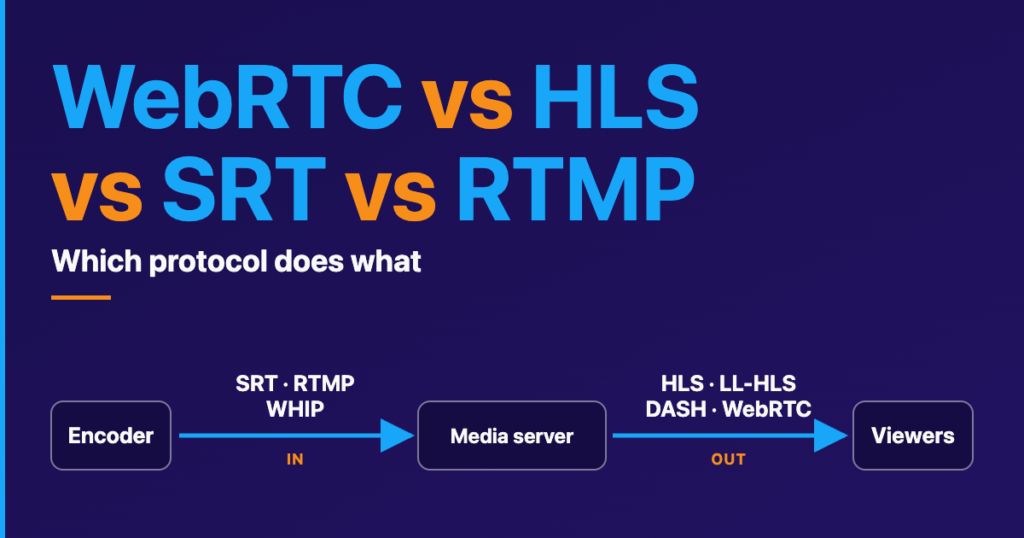
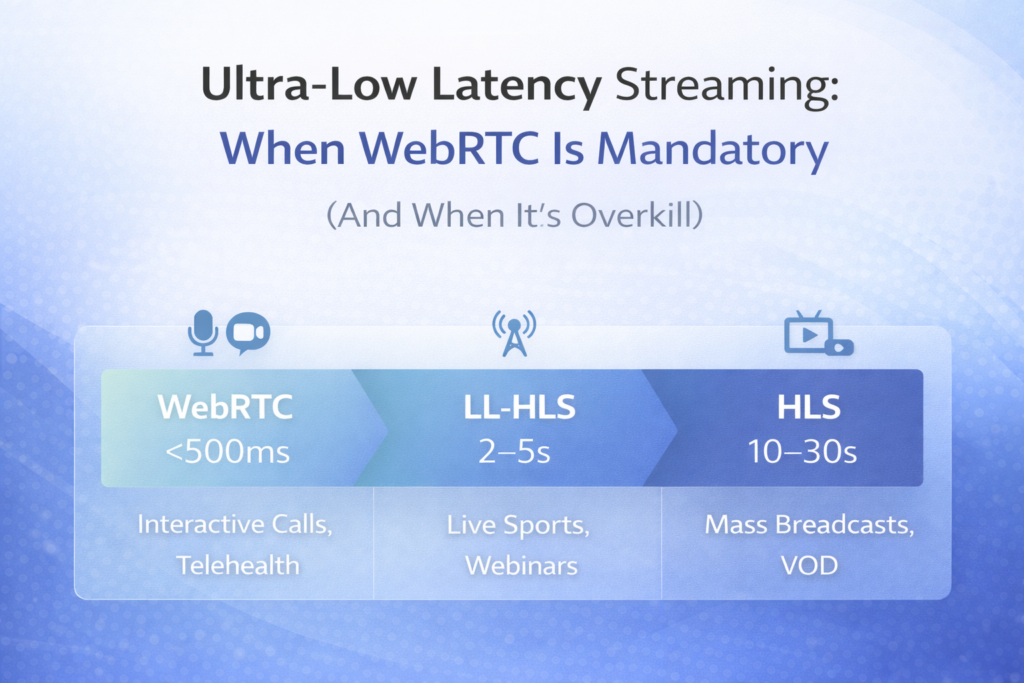
Latency is the other half of “reliable”. Of standard HLS, low-latency HLS and WebRTC, WebRTC has the lowest delay and is the costliest to scale. Our horse-auction build delivers video in under two seconds, as its case study states. For detail, see our WebRTC vs HLS vs SRT vs RTMP comparison and how our live streaming development work matches the delivery tier to the stream. A product demo tolerates a few seconds of delay. A flash sale where the host says “ten left” does not.
How much do live shopping platforms cost?
Live shopping platforms charge in four ways, all in the table above as read on 12 November 2026. Some take a per-sale commission (TikTok Shop, Whatnot, eBay Live). Some charge a metered subscription (Bambuser, Channelize, Smartzer, Firework). CommentSold charges a subscription plus a share of sales, from $149 a month plus 6% to $999 a month plus 4%. The rest publish no price (Firework’s live tier, Amazon Live). YouTube states no fee but limits access by eligibility.
The meter matters more than the headline price. Assume four shows a month, 1,000 viewers per show, each watching 15 minutes: 60,000 viewing minutes, or 3,600,000 seconds. At Smartzer’s pay-as-you-go rate that is $10,800 a month. On Smartzer Plus it is $2,999, inside the allowance. Pay-as-you-go is cheaper only below about 1,000,000 seconds (roughly 278 hours watched) a month. On Channelize Start, whose plan page lists 180,000 viewing minutes, the same audience fits inside the allowance at $97 a month. This is not a ranking. The plans include different features, and each vendor counts a view or a minute its own way. The point is to price your expected audience, not the plan name.
Some costs sit outside every price above: shipping and returns, moderating chat, the host’s time and production. If you run your own platform, video delivery at your scale sits there too. For that side, see what it costs to run a live-commerce platform, component by component.
Should you buy a live shopping platform or build your own?
Rent a platform first. Build when live selling is the product, when you need real-time interaction, or when platform fees at your volume cost more than a team would. The test, trigger by trigger:
- Live commerce is the product, not a feature of an existing store. If the stream is what you sell, renting it caps your control and your margin.
- You need bidding-grade latency or synchronised interaction. Auctions, and flash sales tied to the host’s words, need low, predictable delivery latency and server-side ordering of bids, with video and bid state on a shared clock. Our horse-auction build delivers video in under two seconds and propagates bids in under a second, as its case study states.
- Fees at your volume exceed what a team costs to run. Per-second, per-view or per-sale fees grow with success; the cost section shows how quickly.
- You need local payments, languages or compliance the platforms don’t cover. Cash-on-delivery, right-to-left interfaces and regional payment gateways are examples to check against each platform’s current documentation.
- You need your own data and customer relationship across channels. A marketplace keeps the buyer; a SaaS embed may keep more for you, on the vendor’s data model.
The counter-trigger matters as much: if live is an experiment, a SaaS tool or a marketplace gets you live faster and cheaper, and you learn whether your buyers watch at all. A hybrid is common: start on a SaaS tool, then build only the part you outgrow, such as the player, the checkout or the auction engine.
A wrong choice costs money in either direction:
- If you rent and should have built, your fees grow with your success, and the wrong meter multiplies them. In the cost example above, the same audience costs $10,800 a month on Smartzer’s pay-as-you-go rate against $2,999 on Plus. A missing feature becomes a workaround, and your data sits in the vendor’s model until you move it. Before you sign, ask whether annual billing, as Bambuser and Channelize use it, is a 12-month commitment.
- If you build and should have rented, you pay for a team, video delivery and scaling, moderation and on-call before you know whether your buyers watch at all.
When the test points to building, that is the work our team does in live commerce and shoppable-stream development.
What does a custom live-commerce build actually look like?
Two platforms Trembit delivered show what “build” means in practice. Each started from one requirement that shaped the whole build. Neither case study publishes sales or audience figures, so read them as evidence of what we can build, not of what it earns.
A live video shopping platform for the Middle East (Livebazaar). A live-commerce startup needed sellers to demo products on live video while viewers bought through shoppable overlays without leaving the stream. It also needed cash-on-delivery and a fully Arabic, right-to-left app. We built it end to end, on Wowza streaming and one Flutter codebase. The lesson that applies to any live shopping build: as the case study describes it, the platform ties overlay timing to seller actions, not to video timestamps, because a product card that arrives late erodes trust. Read the live shopping platform built for the Middle East case study.
A live horse-auction platform with real-time bidding. An equestrian auction operator wanted remote buyers to judge horses on video and bid against the room. We built WebRTC streaming on AWS and a WebSocket bidding engine. As the case study states, the live feed reaches remote bidders in under two seconds and bids propagate in under a second. The lesson: video and bid state have to move together, so frames and bid events are timestamped against a shared clock. Read the live horse-auction platform case study.
In both cases the deciding requirement was specific: cash-on-delivery and an Arabic right-to-left app in one, bids in sync with video delivered in under two seconds in the other. Check yours against any rented tool before you commit; we did not test the platforms above for it. Once the platform is yours, you can add features such as real-time analytics on a live stream on your own schedule.
Which live shopping platform fits which seller?
Each line follows from the comparison table: the fee model, who owns the audience, and the stated features.
- A brand that wants live selling on its own site: a SaaS embed (Bambuser, Channelize, Smartzer, Firework), after confirming who holds the order and customer data.
- A boutique that already sells by comment on Facebook, Instagram or TikTok: CommentSold.
- A seller of high-value single items: eBay Live (commission capped at $100 per item). Price Whatnot’s tiered rate against your volume.
- A creator with an audience: YouTube Shopping, if eligible, or TikTok Shop.
- A US brand that doesn’t sell on Amazon and wants its shopper audience: Amazon Live, through Amazon Ads.
- A small business testing live selling with no budget: YouTube Shopping, eligibility permitting; Bambuser’s free tier (250 views a month; confirm it includes live); or a Channelize trial.
- A business where live selling is the product, or one that needs auctions: the buy-or-build test above.
Frequently asked questions
Is Amazon Live still available? Yes. Amazon Ads’ Amazon Live page, read 12 November 2026, says it is available in the US to businesses that do not sell on Amazon, and that amazon.com/live is available only in India and the US. No price is published.
Can you still sell live on Instagram and Facebook? Not with the 2022 product-tagging tools. Meta said Facebook Live Shopping would end on 1 October 2022 and Instagram’s live product tagging on 16 March 2023. In June 2026 Meta announced Live Video Ads on Instagram and a global expansion on Facebook, with live-commerce partners in the US.
What is the best free live shopping platform? No single one, because “free” means different things. YouTube Shopping states no fee but requires the YouTube Partner Program. Bambuser has a free tier of 250 views a month (confirm it includes live). Firework’s free pilot covers shoppable video, not live. Smartzer is free to install but bills per second watched. TikTok Shop, Whatnot and eBay Live list a commission on each sale; Amazon Live is sold as advertising with no published price.
What is the difference between live shopping and shoppable video? Live shopping is a real-time broadcast where the host sells and answers questions. Shoppable video is recorded video with clickable products, watched on demand. Bambuser, Channelize and Smartzer do both; Firework is shoppable video first.
Which live shopping platforms work with Shopify? These name Shopify on their own pages: Bambuser, Channelize.io, Smartzer (a Shopify app) and CommentSold (through Videeo for Shopify).
Do I need WebRTC to run live shopping? Usually not, because a product demo works with a few seconds of delay. You need WebRTC-class latency when buyers must act on the exact moment they see, as in auctions. Our auction build delivers video in under two seconds. The cost is that sub-two-second delivery is harder and dearer to scale than cached HLS.
Weighing a platform against a custom build? Book a free 30-minute call. Bring your expected volume, the one thing a platform won’t do for you, and your current fee quote. We’ll pressure-test the build-vs-buy call with you. No deck, no pitch.