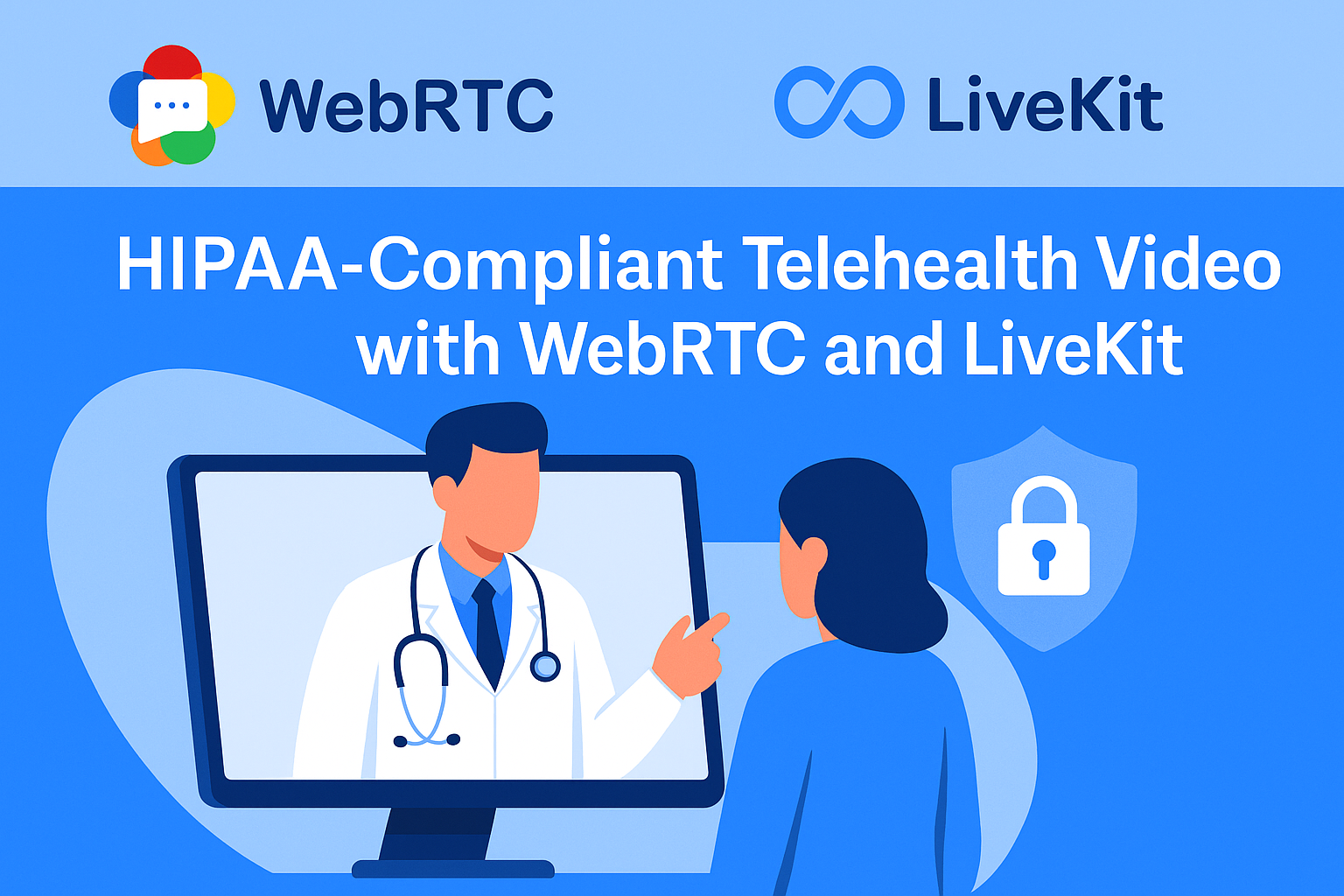
To build HIPAA-compliant video consultations with WebRTC and LiveKit: encrypt media in transit with DTLS-SRTP and at rest with AES-256, enforce MFA and role-based access control, sign a Business Associate Agreement (BAA) with every vendor that touches PHI, and keep immutable audit logs of access. WebRTC mandates transport encryption; HIPAA compliance comes from how you deploy, store, and govern everything around it.
Delivering secure, real-time video consultations has become a cornerstone of modern telemedicine. As healthcare providers expand their digital services, ensuring HIPAA compliance — especially when transmitting sensitive patient information — has never been more crucial. By combining WebRTC’s secure communication capabilities with LiveKit’s scalable infrastructure, healthcare organizations can build high-quality video consultation platforms that protect patient data and meet regulatory requirements. With an experienced development partner like Trembit, the process becomes even more reliable, efficient, and technically robust.
This article examines the requirements of HIPAA compliance for telehealth video, the reasons why WebRTC and LiveKit are leading choices for secure medical communication, and how Trembit assists organizations in implementing fully compliant, production-ready solutions.
What Is HIPAA Compliance in Telehealth Video?
To design a secure telemedicine experience, it’s essential to understand the requirements set forth by HIPAA (Health Insurance Portability and Accountability Act). HIPAA defines strict standards for how protected health information (PHI) must be transmitted, stored, and accessed.
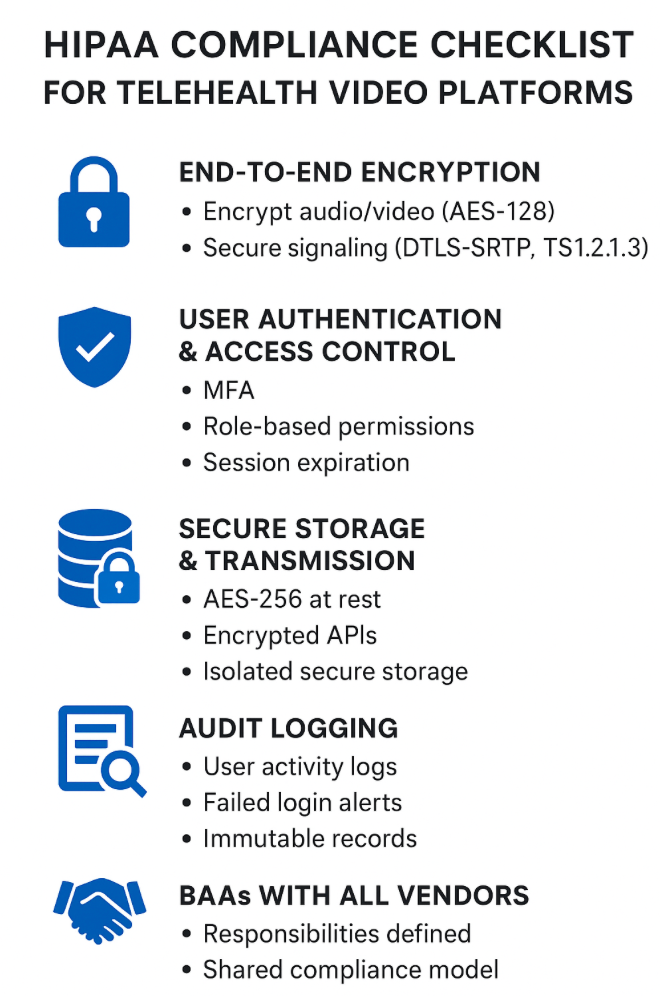
In the context of video consultations, HIPAA compliance means ensuring that audio, video, and related patient data remain confidential, tamper-resistant, and safely accessible only by authorized individuals.
A fully compliant solution must include:
- End-to-end encryption of video and audio streams: Encrypt media from device to device using protocols like DTLS-SRTP with AES-128 to prevent unauthorized interception.
- Secure user authentication and granular access control: Multi-factor authentication (MFA), session expiration policies, and role-based access minimize exposure risks.
- Encrypted data storage and secure transmission: Data at rest (recordings, logs) must be encrypted using AES-256. All data transmission channels should use HTTPS/TLS 1.2 or higher.
- Comprehensive audit logging: Maintain immutable logs of session activity, login attempts, and administrative actions for accountability.
- Signed Business Associate Agreements (BAAs): Contracts with all third-party vendors handling PHI ensure compliance responsibilities are clear.
- Organizational policies: Including breach notifications, data retention, and staff training to prevent accidental exposure.
Meeting these requirements ensures that healthcare organizations can deliver telehealth securely while maintaining patient trust and regulatory alignment.
Why Use WebRTC for HIPAA-Compliant Video?
WebRTC (Web Real-Time Communication) is the industry-standard protocol for real-time audio, video, and data transmission in browsers and apps—without additional plugins or extensions. Its architecture aligns naturally with HIPAA’s security expectations, making it an ideal foundation for telehealth applications.
Key security and performance advantages include:
- Built-in end-to-end encryption using AES-128 and the DTLS-SRTP protocol
- Secure key negotiation and integrity checks to prevent tampering
- Open-source transparency, allowing full control over security components
- Low latency, enabling responsive and natural physician-patient interactions
- Compatibility across browsers and devices, including mobile apps
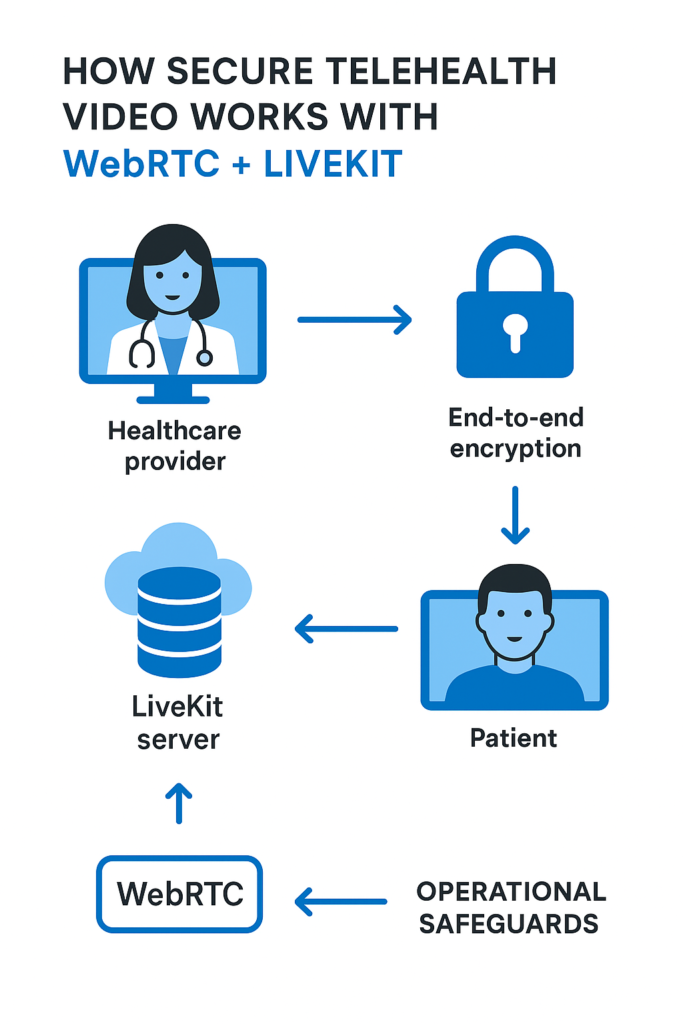
Since WebRTC encrypts media directly at the source and destination, it minimizes the risk of unprotected PHI moving through intermediate servers.
How LiveKit Supports HIPAA Compliance
While WebRTC provides secure media transport, LiveKit adds the orchestration layer needed to manage multi-participant communication, signaling, and scalability. LiveKit is designed for real-time communication at scale and includes features that make it suitable for HIPAA-eligible environments.
LiveKit’s HIPAA-focused capabilities include:
- TLS 256-bit encryption for signaling and AES-128 for media
- AES-256 encryption at rest for all stored data
- No default caching or storage of audio/video streams
- Direct storage uploads, giving developers full ownership of any recorded PHI
- Role-based access control and SSO support for secure system access
- SOC 2 Type II compliance and GDPR-aligned practices
- Availability of Business Associate Agreements (BAAs)
Together, WebRTC and LiveKit form a secure and flexible foundation for compliant telehealth platforms — covering both media-level and infrastructure-level protections.
Building a HIPAA-Compliant Video Consultation Platform: Key Components
To achieve full HIPAA compliance, healthcare systems must integrate several technical and operational elements into the telehealth solution:
| Component | Description | Best Practices |
| Encryption | Secure video, audio, and signaling data | Use AES-128 for media, DTLS-SRTP, and TLS 256-bit |
| Authentication | Authorized access control | Implement MFA and role-based permissions |
| Data Storage | Safeguard recordings and metadata | Encrypt at rest with AES-256, apply retention policies |
| Network Security | Protect backend infrastructure | Employ firewalls, VPNs, intrusion detection |
| Monitoring & Auditing | Log and review all PHI-related activity | Maintain immutable audit logs, conduct regular reviews |
| Business Associate Agreements (BAAs) | Formalize HIPAA responsibilities | Sign BAAs with all PHI-handling vendors |
These components must be carefully combined to ensure secure, reliable telemedicine operations.
Benefits for Customers Using WebRTC and LiveKit for Telehealth
Integrating WebRTC and LiveKit offers several advantages that directly support both compliance and user experience:
- Reduced development complexity thanks to LiveKit’s scalable infrastructure
- High-quality, low-latency video for clinical accuracy
- HIPAA-eligible design backed by audited security practices
- Easy integration with existing healthcare systems
- Continuous platform monitoring with minimal downtime risks
This combination offers a foundation that is both secure and flexible, making it ideal for telehealth providers of any size.
Why Trembit Is a Relevant and Reliable Partner
Choosing the right technology is only half of the equation — executing a secure and compliant implementation requires deep expertise. Trembit is a development partner with extensive experience in real-time communication, WebRTC engineering, and healthcare-focused platform development.
What makes Trembit uniquely suited for HIPAA-compliant telehealth projects?
✔ Proven WebRTC and LiveKit Expertise
Trembit has delivered numerous WebRTC-based video platforms, including telemedicine solutions, e-learning systems, and large-scale conferencing tools. Their team understands how to configure LiveKit for optimal performance, low latency, and strong security.
✔ Strong Healthcare Domain Knowledge
Trembit has worked with systems handling PHI and understands the rigorous requirements of HIPAA, including encryption, access controls, audit trails, and data lifecycle policies.
✔ Security-First Development Practices
From architecture design to deployment, Trembit follows secure coding standards, infrastructure hardening, and continuous security reviews—minimizing risks throughout the project lifecycle.
✔ Reliable, Flexible Collaboration
Whether your organization needs full platform development, architecture consulting, or integration with existing healthcare systems, Trembit adapts to your operational needs and ensures a smooth development process.
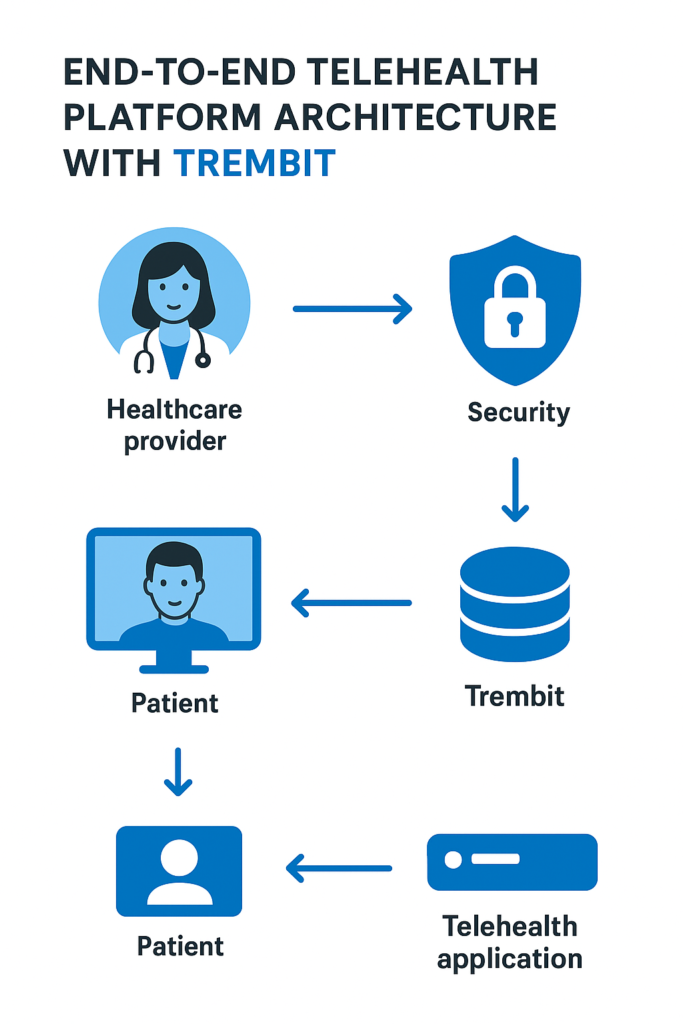
With Trembit as a partner, healthcare providers gain confidence that their telehealth solution is not only compliant and secure but also scalable, user-friendly, and built for long-term success.
Summary for Healthcare Providers
Building a HIPAA-compliant video consultation platform requires a precise combination of secure technology, reliable infrastructure, and expert implementation. For a real-world example, see how we did exactly this at scale in our Cloudbreak healthcare video translation case study. WebRTC ensures encrypted, low-latency communication, LiveKit provides a scalable and HIPAA-eligible platform, and Trembit delivers the experience needed to integrate these technologies into a fully compliant solution.
With the right tools and a trusted development partner, healthcare organizations can expand their virtual care offerings, protect patient privacy, and maintain regulatory adherence — all while delivering a seamless telemedicine experience for patients and providers.
If you want to begin architecting or enhancing your HIPAA-compliant telehealth platform with WebRTC and LiveKit, Trembit can help bring your vision to life with secure, reliable, and expertly engineered solutions.
Frequently Asked Questions
Is WebRTC HIPAA compliant?
WebRTC itself isn’t “HIPAA compliant” — it provides mandatory transport encryption (DTLS-SRTP). HIPAA compliance depends on your full deployment: access control, audit logging, encryption at rest, and BAAs.
Is DTLS-SRTP enough for HIPAA?
No. DTLS-SRTP encrypts media in transit, but HIPAA also requires access control, audit logging, encryption at rest, and Business Associate Agreements.
Does LiveKit sign a BAA?
LiveKit can be self-hosted, in which case BAA obligations sit with your own infrastructure providers (such as your cloud host). If you use a managed LiveKit offering, confirm BAA availability with the vendor directly.
Can you record HIPAA-compliant video calls?
Yes — if recordings are encrypted at rest, access-controlled, retained according to policy, and covered by a BAA with the storage provider.
Where can PHI video be stored?
In encrypted, access-controlled storage covered by a BAA — for example, a HIPAA-eligible cloud service configured correctly. The location must be governed, logged, and access-restricted.