In today’s fast-paced digital landscape, businesses must continuously optimize their workflows to remain competitive. AI-powered workflow automation transforms how organizations handle repetitive tasks, freeing employees to focus on strategic, high-value work. From data processing to customer interactions, AI-driven automation drives business operations more efficiently, accurately, and intelligently.
Beyond productivity, this directly lowers operating costs — we break down the cost-saving benefits of AI in business process automation.

Why AI-Powered Automation?
Traditional automation tools have helped businesses streamline processes. However, they often require rigid rules and manual oversight. AI takes automation to the next level by integrating machine learning and natural language processing to make real-time, intelligent decisions. For businesses, it means they can move beyond simple task automation and leverage AI for dynamic, adaptive workflows.
Key Benefits of AI in Workflow Automation
1. Eliminating Repetitive Tasks
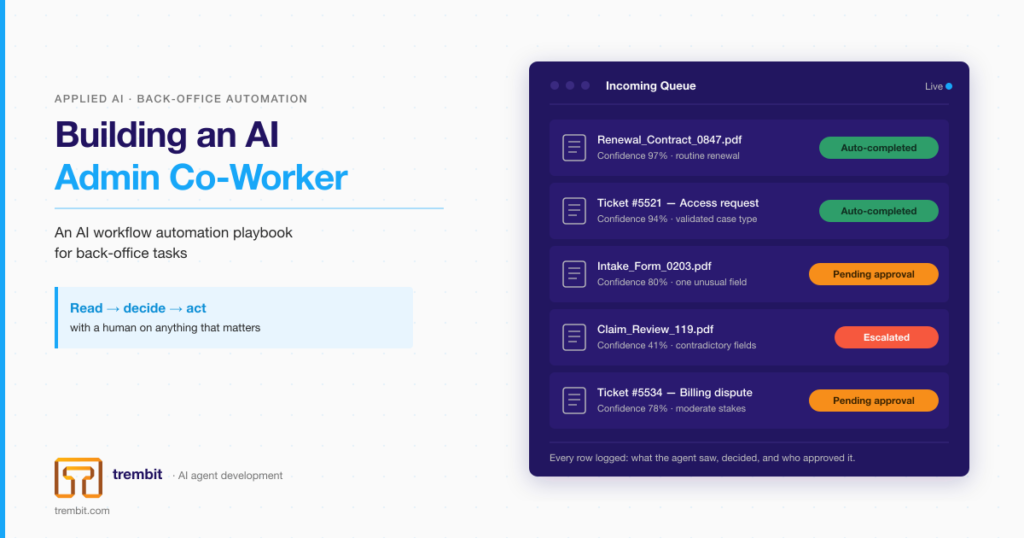
Routine tasks like data entry, invoice processing, and email sorting consume valuable time and energy. AI-powered bots can precisely handle these tasks, reducing human intervention and minimizing errors. For example, AI-driven document processing tools can extract data from invoices and update accounting systems without manual input.
2. Enhancing Decision-Making
AI doesn’t just execute tasks—it learns from data and identifies patterns to provide actionable insights. Predictive analytics can help businesses anticipate demand, optimize resource allocation, and improve customer experiences. For instance, AI can analyze past project timelines to predict potential delays and suggest adjustments.
3. Streamlining Communication and Collaboration
AI-powered chatbots and virtual assistants improve internal communication by automating responses to common queries. Whether it’s an HR chatbot managing leave requests or an AI assistant scheduling meetings, these tools reduce back-and-forth interactions, allowing teams to focus on critical work.
4. Automating Customer Interactions
Customer support is a prime candidate for AI automation. AI-driven chatbots can resolve customer queries in real-time, analyze sentiment, and escalate issues to human agents when necessary. By integrating AI into customer service workflows, businesses can ensure faster response times and higher customer satisfaction.
5. Intelligent Process Optimization
AI can optimize business operations by continuously analyzing workflow efficiency. For example, AI-powered systems can monitor employee productivity, identify bottlenecks, and suggest improvements. It helps businesses refine their processes and achieve maximum efficiency.
Real-World Use Cases

Automated IT Support
AI-driven IT support bots can troubleshoot issues, reset passwords, and provide solutions without human intervention. It reduces downtime and allows IT teams to focus on more complex technical challenges.
AI-Powered Recruitment
HR teams use AI to screen resumes, schedule interviews, and assess candidate suitability through predictive analytics. It accelerates the hiring process and ensures better talent acquisition decisions.
Financial Workflow Automation
AI automates financial reporting, fraud detection, and compliance monitoring. By real-time analysis of transaction data, AI can flag suspicious activities and enhance secure income.
How to Implement AI-Powered Automation
1. Identify High-Impact Areas
Begin by analyzing your business processes to identify repetitive and time-consuming tasks that are feasible to automate.
2. Choose the Right AI Tools
Various AI automation tools, such as n8n, UiPath, and Microsoft Power Automate, are available. Selecting the right tool depends on your business needs and integration requirements.
3. Integrate AI with Existing Systems
Seamless integration with existing tools like CRM, ERP, and communication platforms ensures smooth AI adoption without disrupting operations.
4. Continuously Monitor and Optimize
Monitor AI-driven workflows regularly to improve efficiency. Machine learning models refine themselves over time, so businesses must evaluate performance and make necessary adjustments.
The Future of AI Automation
As AI technology advances, businesses will see even greater efficiencies through hyper-automation, where AI, robotic process automation (RPA), and analytics work together to create fully autonomous workflows. Companies that invest in AI-powered automation today will gain a competitive edge by boosting productivity, reducing costs, and unlocking new business opportunities.
Are you ready to automate and optimize your workflows? Trembit specializes in AI-driven solutions that help businesses transform their operations. Contact us today to explore how AI-powered automation can elevate your business processes.