In 2025, AI voice agents no longer represent futuristic concepts—forward-thinking organizations embed them into daily operations. These agents have evolved from passive transcription tools into context-aware collaborators, capable of managing real-time dialogue, summarizing decisions, and connecting seamlessly with enterprise systems.
How Enterprises Can Leverage AI Voice Agents
AI Voice Agents are rapidly becoming essential tools for modern enterprises, enabling smarter, faster, and more scalable communication. These agents can participate in meetings, assist with customer support, automate internal workflows, and provide real-time insights by understanding natural speech and context.
Key Use Cases:
- Meeting Intelligence: Agents can join calls to transcribe, summarize, and highlight key decisions or action items—freeing teams from manual note-taking.
- Customer Support: Voice agents handle routine inquiries, escalate complex cases, and operate 24/7 without compromising service quality.
- Sales & CRM Integration: AI can update CRM systems based on conversations, suggest next steps, and track leads more effectively.
- Employee Assistance: Internal voice bots help staff schedule meetings, retrieve documents, or get instant answers from corporate knowledge bases.
Why invest: Enterprises that invest in AI Voice Agents gain productivity, consistency, and scalability. Whether buying a ready-made solution or building a tailored system, these agents reduce operational overhead, improve decision-making speed, and enhance the employee and customer experience. With secure infrastructure, flexible integration options, and rapidly evolving AI models, now is the time for companies to integrate voice agents into their digital transformation strategy.
What’s Available Today: The Rise of Real-Time Voice Collaboration
Various AI voice solutions are now available, supporting everything from live meeting participation to post-call analytics. These systems are changing how teams collaborate, driving efficiency and freeing human attention.
Key Capabilities in the Market:
- Live Transcription + Smart Summaries: Tools like Otter.ai, Airgram, and Fireflies automatically transcribe meetings and generate actionable summaries.
- Conversational Meeting Agents: Products such as Zoom AI Companion, Microsoft Copilot, and Google Duet AI integrate directly into meetings, offering contextual support and follow-up actions.
- Custom Voice Profiles: APIs from AssemblyAI and Speechly allow businesses to tailor agents to specific industries or roles.
- Knowledge-Connected Assistants: Enterprises use solutions powered by OpenAI, Mistral, or Claude to build voice agents that access internal databases, CRMs, or knowledge graphs securely.
- Background Operation: Silent agents track tasks, highlight decisions, and deliver recaps without interrupting live discussions.
Going Deeper: What Powers Enterprise-Grade Voice Agents
Behind every real-time AI voice agent lies a sophisticated blend of infrastructure, streaming technology, speech intelligence, and user experience design. To function seamlessly during live meetings, calls, or workflow automation, these agents must rely on carefully orchestrated backend systems and thoughtfully designed interfaces.
Let’s break down the core components that enable reliable, high-performing voice assistants in the enterprise environment.
Real-Time Infrastructure for Enterprise-Scale AI
Deploying AI Voice Agents at an enterprise scale goes far beyond building intelligent algorithms—it requires a resilient, secure, and responsive infrastructure capable of handling real-time audio, dynamic interactions, and continuous learning. Enterprises must support thousands of concurrent users, integrate with diverse IT environments, and meet strict data governance and compliance requirements.
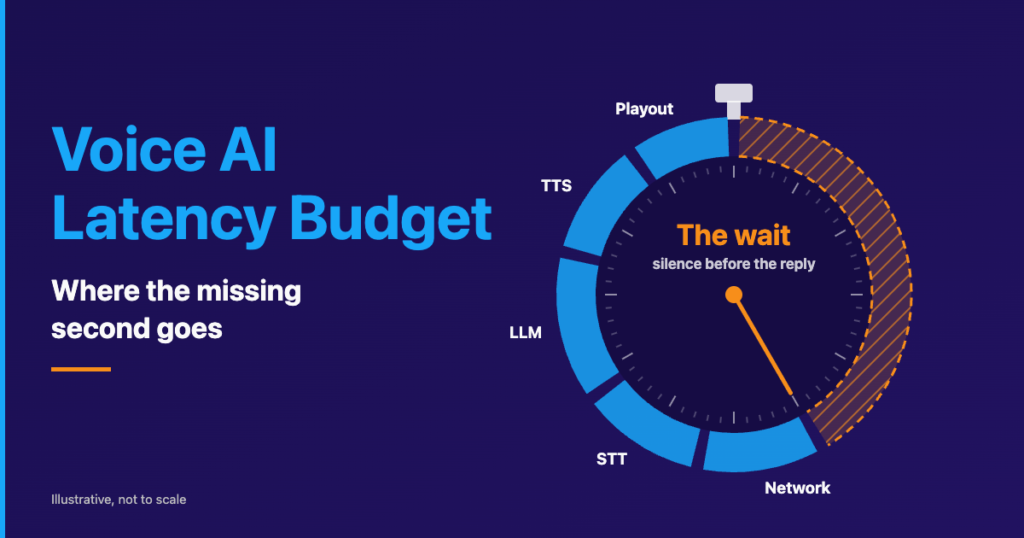
For voice agents to perform reliably in live meetings, customer calls, and operational workflows, the underlying infrastructure must deliver low latency, high availability, and scalable computing across global deployments.
Standard Infrastructure Patterns Include:
- Cloud-Native & Hybrid Deployment: Most enterprise AI deployments rely on AWS, Azure, or Kubernetes-based setups for flexible scaling and secure operations.
- Multi-Tenant Architecture: Logical and physical separation ensures secure, scalable operation across customers or business units.
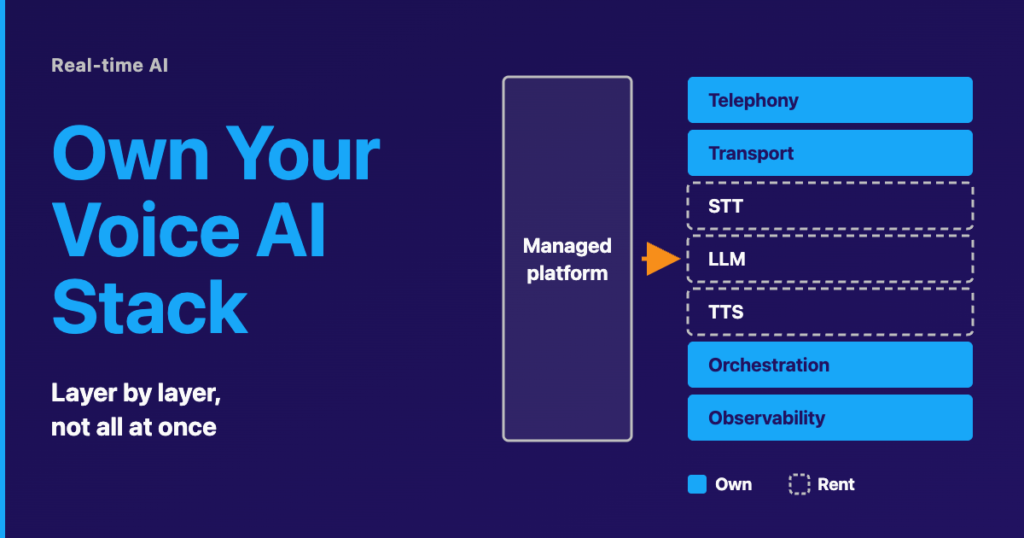
- Flexible LLM Support: Infrastructure must support different large language models (e.g., GPT-4 Turbo, Claude 3, Mistral) and private deployments for sensitive or regulated environments.
Why It Works: Optimized Streaming and Voice Tech
High-performance media processing forms the real-time core of every voice agent. From capturing live audio to producing real-time responses, media infrastructure determines whether the agent enhances or disrupts the conversation.
- Streaming Protocols: Technologies like WebRTC, SRTP, and RTCP ensure encrypted, low-latency audio transmission across platforms like Zoom, Teams, and custom apps.
- Speech Tech Leaders: Tools such as Deepgram, Google STT, Whisper, and ElevenLabs provide fast, accurate speech-to-text, voice recognition, and synthesis capabilities.
- Custom Pipelines: Enterprises often integrate with FFMPEG, GStreamer, or custom processing chains to adapt to advanced or domain-specific audio scenarios
UX-Driven AI Integration
A voice agent only delivers value when users trust and adopt it. That’s why thoughtful UX is as important as backend performance. The agent must blend into the user’s environment, act when appropriate, and stay invisible when not needed.
- Context-Aware Interfaces: Seamless integration with communication platforms like Slack, Zoom, and Teams keeps the agent accessible without disruption.
- Role-Aware Interactions: Voice agent behavior adapts to the user’s role—offering relevant insights, summaries, or follow-up tasks based on context.
- Progressive Exposure: New features roll out gradually, encouraging user adoption without overwhelming first-time users.
Why Trembit?
While the AI voice market bears impressive tools and platforms, Trembit stands out as a strong engineering partner for businesses seeking custom, secure, and scalable solutions.
With over a decade of experience in real-time video, speech processing, and enterprise systems integration, Trembit specializes in building platforms where voice agents thrive—from WebRTC audio pipelines to LLM-powered conversation orchestration.
Areas of expertise:
- Real-time collaboration systems (Teams, Zoom, custom WebRTC apps)
- Secure media streaming and multi-tenant infrastructure
- LLM integration with OpenAI, Claude, and custom models
- Speech technology using Deepgram, Whisper, Google STT
- Cloud-native deployments (AWS, Azure, Kubernetes)
- Flexible APIs and third-party integration (Slack, Notion, Monday.com)
Whether you are prototyping a vertical-specific voice agent or scaling a collaboration tool to thousands of users, Trembit can provide the technical foundation and domain insight needed to execute successfully.
Let us Build the Future of Collaboration.
AI voice agents are no longer optional—they are quickly becoming essential tools for productive, efficient, and intelligent collaboration. The technology is mature, the infrastructure is proven, and the opportunities are wide open.
If your team is exploring how to bring AI agents into your product, platform, or workplace, now is the time to build—and the right partners make all the difference.