Voice AI Agents

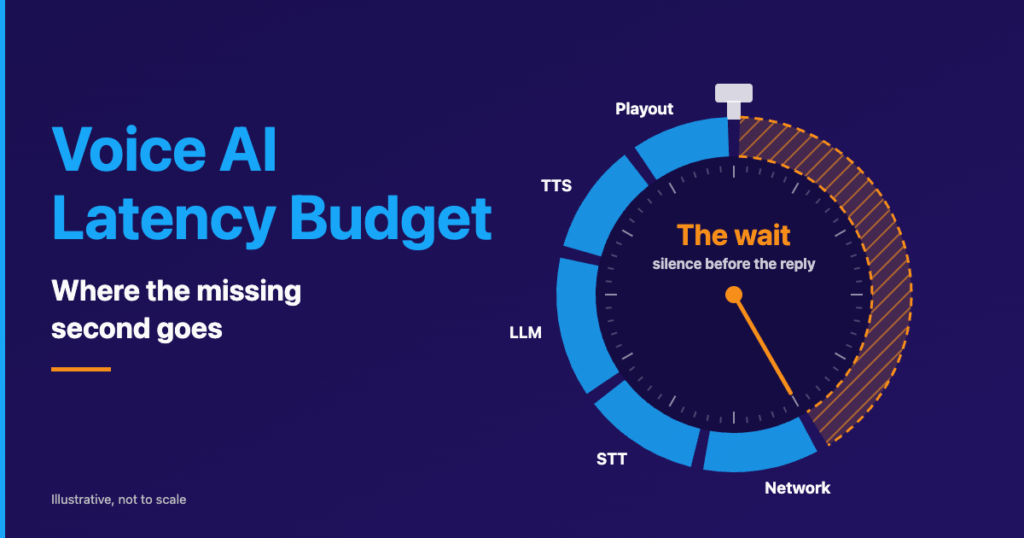
Voice AI Latency: A Stage-by-Stage Budget and Where the Missing Second Hides

Voice AI Latency: A Stage-by-Stage Budget and Where the Missing Second Hides

A stage-by-stage voice AI latency budget: endpointing, STT, LLM, TTS, transport and telephony, where the extra second hides, and how to claw it back.

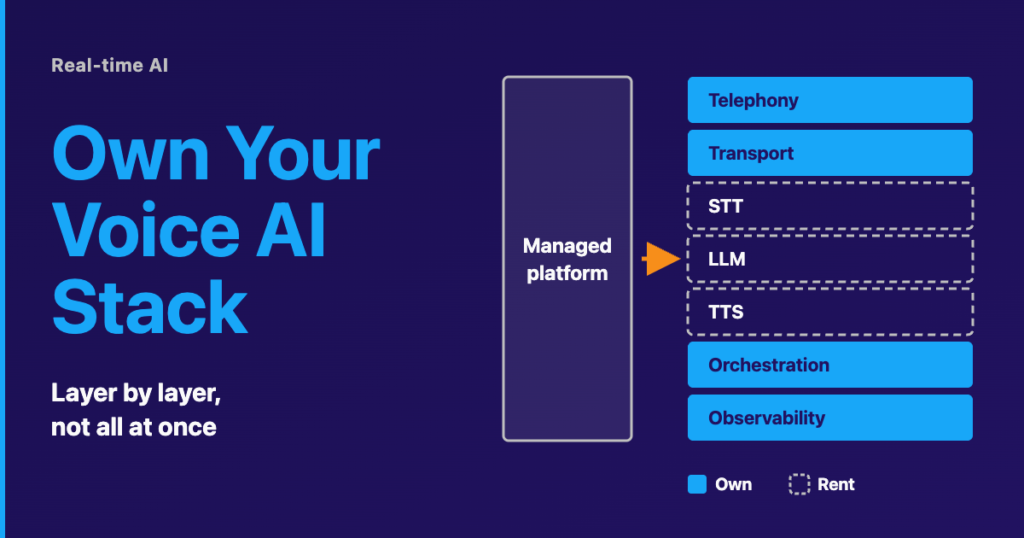
Vapi and Retell Alternatives: When to Leave a Voice AI Platform and Own the Stack

Vapi and Retell Alternatives: When to Leave a Voice AI Platform and Own the Stack

Looking for a Vapi or Retell alternative? Signals it’s time to leave, what owning the voice stack means layer by layer, and how to migrate safely.

Voice AI Agent Development Companies (2026): Integrators vs Platforms

Voice AI Agent Development Companies (2026): Integrators vs Platforms

Voice AI agent development companies compared for 2026: platforms (Vapi, Retell, LiveKit) vs integrators, telephony, compliance and named proof.

Pipecat vs LiveKit Agents: Which Is Right for You?

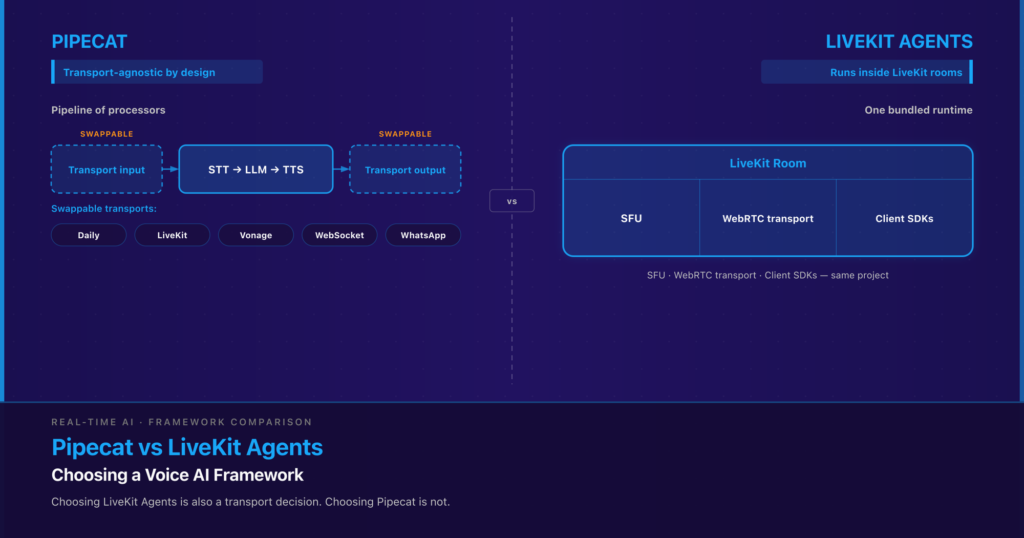
Pipecat vs LiveKit Agents: Which Is Right for You?

Pipecat vs LiveKit Agents: the real architectural difference — transport-agnostic pipeline vs bundled LiveKit stack — and how to choose.

Cost of Running a Voice AI Platform: A Full-Stack Cost Breakdown

Cost of Running a Voice AI Platform: A Full-Stack Cost Breakdown

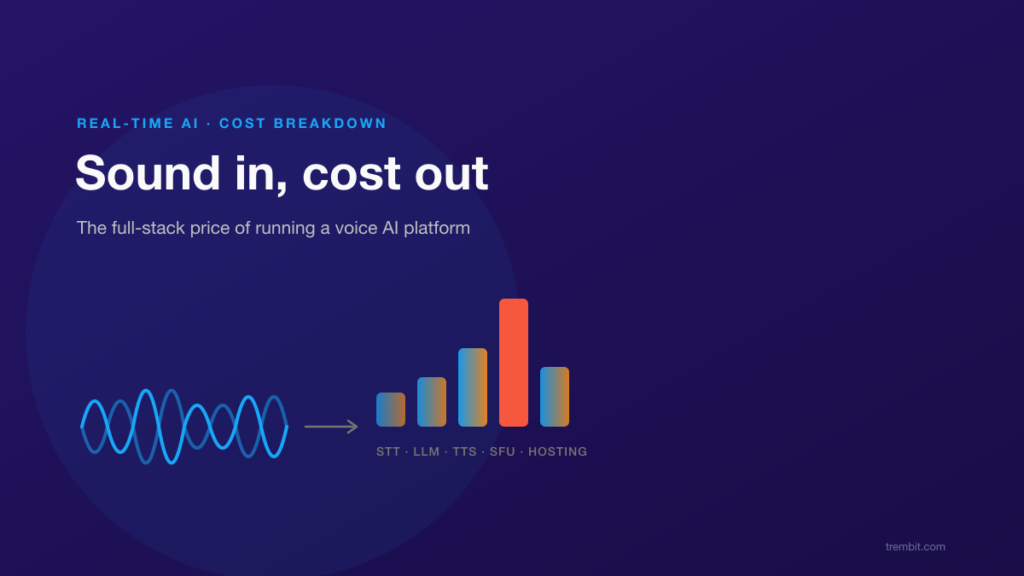
Running a voice AI platform in production means paying for five things every call touches: the WebRTC/SFU transport layer that carries the audio, speech-to-text (STT), the LLM that decides what to say, text-to-speech (TTS), and the hosting, bandwidth, and observability underneath all of it. Most public cost breakdowns only price the AI components and quietly […]

OpenAI Realtime API + WebRTC in Production (2026): What Works, What Breaks, and the HIPAA Audio Gap

OpenAI Realtime API + WebRTC in Production (2026): What Works, What Breaks, and the HIPAA Audio Gap

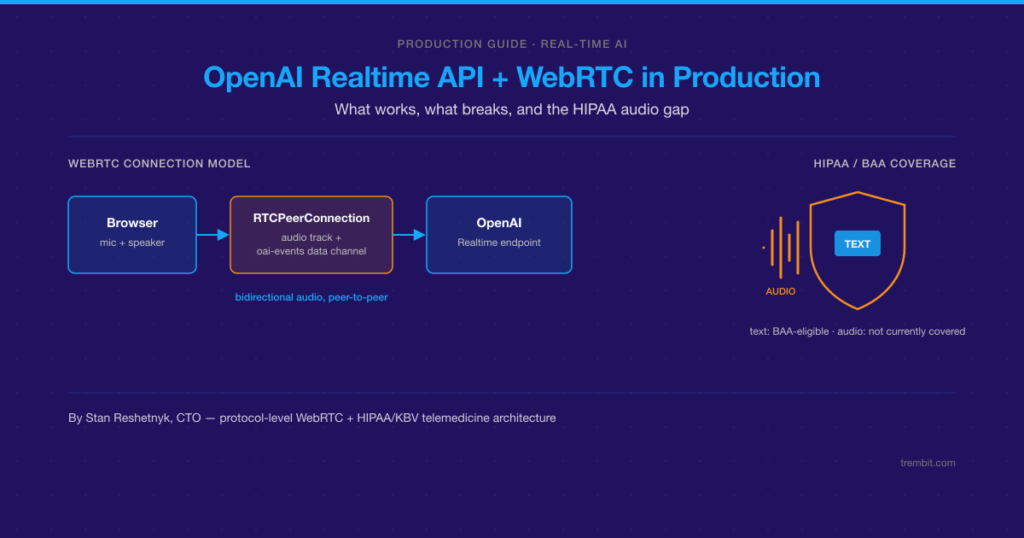
Updated September 2026. The current realtime models are gpt-realtime-2 and its July 2026 update gpt-realtime-2.1, released together with a smaller gpt-realtime-2.1-mini. In the browser, OpenAI’s WebRTC guide now mints an ephemeral key via /v1/realtime/client_secrets and exchanges SDP with /v1/realtime/calls, or lets your server relay the SDP instead (what OpenAI calls the unified interface). If you are working from […]

Building a Voice AI Agent on WebRTC: Latency, Barge-In, Turn-Taking and Testing

Building a Voice AI Agent on WebRTC: Latency, Barge-In, Turn-Taking and Testing

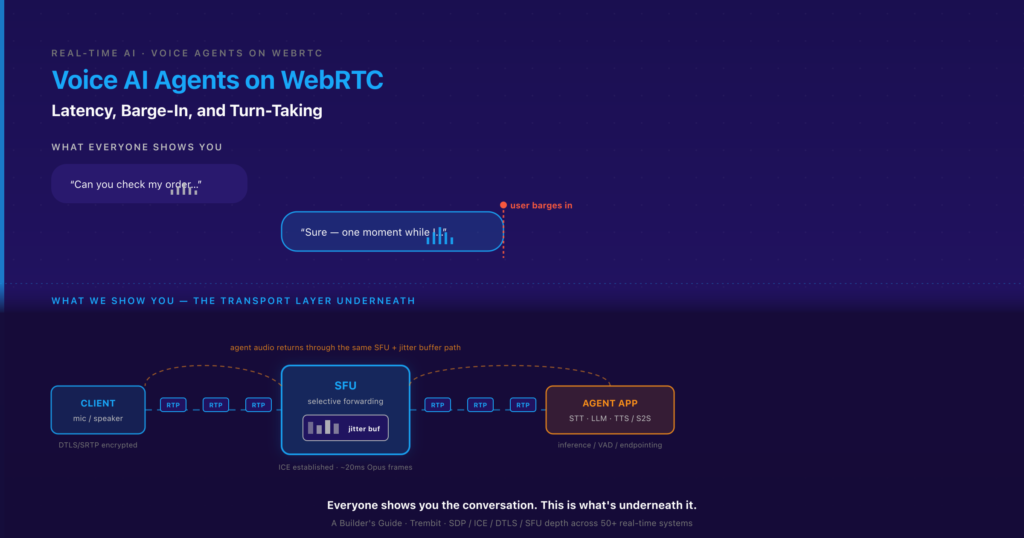
A voice AI agent on WebRTC runs inside one live, two-way media session. The user’s microphone streams up as an audio track, the agent’s synthesized speech streams back as another, and control events travel alongside. Between the two tracks sits either a cascaded STT → LLM → TTS chain or a native speech-to-speech model. Whether […]

From Human-to-Human Calls to Human-to-AI Sessions: What Changes in Your Video Stack

From Human-to-Human Calls to Human-to-AI Sessions: What Changes in Your Video Stack

Video conferencing architecture spent a decade optimizing for one assumption: every participant is human. SFU routing, session management, and resource allocation all evolved around this human-centric model. Then AI participants arrived, and the architectural foundations cracked. AI agents don’t behave like humans. They stay connected for hours without breaks. They process audio in milliseconds. They […]

AI Voice Agents That Collaborate and Contribute

AI Voice Agents That Collaborate and Contribute

In 2025, AI voice agents no longer represent futuristic concepts—forward-thinking organizations embed them into daily operations. These agents have evolved from passive transcription tools into context-aware collaborators, capable of managing real-time dialogue, summarizing decisions, and connecting seamlessly with enterprise systems. How Enterprises Can Leverage AI Voice Agents AI Voice Agents are rapidly becoming essential tools […]