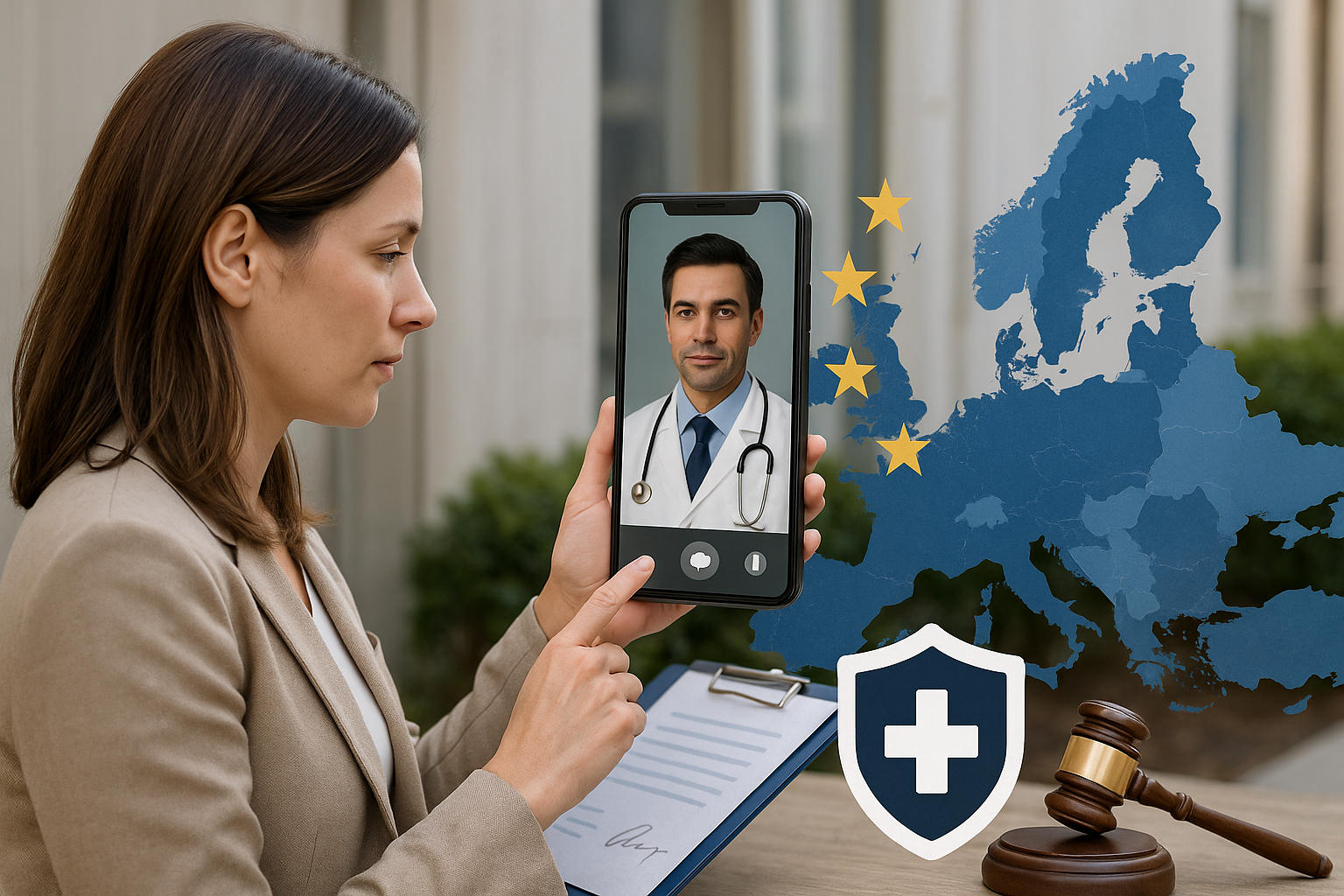
As digital healthcare accelerates across Europe, developers building telemedicine platforms – especially mobile and web applications – face the challenge of navigating a growing landscape of regulations. Crafting a compliant healthcare app goes beyond ticking legal boxes; it requires building trust, security, and usability into your product from the outset.
This guide unpacks the current European regulatory landscape for telemedicine and provides clear insights into what it means for app developers. Drawing on leading legal research, EU regulations, and national compliance models, we’ll help you design smart, safe, and regulation-ready health apps.
The EU Legal Framework for Telemedicine Apps
Telemedicine in Europe is governed by EU-wide regulations and national laws. However, several overarching frameworks provide the foundation for compliance. It is essential to understand the EU’s role in regulating healthcare data, digital services, and privacy protections, as well as how national regulators enforce and interpret these rules.
| Regulation | Scope | Highlights | Development |
| GDPR (General Data Protection Regulation) | Applies to personal health data, including sensitive medical info and user profiling; especially for cross-border processing. | – Explicit consent must be informed and voluntary – Privacy-by-design and by default required – Users can request data portability and erasure | – Implement transparent consent flows – Apply data minimization, encryption, and audit trails – Include user dashboards for managing data rights |
| ePrivacy Directive(Soon to be a Regulation) | Covers electronic communications (calls, chats, metadata) in digital services including telemedicine. | – Confidentiality of all communications (e.g., chats, calls) – Explicit cookie consent – Metadata (e.g., duration, timestamps) must be processed lawfully | – Use secure, end-to-end encrypted communication tools – Implement cookie banners that comply with national laws (e.g., France, Spain) |
| European Health Data Space (EHDS)(Upcoming Regulation) | Enables cross-border access and use of health data; promotes standardized data formats and interoperability across EU health systems. | – Use of standardized data formats like HL7 FHIR – Increased patient control over data sharing and consent – Interoperability required between systems across member states | – Build APIs supporting HL7 FHIR and consent portability – Prepare for EU-wide interoperability mandates – Enable both primary and secondary health data use |
Country-Specific Rules to Watch
National regulators often impose additional requirements that go beyond the EU-wide framework. App developers must stay updated on the specific compliance demands within each country to ensure their apps meet local requirements.
- Germany (KBV): Telemedicine platforms that provide video consultations must use approved providers listed by the KBV (German Association of Statutory Health Insurance Physicians). Additionally, servers hosting health data must be located within Germany or the EU. Digital health apps must be certified and DiGA-listed to qualify for reimbursement under Germany’s healthcare system.
- France (CNIL): The CNIL (French Data Protection Authority) mandates that health apps notify or register with the agency if they are handling sensitive health data. Apps are also required to notify the CNIL in case of a data breach within 72 hours, and high-risk processing activities (such as using AI to analyze health data) may require prior approval.
- Netherlands (NEN 7510): This regulation establishes strict security and privacy requirements for managing health data. Any health-related apps in the Netherlands must comply with NEN 7510, which outlines essential security measures, including encryption and access control policies.
- Italy (Garante): Italy imposes stringent rules on the processing of health data, including the need for explicit informed consent for behavioral or biometric data collection. Apps must also comply with data retention rules and use only certified cloud service providers for storing health data.
- Spain (AEPD): The Spanish Data Protection Agency (AEPD) has a particular focus on obtaining explicit consent, especially when dealing with minors or vulnerable populations. Apps that collect or process health data must implement rigorous consent management processes.
- UK (post-Brexit): The UK operates under a separate regulatory framework post-Brexit, including UK-GDPR for data protection and specific NHS standards for healthcare apps. Only NHS-approved APIs and hosting solutions can be used in health-related applications.
How to Build a Regulation-Ready Telemedicine App
Understanding the regulations is the first step, but how can you translate this into practical development strategies? Here’s a roadmap to build a telemedicine app that’s both compliant and user-friendly.
- Embed Consent and Transparency into UX
- Granular Consent Options: For features like video consultations, location tracking, or wearable integration, users should be able to opt in and opt out with a clear understanding of what their consent means.
- Data Summaries & Export Options: Allow users to view summaries of the data collected and provide simple mechanisms for downloading or exporting their information.
- Revocation of Consent: Users should be able to withdraw consent at any time, and this action should not prevent them from accessing critical health services.
- Prioritize Security Architecture
- End-to-end Encryption: Ensure all communications, including video calls and text messages, are encrypted end-to-end to protect patient privacy.
- Multi-Factor Authentication (MFA): Implement MFA for accessing sensitive data or features, and use device attestation to ensure security at the hardware level.
- Secure Cloud Hosting: Choose cloud service providers that are certified for health data security (e.g., ISO 27001) and adhere to local compliance standards (e.g., HDS certification in France).
- Plan for Interoperability from Day One
- Structured Healthcare Standards: Ensure that your app supports widely used healthcare standards like HL7 FHIR and SNOMED CT for data sharing.
- Integration with National EHR Systems: Start by building integrations with national Electronic Health Record (EHR) systems as pilot cases for future scalability.
- Adherence to Local Hosting and Retention Rules: Consider country-specific hosting regulations and retention periods for health data (e.g., in Germany or Italy).
- Validate All Vendors and APIs
- Data Processing Agreements (DPAs): Ensure that third-party SDKs, APIs, or services provide DPAs that comply with GDPR and other relevant laws.
- Avoid Non-GDPR-Compliant Services: Be cautious when working with US-based services unless they explicitly support GDPR-compliant data processing and EU data residency.
- Prepare for Certification Pathways
- Germany’s DiGA Certification: If targeting the German market, prepare for the DiGA certification to enable reimbursement.
- Consult with National Authorities: In countries like France or Italy, consult with national data protection agencies before implementing high-risk data processing technologies, such as AI.
- CE Marking for Medical Devices: If your app involves medical functionalities, ensure that it meets the requirements for CE marking under the Medical Device Regulation (MDR) for a smoother European rollout.
Conclusion: Compliance as a Feature
In Europe’s tightly regulated digital health space, compliance is not just an afterthought—it’s a cornerstone of your product’s design. By incorporating transparent data handling practices, secure communications, and adherence to local rules, you not only meet regulatory standards but also build trust with your users, paving the way for broader market access.
Need Help?
At Trembit, we specialize in developing secure, regulation-ready mobile and web healthcare apps. Our portfolio includes telehealth solutions that meet GDPR, NEN 7510, and national guidelines. For example:
- WebPRAX Face2Face: A KBV-certified video conferencing solution for psychotherapists, enabling GDPR-compliant online therapy through secure doctor–patient video chat.
- Stusan: A HIPAA-, GDPR-, and KBV-compliant P2P video platform tailored for group telemedicine. Includes healthcare-focused features like e-prescriptions, meeting calendars, and whiteboards for clinical collaboration.
Whether you’re scaling within a single EU country or planning a cross-border rollout, we help you navigate the complexities of compliance with actionable development roadmaps.