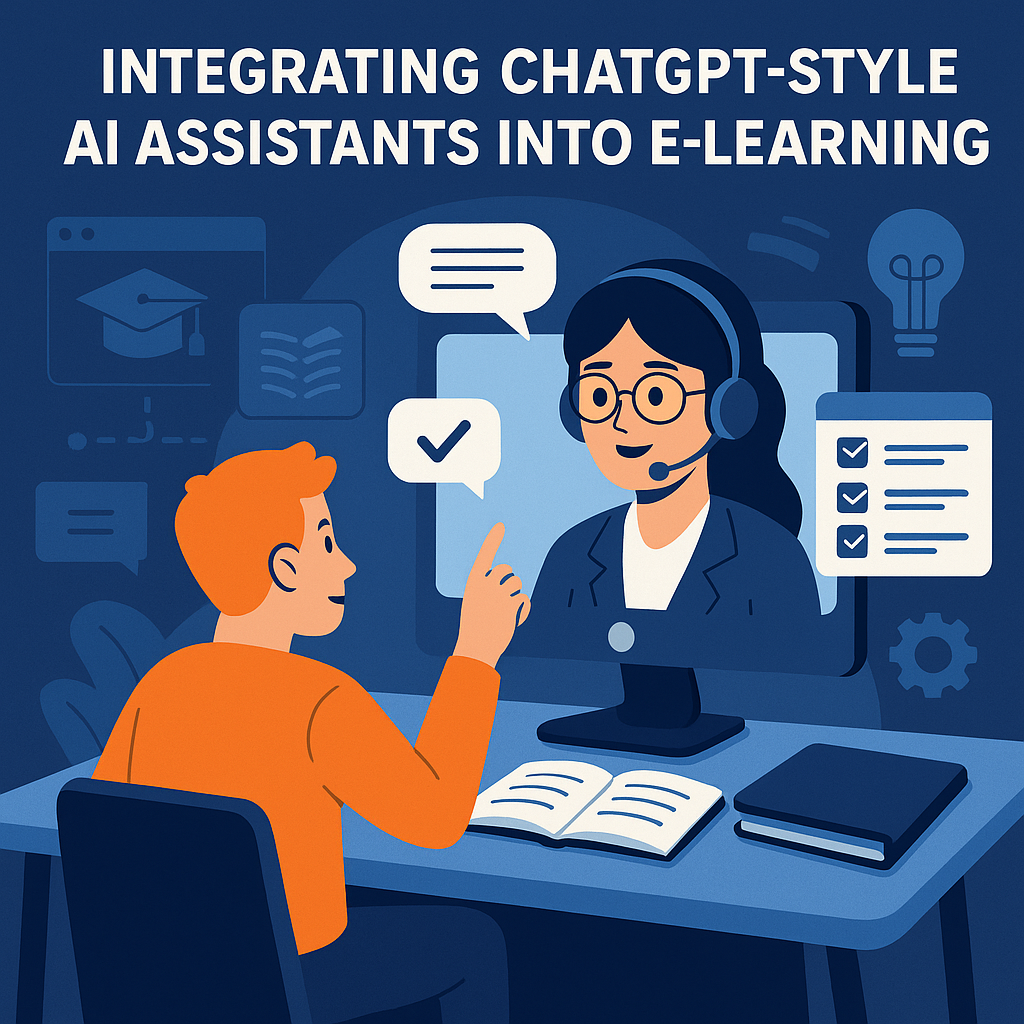
E-learning is entering a new era—one defined by the seamless fusion of human instruction and artificial intelligence. ChatGPT-style AI assistants are reshaping how students interact with digital education platforms. They can explain difficult concepts, adapt lessons to individual learning speeds, and provide instant support around the clock.
At the heart of this transformation stands Trembit, a technology partner helping education providers integrate intelligent chatbots and conversational systems that enhance learning outcomes while preserving data privacy, accessibility, and reliability. Drawing from multiple successful deployments, Trembit enables clients to accelerate the adoption of smart AI assistants tailored for real-world classroom and corporate learning environments.
The Momentum Behind AI in Education
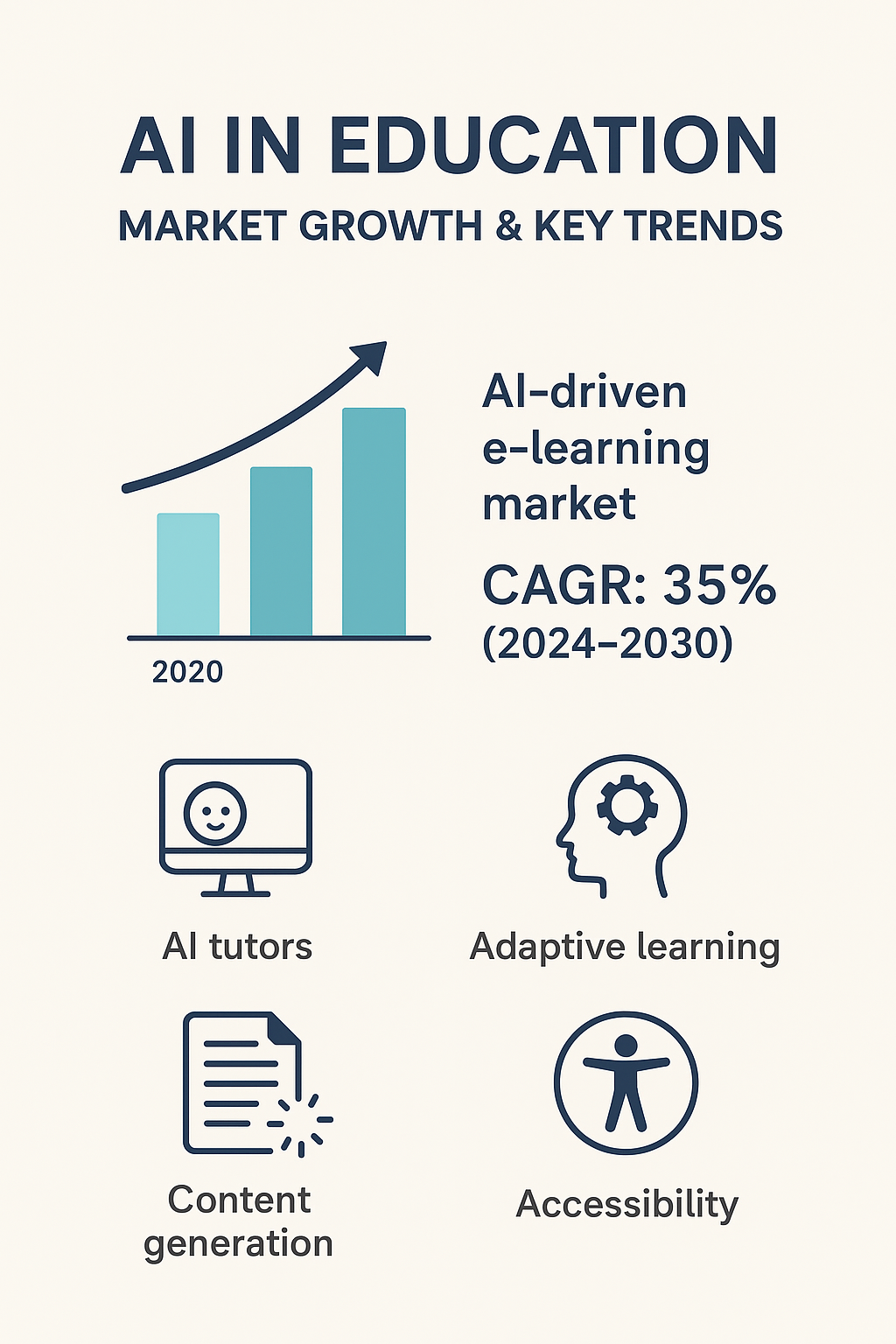
The global e-learning market is expected to exceed $500 billion by 2030, with AI being its fastest-growing segment. Leading institutions and EdTech companies are investing heavily in conversational AI to create personalized, engaging learning journeys.
Recent trends show that:
- AI tutors are being used for self-paced learning and exam preparation.
- Adaptive learning systems dynamically adjust difficulty based on learner performance.
- Voice and multimodal interfaces make education more inclusive, especially for children and people with disabilities.
- Generative AI is now being adopted not just for Q&A, but also for automated content generation and feedback.
Trembit’s Leading Approach to AI Integration
Trembit bridges innovation with practicality by offering education-specific conversational AI systems that seamlessly integrate into existing platforms.
Our capabilities include:
- Proven expertise in custom conversational AI for education and training.
- Smooth integration with LMS platforms, web, and mobile apps.
- Full compliance with GDPR, COPPA, and FERPA standards.
- Scalable architectures optimized for Q&A, student progress tracking, and content generation.
- End-to-end support from design and prototyping to deployment and analytics.
Trembit’s approach is built around real-world use: every assistant is trained on curriculum-aligned data, tuned for the platform’s learning goals, and monitored continuously for quality and engagement.
Industry Landscape and Competitive Strategies
The race to embed AI into education is fierce, with major players taking diverse strategic routes:
- Duolingo leverages generative AI to power “Roleplay” and “Explain My Answer,” enabling conversational practice and personalized corrections.
- Coursera has introduced AI-powered learning companions that help students summarize videos, ask contextual questions, and get personalized course suggestions.
- Khan Academy’s Khanmigo acts as a teacher’s assistant, supporting both student tutoring and educator productivity.
- IBM Watson Education focuses on AI for content curation and analytics-driven insights for administrators.
- Emerging startups are carving out niche spaces—like AI mentors for STEM problem-solving or soft-skill simulations for corporate training.
Trembit’s differentiation lies in delivering custom-built, compliant, and fully integrable solutions — unlike off-the-shelf AI assistants that often compromise privacy or adaptability.
Core Challenges in Deploying AI Assistants for E-Learning
Despite the excitement, integrating AI into educational environments involves several critical challenges:
- Data Security & Privacy: Managing sensitive learner data responsibly under strict regulations.
- Content Accuracy: Ensuring AI responses align with approved curricula and avoid misinformation.
- User Experience: Designing conversational flows that feel natural, non-intrusive, and inclusive.
- System Integration: Bridging new AI modules with existing LMS, grading, and reporting systems.
- Scalability: Maintaining high responsiveness even during exam seasons or heavy traffic periods.
Best Practices for Successful ChatGPT-Style Integration
From Trembit’s hands-on experience, successful AI assistant deployment follows these key principles:
- Use modular, API-first architectures to enable flexible updates.
- Apply multi-layered security (encryption, authentication, and consent management).
- Train models with curriculum-aligned, bias-checked datasets.
- Provide human fallback routes for complex or sensitive queries.
- Continuously analyze user feedback to refine tone and accuracy.
- Build multilingual and accessibility features from the start.
Comparison Table: AI Assistant Integration Strategies
| Approach | Pros | Cons | Trembit Differentiator |
| Off-the-Shelf AI Plugins | Fast deployment, minimal setup | Limited customization, privacy risks | Custom-built, compliant solutions |
| External API Integration | Access to top-tier models | Data transfer risk, dependency on 3rd-party uptime | On-premise or hybrid integration for data control |
| Fully Custom AI (Trembit) | Optimized, secure, and scalable | Requires expert resources | Full personalization with maximum compliance |
Trembit’s Integration Roadmap
Trembit applies a structured, step-by-step roadmap to deliver AI assistants that add measurable value to educational ecosystems:
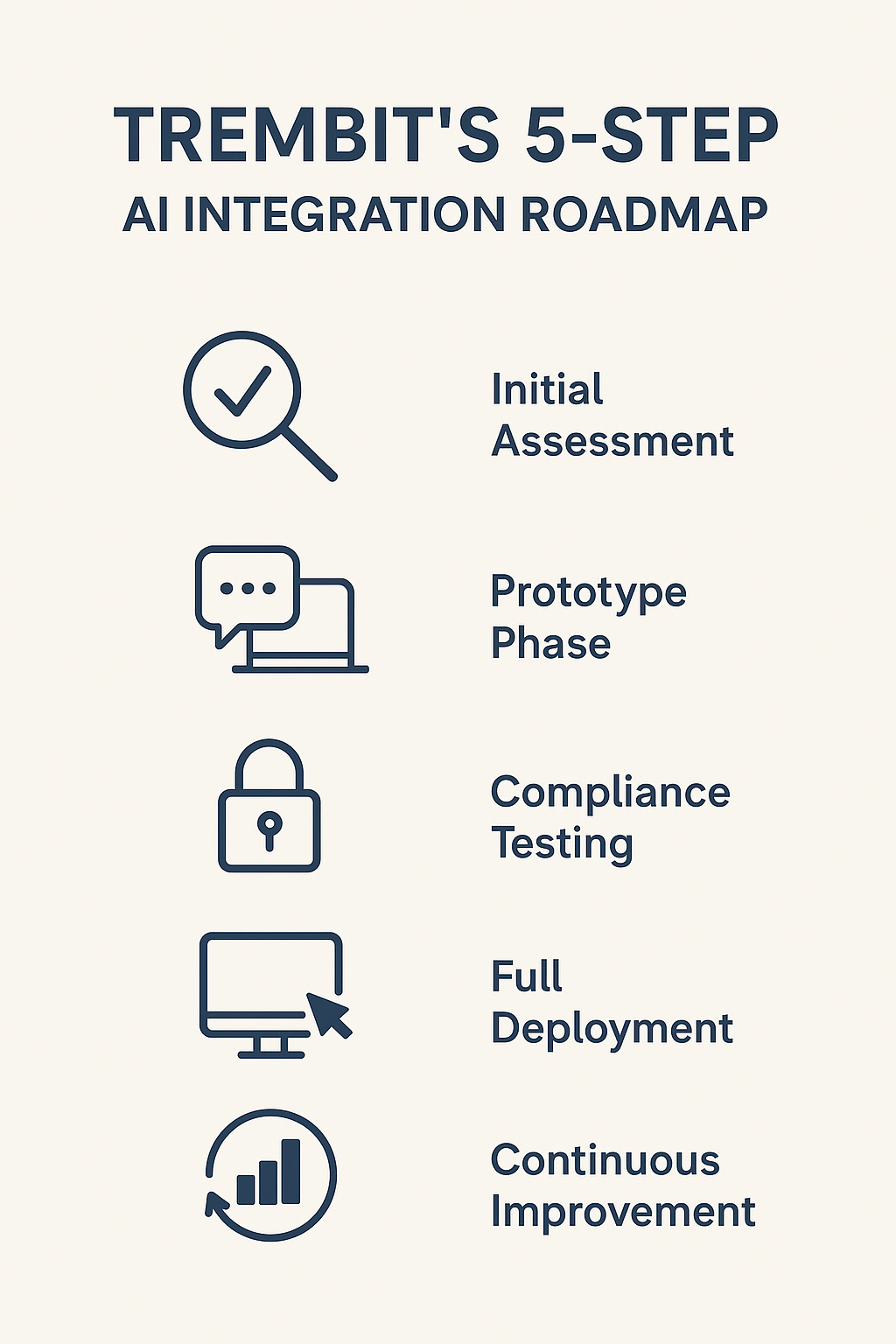
- Initial Assessment: Platform and User Needs Analysis.
- Prototype Phase: Build an MVP chatbot using real lesson content and live Q&A scenarios.
- Security & Compliance Testing: Validate adherence to GDPR, COPPA, and FERPA.
- Full Deployment: Launch the integrated assistant with analytics dashboards.
- Continuous Improvement: Update and optimize based on real user data and instructor input.
Conclusion
AI assistants are redefining the learning experience — making it more interactive, adaptive, and scalable than ever before. While many companies are experimenting with ChatGPT-style tools, Trembit’s expertise in secure, custom-built conversational AI positions it as the ideal partner for educational institutions and EdTech providers ready to embrace the next generation of intelligent learning.