The landscape of education and corporate training is evolving at a faster pace than ever. As organizations shift from traditional in-person education to digital-first models, custom Learning Management Systems (LMS) are becoming the backbone of modern learning — powering personalized pathways, rich analytics, and seamless cloud access.
In 2026, businesses, universities, and training institutions will increasingly choose custom-built LMS solutions to support large-scale digital transformation, deliver tailored learning experiences, and integrate emerging technologies such as AI, real-time analytics, and immersive content.
Why Custom LMS Development Matters in 2026
Off-the-shelf LMS platforms can be useful for basic training needs, but they often fall short when organizations require unique workflows, advanced integrations, specialized reporting, or enterprise-level scalability.
A custom LMS in 2026 allows organizations to:
- Personalize learning to individual roles and career paths
- Optimize operational workflows through deep integrations
- Maintain full control over UX, branding, and data governance
- Incorporate cutting-edge technologies, such as AI-driven recommendations, automation, and adaptive content.
This level of flexibility leads to higher learner engagement, stronger knowledge retention, and improved training ROI.
Key Benefits of Custom LMS Solutions
A custom LMS goes beyond standard course delivery. It enables organizations to build a learning ecosystem that aligns precisely with their culture, processes, and long-term goals. Below is a deeper look at the core benefits that make custom LMS development a strategic choice in 2026.
| Benefit | Description |
| Personalized Learning Paths | Custom LMS platforms allow organizations to design tailored learning journeys based on job roles, skill gaps, interests, performance data, and user behavior. This leads to higher engagement and faster skill acquisition because learners receive content that adapts to their pace and goals rather than following rigid, generic courses. |
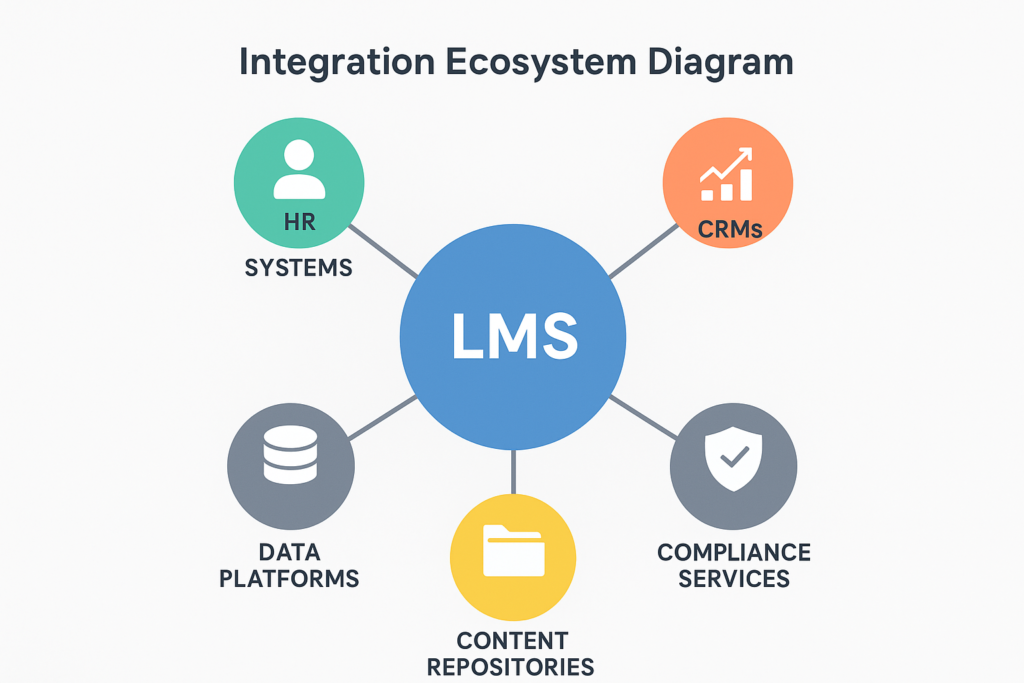
| Seamless System Integration | Businesses today rely on a wide set of digital tools — HR systems, CRMs, ERPs, content libraries, payment gateways, analytics platforms, and more. A custom LMS can integrate smoothly with existing infrastructure, enabling:automated user onboardingunified reportingsynchronized learning datareduced administrative overhead This eliminates siloed systems and creates a cohesive workflow from employee onboarding to performance evaluation. |
| Automated Compliance & Certification Management | Industries such as healthcare, finance, aviation, and manufacturing depend on strict regulatory compliance. A custom LMS can include:automated remindersrecertification alertsaudit-ready reportingcompliance dashboards Organizations reduce risk, stay aligned with evolving regulations, and maintain a transparent record of all learning activities. |
| Enhanced Branding & User Experience | Instead of forcing learners into a generic interface, custom LMS solutions fully reflect the organization’s identity — logos, colors, typography, navigation structure, and custom learning journeys. This consistency improves trust and fosters a professional, polished user experience that aligns with your brand |
| Advanced User & Role Management | Custom LMS platforms offer flexibility in defining roles such as learners, trainers, managers, external partners, and administrators. You can control access to:specific modulesconfidential training contentcustom dashboardsspecialized reporting tools This ensures users always see content relevant to their responsibilities and expertise. |
| Scalability for Growing Organizations | A custom LMS grows with the organization. Whether onboarding 100 or 100,000 users, the platform remains stable and efficient. Scalable cloud architecture supports high traffic, large content libraries, and multiple learning formats without compromising performance. |
| Data-Driven Decision Making | Analytics are at the heart of modern learning. A custom LMS can include:performance heatmapsengagement analyticscompletion trackingskill gap mappingmanager dashboards These insights help organizations refine training methods, improve content quality, and strategically develop talent. |
| Rich Multimedia & Interactive Learning | Custom LMS solutions can support interactive content such as:quizzes and simulationsbranching scenariosAI-assisted assessmentsvirtual classroomsmicrolearning modulesWebRTC-based live sessions This makes learning more dynamic, experiential, and effective — especially in corporate and professional training environments. |
| Gamification for Motivation and Retention | Advanced gamification elements (badges, leaderboards, progress streaks, achievements) help increase learner motivation. Motivated learners complete more courses, retain information longer, and engage more consistently. |
| Continuous Enhancement & Future-Proofing | With a custom LMS, organizations aren’t limited to the vendor’s release cycle. They can request improvements anytime, enabling:faster innovationaddition of new learning formatsintegration of emerging AI toolscompliance with new standards This ensures the LMS evolves alongside business goals and industry changes. |
Must-Have LMS Features for 2026
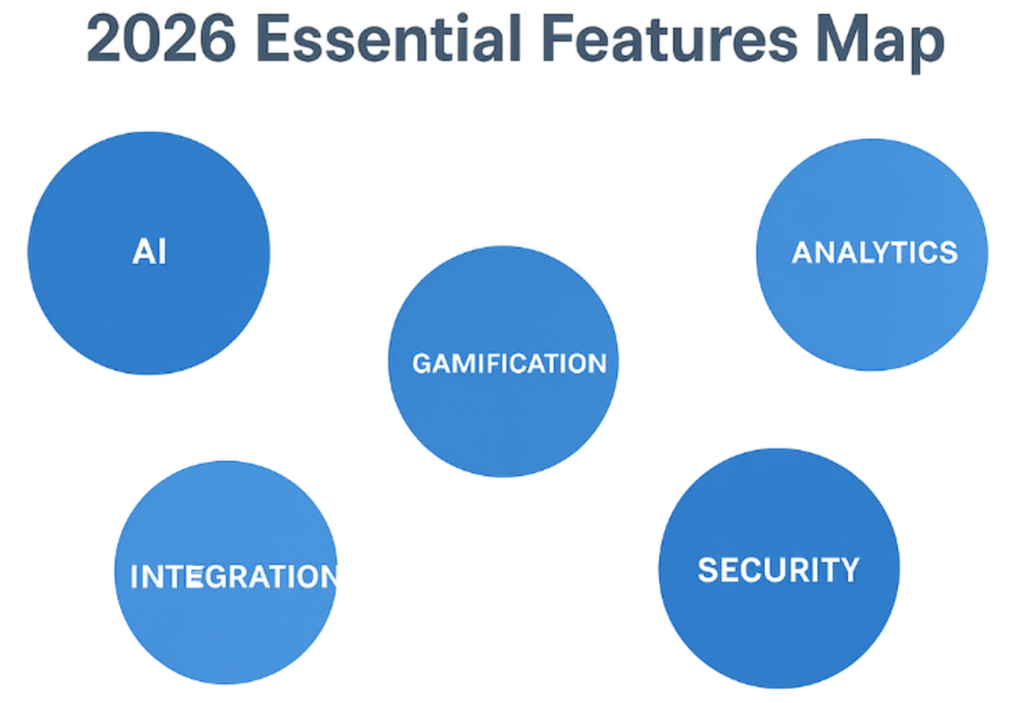
As digital learning becomes more advanced, user expectations in 2026 extend far beyond simple course uploads and progress tracking. Modern LMS platforms must support adaptive learning, flexible access, robust analytics, and high security — all while delivering engaging, interactive experiences. Below are the essential features shaping next-generation LMS development.
AI-Driven Personalization
In 2026, AI is no longer a “nice to have” but a fundamental component of effective learning systems.
Adaptive algorithms track user behavior, performance patterns, learning speed, and content interactions to:
- Adjust difficulty levels dynamically
- Recommend relevant courses
- Identify skill gaps
- Personalize learning paths for every individual
This ensures each learner receives tailored content that aligns with their goals and competencies, reducing time-to-skill and improving overall engagement.
Mobile-First Access
Modern learners expect to study from any device — especially mobile. A mobile-first LMS offers:
- responsive interfaces optimized for smartphones and tablets
- native iOS and Android apps
- offline learning modes
- push notifications for reminders and updates
This approach supports microlearning, on-the-go training, and continuous skill development for remote teams, field workers, and fast-paced corporate environments.
Advanced Analytics & Reporting
In data-driven organizations, analytics power better decisions.
A modern LMS provides real-time dashboards that track:
- engagement metrics
- course completion rates
- time spent learning
- competency development
- assessment performance
Advanced systems also offer cohort analysis, predictive insights, and AI-generated recommendations that help managers refine content strategies, measure ROI, and design targeted learning interventions.
Gamification Tools
Motivation is essential for sustained participation. Gamification elements — badges, leaderboards, progress points, learning streaks, and rewards — help boost learner engagement.
These features turn learning into an achievable, game-like journey, increasing completion rates and improving long-term knowledge retention, especially in corporate and compliance training programs.
Interactive Content & Virtual Classrooms
Learning in 2026 is highly interactive, blending asynchronous and live training:
- embedded videos and multimedia
- quizzes, polls, and branching scenarios
- simulations and hands-on exercises
- WebRTC-powered virtual classrooms
- webinar-style live sessions
- collaborative tools like shared boards and breakout rooms
This interactivity transforms static content into dynamic, experience-driven learning that supports deeper understanding and higher engagement.
Compliance Tracking
Regulated industries require a reliable way to monitor mandatory training. Modern LMS platforms include:
- compliance dashboards
- automated recertification alerts
- audit-ready reports
- configurable workflows that align with industry rules (e.g., GDPR, HIPAA, ISO frameworks)
This ensures organizations remain fully compliant, reduce administrative workload, and maintain transparent, traceable training histories.
Security & SSO
With sensitive learning data stored in the cloud, enterprise-grade security is essential.
A 2026 LMS typically includes:
- Single Sign-On (SSO) using OAuth, SAML, or OpenID
- data encryption in transit and at rest
- role-based access control
- multi-factor authentication
- secure API communication
- GDPR-aligned data storage
Robust security infrastructure protects user information and ensures integrity across all connected systems.
The Custom LMS Development Process
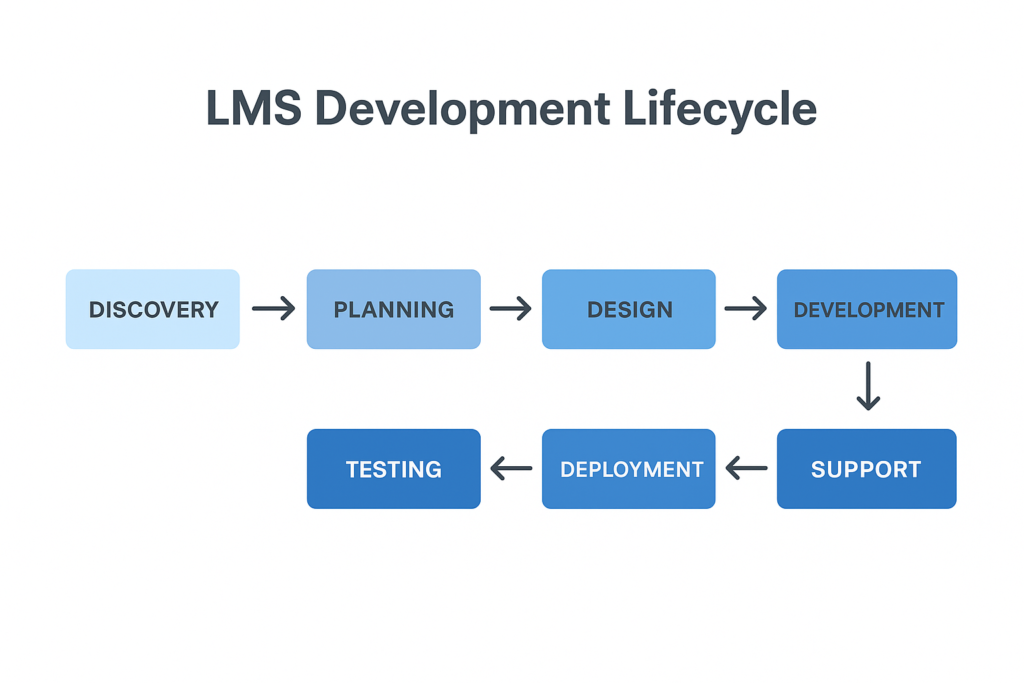
1. Discovery & Requirement Analysis
This foundational stage defines the entire direction of the LMS. The team identifies key learner personas (employees, students, partners, managers), training workflows, business goals, and content formats.
It also includes:
- auditing existing learning tools
- evaluating technical constraints
- mapping essential integrations (HR, CRM, SSO, video platforms)
- identifying competitive and market gaps
The outcome is a clear understanding of what makes the LMS truly valuable and differentiating for the organization.
2. Project Vision & Planning
Once requirements are defined, the team establishes a shared vision and long-term strategy for the platform.
This stage includes:
- detailed project roadmap
- timelines and development milestones
- risk assessment and mitigation planning
- success metrics and KPIs
- resource allocation and team roles
A strong project plan ensures that all stakeholders have aligned expectations and a transparent blueprint for execution.
3. UX/UI Design
Design shapes learner motivation and engagement. During this stage, designers create intuitive user journeys, wireframes, and high-fidelity prototypes.
Key considerations include:
- accessibility standards (WCAG)
- responsive design principles
- clean, branded interfaces
- seamless navigation between modules
- reducing cognitive load for learners
The goal is to build an interface that feels simple, modern, and enjoyable — regardless of user skill level.
4. Development & Integration
The LMS is built according to the approved designs and architecture. Development includes creating core modules such as course management, dashboards, analytics, notifications, and role-based access control.
This stage also involves:
- integrating with third-party platforms
- ensuring compatibility with SCORM, xAPI, LTI
- enabling WebRTC for real-time video classrooms
- building scalable cloud-based infrastructure
- implementing APIs for content, payment, or HR systems
A custom LMS is engineered for performance, scalability, and long-term flexibility.
5. Testing & Feedback
Before launch, the platform undergoes rigorous testing to ensure stability and quality.
Testing typically includes:
- functional testing
- performance and load testing
- security validation
- accessibility checks
- user acceptance testing (UAT) with real learners and administrators
Early feedback ensures the LMS is intuitive, bug-free, and capable of supporting real-world usage.
6. Deployment & Onboarding
Once approved, the LMS is deployed to production and released to learners. This stage may include:
- staged rollout (pilot → full launch)
- staff and admin training
- migration of legacy content
- onboarding webinars and documentation
Clear onboarding ensures smooth adoption and empowers administrators to manage the platform confidently from day one.
7. Continuous Support & Enhancements
A custom LMS evolves over time as learning needs change. Ongoing support may include:
- regular feature updates
- performance optimizations
- new integration requests
- UI improvements
- adding new learning formats (microlearning, interactive video, AI-driven content)
- refining analytics dashboards based on real usage
Continuous improvement keeps the platform modern, competitive, and aligned with organizational learning strategies.
Transitioning from Classroom to Cloud
Shifting to a cloud-based LMS removes the limitations of physical classrooms and static schedules. Learners can access training on demand, while organizations gain the agility to respond quickly to new skills requirements and market realities.
Cloud-native LMS platforms also support global access, unlimited scalability, high availability, and cost-efficient infrastructure management — essential as training needs expand in 2026.
Why Trembit Is a Reliable LMS Development Partner
Companies exploring digital learning transformation often require a partner with deep expertise in video streaming, real-time communication, AI-driven personalization, and scalable web platforms.
Trembit has spent years building complex edtech and video-driven learning systems for European and US clients, including platforms with:
- Adaptive learning models
- Real-time video classrooms (WebRTC-based)
- Custom analytics dashboards
- Secure user management and integration-heavy architectures
Our experience in education technology, enterprise integrations, and AI-enhanced user experiences allows us to support clients throughout the entire LMS lifecycle — from discovery and architecture to deployment and long-term evolution.
Conclusion
Developing a custom LMS in 2026 is more than a technology upgrade — it’s a strategic investment in people, growth, and digital transformation. With a clear roadmap and the support of an experienced partner like Trembit, organizations can successfully transition from traditional learning models to dynamic cloud environments, delivering personalized, engaging, and future-ready education experiences.