The Current Reality — An Overcrowded but Evolving EdTech Market
The EdTech landscape in 2025 is defined by rapid AI adoption and an influx of new tools. While this growth opens opportunities for innovation, it also raises concerns about market saturation and user fatigue — especially as learners navigate countless “AI-enhanced” products that promise transformation but often deliver clutter.
The explosion of AI tools in education: opportunity or oversaturation?
- Over 300 AI-powered EdTech tools were launched in 2024 alone.
- A proliferation of products claiming “AI-enhanced learning” has created noise.
- Founders face the challenge of standing out without overwhelming learners who feel AI fatigue.
Transition: Understanding user fatigue is key to designing products that truly connect.
Why user fatigue is real — and how to differentiate
Today’s learners are savvy. Many have tested multiple apps and platforms, making them quick to spot shallow AI integrations. Differentiation requires substance:
- Purposeful AI integration that directly improves outcomes.
- Transparency about the AI’s role in the learning journey.
- Seamless UX design focused on flow and clarity rather than flashy algorithms.
At Trembit, we help EdTech founders achieve this balance — developing platforms where AI quietly enhances experience, rather than dominating it.
The new generation of learners: shorter attention spans, higher expectations
- Average learner session time dropped by 15% since 2022.
- Demand for microlearning, interactive content, and personalized paths has surged.
- Learners expect platforms to be intuitive, adaptive, and results-driven.
Founders’ Dilemma — Compete or Redefine?
The traditional EdTech playbook of replicating giants like Coursera or Udemy no longer suffices. The next wave of winners are founders who narrow their focus, design for engagement, and build ecosystems rather than platforms.
Why copying Coursera or Udemy won’t work in 2025
| Aspect | Coursera/Udemy (2020s) | 2025 Market Reality |
| Course Scope | Broad, general | Focused, niche, tailored |
| User Engagement | Passive video lectures | Interactive, community-rich |
| Monetization | Course purchases/subscriptions | Diverse, including B2B & SaaS |
Micro-niche learning markets (language, corporate, soft skills, certification)
Winning startups are finding success by serving micro-niches such as:
- Language learning powered by conversational AI tutors.
- Corporate upskilling platforms with custom analytics dashboards.
- Soft skills development enhanced by AI-driven coaching assistants.
- Certification prep using adaptive learning algorithms.
Trembit’s development team has supported founders in these very segments — from custom e-learning apps to AI-driven video collaboration tools — enabling them to scale from MVP to enterprise-ready ecosystems.
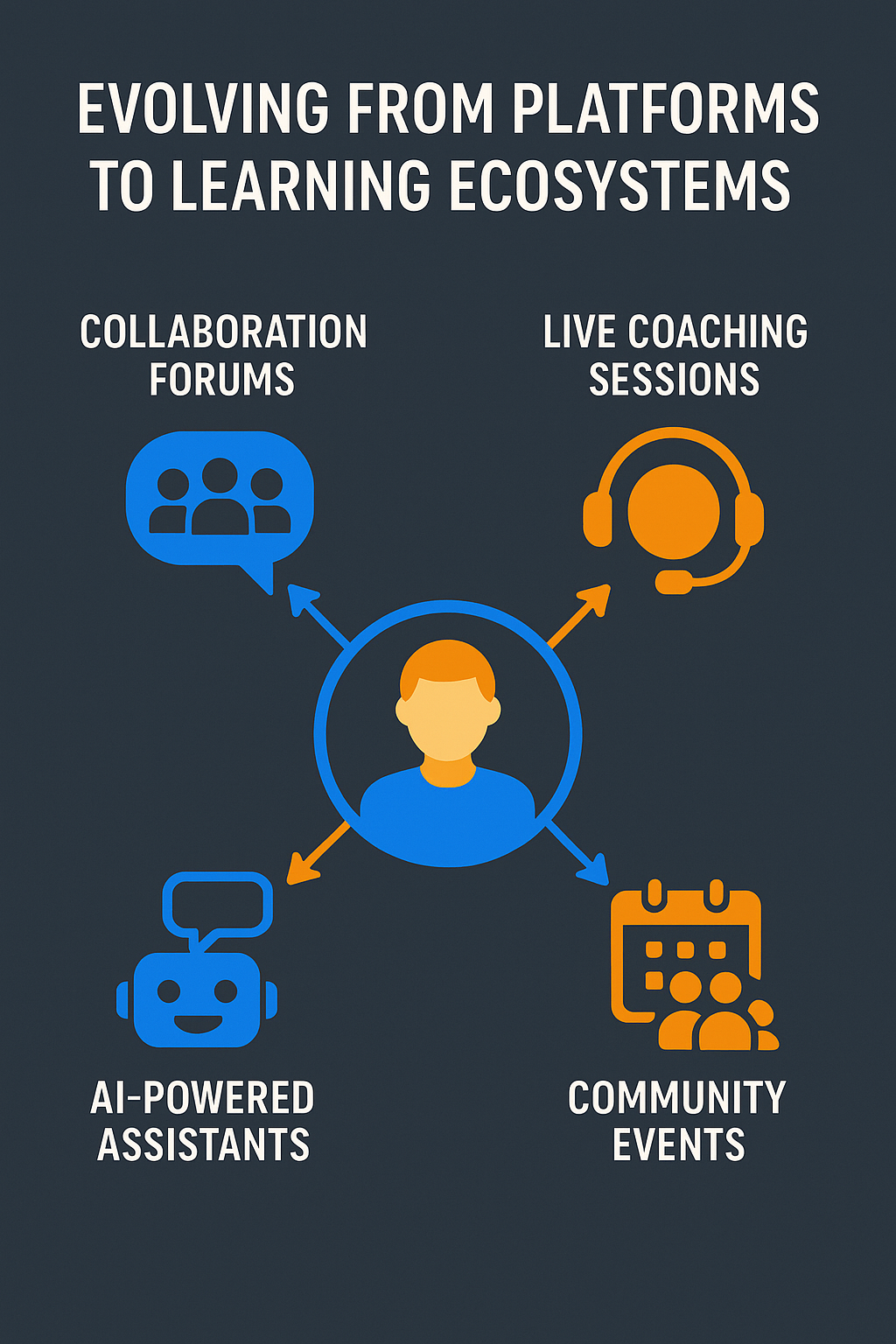
From platforms to ecosystems: collaboration, coaching, and community-driven learning
Creating ecosystems around learning boosts engagement and retention.
Winning examples integrate:
- Peer collaboration forums and study groups.
- Live coaching sessions with AI assistant support.
- Real-time performance tracking and gamified progress dashboards.
The Mindset Shift — From Building Products to Designing Learning Experiences
The future belongs to founders who design holistic learning journeys, not just content libraries. Successful EdTech solutions in 2025 focus on emotional connection, interactivity, and outcome-driven personalization.
Human-centered design for digital education
A product built for human experience outperforms one built for scale alone. That means:
- Designing with empathy for learner goals and frustration points.
- Using iterative feedback loops to evolve based on real learner data.
- Ensuring accessibility across devices, regions, and learner abilities.
Balancing automation and emotional intelligence in UX
The most impactful learning apps use automation to handle repetition — while preserving human warmth in design:
- Automation streamlines tasks like grading and reminders.
- Emotionally intelligent interfaces sustain motivation.
- AI chatbots, when trained correctly, simulate empathy without manipulation.
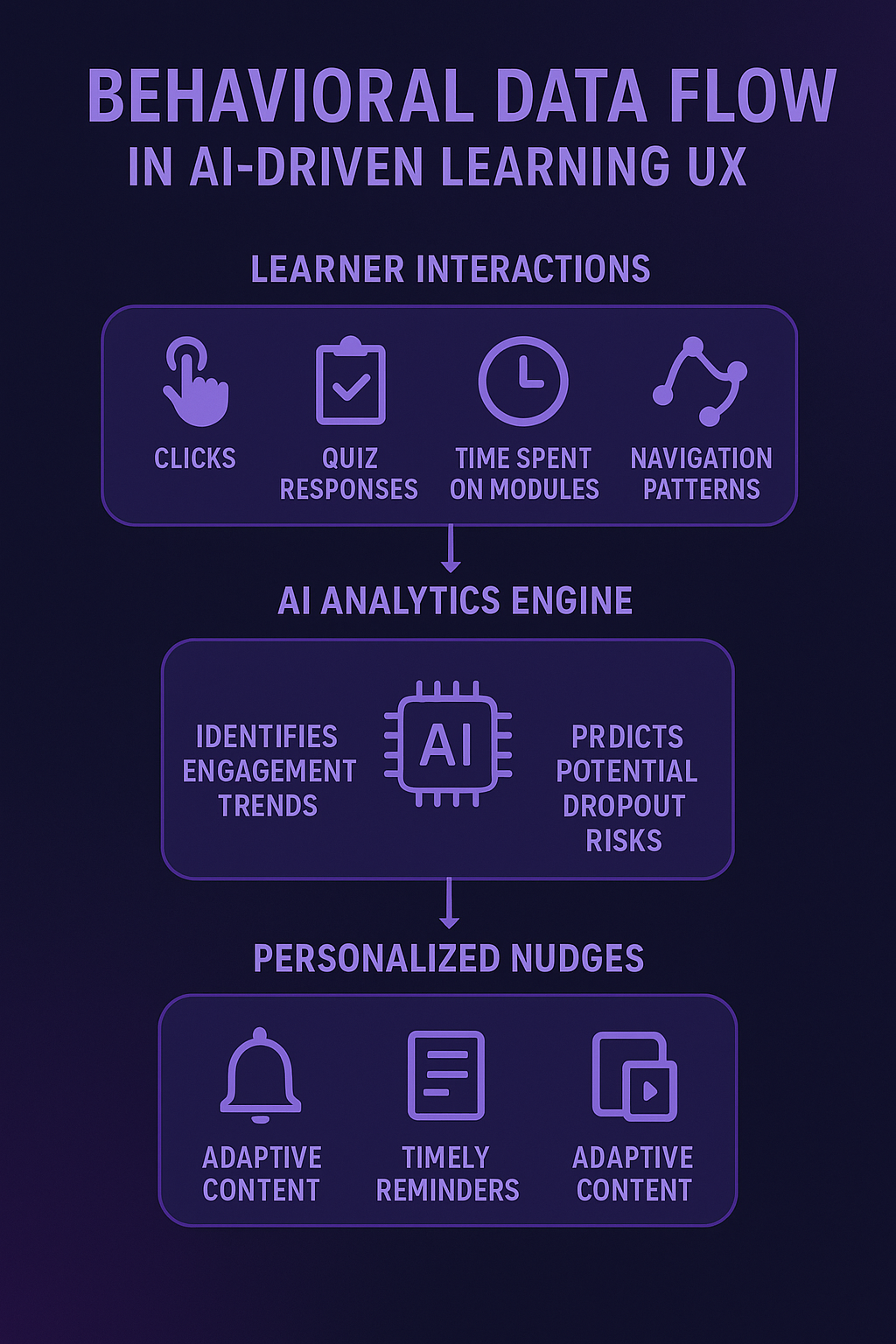
Role of behavioral data in optimizing user retention
Data is the compass guiding user experience evolution:
- Tracking engagement to anticipate drop-off patterns.
- Sending personalized nudges that re-engage learners at risk.
- Continuously adapting content to improve completion rates.
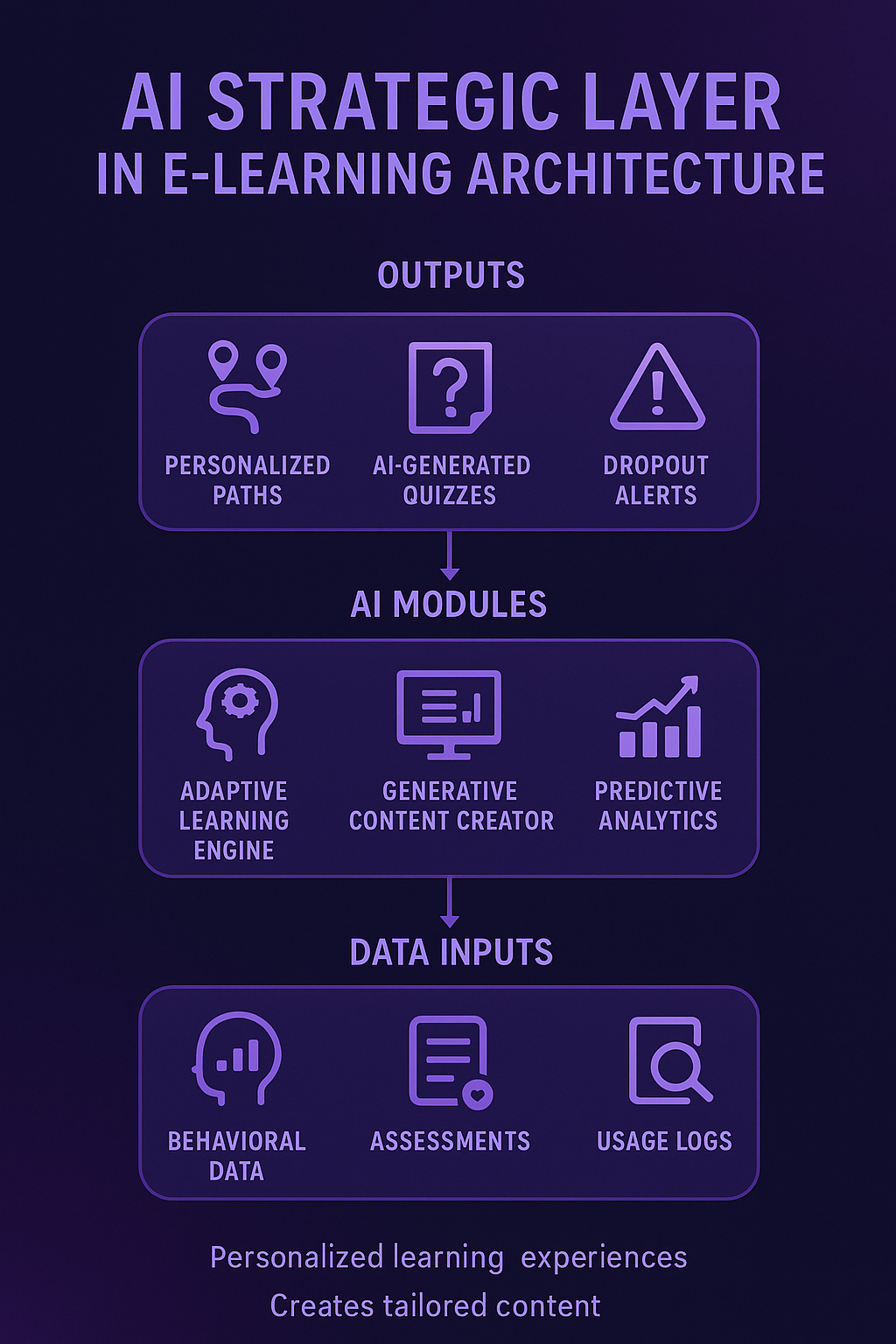
The Core: AI as a Strategic Layer, Not a Feature
AI is no longer a “selling point” — it’s the infrastructure. Founders must treat it as a strategic layer that enhances adaptability, scalability, and user satisfaction.
AI-driven personalization (adaptive learning paths, smart pacing)
- Dynamically adjusts difficulty and content sequence.
- Provides learners with tailored recommendations.
- Adapts pace and feedback based on engagement signals and results.
Generative AI in content creation and assessment
- Creates assessments, summaries, and personalized study aids on demand.
- Supports educators with scalable, diverse materials.
- Enables rapid content updates aligned with learner needs.
Predictive analytics for engagement and dropout prevention
- Detects early signs of disengagement.
- Triggers automated interventions like motivational messages or reminders.
- Empowers educators with actionable insights.
At Trembit, our AI integration expertise helps EdTech startups weave these technologies into solid, scalable architectures — from data pipelines to user-facing personalization.
Building a Sustainable Business Model
Sustainability is the true test of an EdTech product’s maturity. Beyond innovation, it demands diverse revenue streams, community retention, and ethical data use.
Pricing models that work in 2025–2026
| Model | Description | Pros | Cons |
| Subscription | Ongoing access to entire platform | Predictable revenue | Requires constant content refresh |
| Pay-per-path | Payment for specific learning journeys | Highly tailored spending | May limit learner exploration |
| B2B SaaS | Licensing to companies | Large contracts, scalable | Longer sales cycles |
Monetization beyond courses — communities, micro-credentials, data insights
- Monetizing learning communities through memberships.
- Issuing micro-credentials with blockchain-backed verification.
- Offering aggregated learning data insights for institutional partners.
Aligning investor expectations with educational impact
- Balance profit and learner success as dual KPIs.
- Maintain transparency around AI ethics and data privacy.
- Focus on long-term brand trust through demonstrable impact.
From Chaos to Clarity — Structuring Your Team and Tech Partnerships
Early architecture and team-building decisions can determine whether an EdTech startup scales — or stalls.
Early-stage hiring priorities for EdTech startups
- UX designers who understand cognitive learning behavior.
- Data scientists experienced in learner analytics.
- AI engineers skilled in adaptive and conversational systems.
When to bring in AI and backend experts
- Early prototypes can use no-code or SaaS AI tools.
- MVPs benefit from dedicated AI engineers for personalization.
- Scalable backends with real-time analytics are essential in the growth stage.
Outsourcing efficiently while retaining creative and educational control
- Partner with experienced development teams for technical heavy lifting.
- Keep pedagogy, UX, and strategy in-house to maintain vision alignment.
- Use agile workflows to ensure flexibility and transparency.
Trembit acts as a trusted technology partner for EdTech founders — offering full-cycle development in AI, data analytics, and WebRTC video learning while helping teams retain creative control and educational focus.
Looking Ahead — The Traits of Survivors in the AI-Driven E-Learning Era
The next wave of successful EdTech startups will embody adaptability, data fluency, and ethical innovation. They’ll view AI as a means to elevate human learning — not replace it.
- Adaptability and data fluency enable faster iteration cycles.
- Continuous UX innovation ensures lasting engagement.
- Ethical AI practices foster trust and compliance across regions.
Final note:
E-learning founders who invest in learner-centric value and smart AI integration will lead the industry’s evolution — from one-off platforms to enduring ecosystems of growth.
Trembit’s Expertise in EdTech and AI
At Trembit, we help startups and enterprises build AI-powered educational products that combine seamless user experience, real-time collaboration, and scalable video infrastructure.
From adaptive learning platforms to interactive classroom streaming, our team bridges technical innovation with pedagogical insight.
Let’s Build the Next Generation of Learning Together
If you’re an EdTech founder looking to integrate AI, enhance engagement, or scale your product architecture — Trembit’s experts are ready to help you bring your vision to life.
👉 Contact Trembit to discuss your project or schedule a free consultation.