As telehealth continues to reshape modern medicine, secure group video communication has become essential, not just for one-on-one consultations but also for multidisciplinary team meetings, group therapy, and family-involved sessions. This guide explains how to build a secure group video chat app for healthcare, tailored to the industry’s specific privacy, compliance, and performance standards.
We will walk you through technical architecture, regulatory compliance, technology stack selection, and best UX practices, as well as post-launch maintenance. In each section, you will also find real-world examples and decision-making guidance that helps startups and enterprises alike avoid costly mistakes.
As one of the top software development companies, Trembit has delivered cutting-edge real-time video solutions for clients in the U.S., EU, and the Middle East, combining deep healthcare domain knowledge with high-performance, compliant technology.
Why Secure Group Video Chat Is a Game Changer in Telehealth
Healthcare digitalization results in group video calls becoming more common for many types of medical communication. From oncologists coordinating across hospitals to psychologists conducting trauma group therapy, secure video chat enables collaboration without physical barriers.
Yet, unlike general-purpose tools (like Zoom or Google Meet), medical video apps need to:
- Adhere to strict security and privacy regulations (HIPAA, GDPR, etc.)
- Ensure patient confidentiality
- Provide role-based access
- Be user-friendly for clinicians and patients across devices
🔍 Example: A U.S. behavioral health clinic wants to offer virtual family therapy. They need a group video app where only licensed therapists can initiate sessions, enable parental controls, and session logs are securely stored. Trembit developed a HIPAA-compliant platform with group calls, consent capture, and EHR integration.
With this growing demand, now is the time to invest in a custom, scalable, and secure solution.
Key Features Every Group Telehealth Video App Should Have
When planning your application, consider the full feature set required to meet both clinical goals and legal requirements.
| Category | Must-Have Features |
| Video/Audio | Group calls (4+ participants), HD video/audio, screen share, speaker switching |
| Security & Privacy | End-to-end encryption, audit logs, access control, data retention policies |
| Compliance | HIPAA, GDPR, SOC 2 readiness, consent flows, digital signatures |
| Scheduling | Appointment booking, calendar sync (Google, Outlook), timezone awareness |
| EMR/EHR Integration | HL7/FHIR APIs, secure document sharing, SOAP note attachments |
| User Roles | Doctor, patient, admin, family, therapist |
| UX/UI | Accessibility (WCAG 2.1), mobile-first, intuitive for non-tech-savvy users |
| Analytics | Call quality tracking, usage logs, performance alerts |
From Vision to Execution — Let’s Start with the Fundamentals
You know what your app must achieve—but how do you actually build it? Let’s now look at the development blueprint that ensures both success and compliance.
Step-by-Step: How to Build a Secure Group Video Chat App for Telehealth
1. Define Use Cases and Compliance Needs
The first step is to understand your target audience and compliance environment.
Ask yourself:
- How many participants per session?
- What roles need access? (Doctors, patients, caregivers, admins?)
- What geographies are covered? (U.S. = HIPAA, EU = GDPR, etc.)
- Will recordings or notes be stored?
- Do you need integration with insurance, labs, or existing healthcare software?
🧠 Tip: Trembit works with clients to map user journeys and risk profiles during the discovery phase, ensuring your feature set aligns with legal and practical needs.
2. Choose a Scalable and Secure Tech Stack
Now it’s time to design the architecture that makes your app performant and future-proof.
| Layer | Recommended Technologies (Used by Trembit) |
| Frontend | React, Angular, Flutter (cross-platform mobile + web) |
| Backend | Node.js, .NET Core, Java (depending on scalability needs) |
| Video | WebRTC (self-hosted), Jitsi (customizable), Twilio, Agora |
| Auth | OAuth2, OpenID Connect, Firebase Auth |
| Security | JWT, TLS 1.2+, AES-256, BAA-compliant hosting (AWS/GCP) |
| Storage | PostgreSQL, Redis (presence), S3 (encrypted media) |
| Monitoring | Prometheus, Grafana, Sentry, Datadog |
🎯 Example: For a European e-health provider, Trembit used WebRTC + SFU + Node.js for real-time communication and integrated with Azure’s GDPR-compliant hosting to pass third-party compliance audits.
3. Build the Video Communication Engine
This is your core layer. Key decisions include:
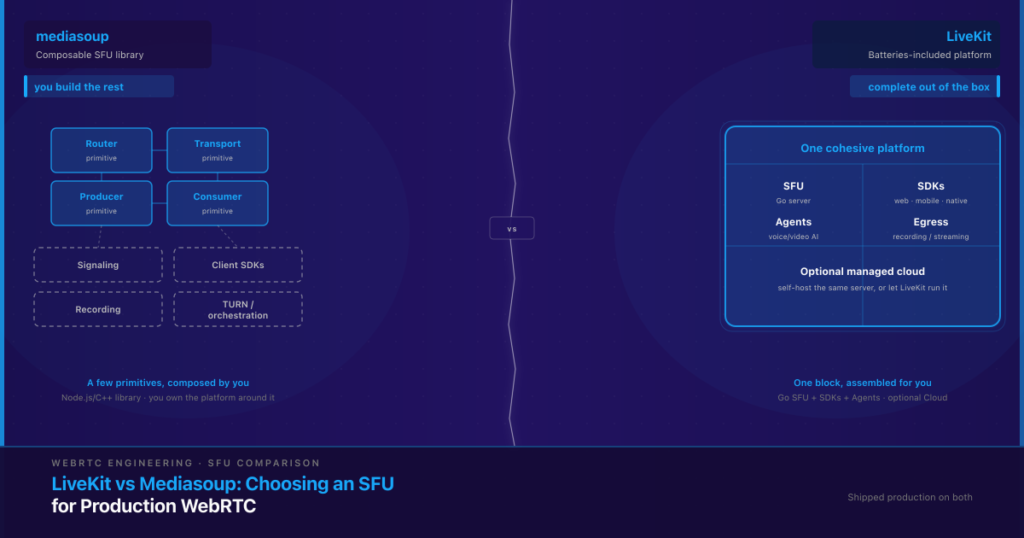
- SFU architecture for better group call performance (e.g., Jitsi Videobridge)
- TURN servers for reliable connectivity across firewalls/NAT
- Noise suppression and adaptive bitrate for smooth calls in low bandwidth
- In-session chat and file sharing, with logs for auditability
- Real-time voice activity detection for speaker switching
🛠️ Best Practice: Enable screen sharing with patient redaction (masking sensitive info during explanations)—Trembit builds this using canvas overlays in the video layer.
4. Implement Role-Based Security and Authentication
Use RBAC (Role-Based Access Control) to prevent unauthorized access. Also:
- Use JWTs with short lifespans
- Require 2FA for clinicians
- Log all actions (e.g., who viewed/shared files)
- Apply consent forms digitally before sessions
5. Design UX for Doctors and Patients Alike
A healthcare video app must be intuitive, especially for non-tech users.
✅ Key UX Tips:
- One-click session start
- Mute-all and waiting room for moderation
- Visual indicators for “who’s talking”
- Accessibility: screen reader support, contrast toggles
- Responsive across mobile/tablet
💡 Example: Trembit redesigned a UI for an elderly-focused telecare provider, increasing session completion rates by 47% after simplifying login and enlarging call controls.
6. Integrate with EMRs, Calendars, and Alerts
Don’t isolate the video app, embed it into clinical workflows:
- Pull patient data securely via FHIR APIs
- Sync appointments with Google/Outlook
- Auto-trigger reminders, feedback surveys, and post-session notes
You’ve Built the Platform — Now Keep It Secure and Compliant
After launch, the real work begins: protecting your users, tracking performance, and adapting to changes in compliance or usage patterns.
Post-Launch: Monitoring, Maintenance & Compliance
| Area | Recommendation |
| Monitoring | Real-time alerts on call quality, drop rates |
| Compliance | Quarterly audits, logs retention, policy reviews |
| Support | 24/7 incident response, SLA-backed support |
| Updates | Auto-patch known vulnerabilities (OpenSSL, WebRTC) |
| Training | In-app walkthroughs, staff onboarding kits |
Trembit uses CI/CD pipelines with built-in security checks and auto-scaling infrastructure to manage peak loads—critical during flu season or COVID-like surges.
Why Trembit Is a Trusted Partner for Telehealth Apps
At Trembit, we bring more than code; we bring healthcare-specific expertise, trusted by startups, hospitals, and digital clinics across three continents.
✅ What sets us apart:
- Deep knowledge of HIPAA/GDPR compliance
- Real-time expertise with WebRTC, Twilio, Jitsi
- Hands-on experience with EHR integrations
- Security-first development culture
- Track record in healthtech, telecommunication, and video platforms
🎓 Let’s talk if you’re launching:
- A secure virtual clinic platform
- Group therapy or a wellness coaching app
- Teleconsultation network for rural care
- A private-label white-labeled video solution
FAQ: Building Secure Group Video Chat Apps for Telehealth
What’s the best video engine for medical group calls?
Use WebRTC with SFU architecture for performance. For plug-and-play, Twilio or Jitsi are strong. Trembit offers both options based on your needs.
How many participants can we support?
With optimized SFU, 12–20 participants with video are common. For larger sessions, limit video to 3–5 speakers at a time.
Is HIPAA compliance guaranteed with Twilio or WebRTC?
Not automatically—you still need to handle encryption, logging, access control, and sign a BAA with providers. Trembit guides you through the full process.
Should we use SaaS APIs or build custom?
| Criteria | Twilio/Agora (SaaS) | WebRTC + Jitsi (Custom) |
| Speed to Market | Very Fast | Medium |
| Cost (Long Term) | High at scale | Lower if you self-host |
| Customization | Moderate | Full |
| Compliance Control | Provider dependent | In your hands |
| Scalability | Built-in | Requires setup |
Can I reuse this platform across clinics or white-label it?
Yes. Trembit builds modular, multi-tenant platforms you can reuse, resell, or license—perfect for SaaS ventures.
Need a Secure, Scalable Telehealth Video Platform?
Let Trembit help you design, build, and launch a group video chat application tailored for healthcare, fast, secure, and future-ready.