Telehealth Architecture

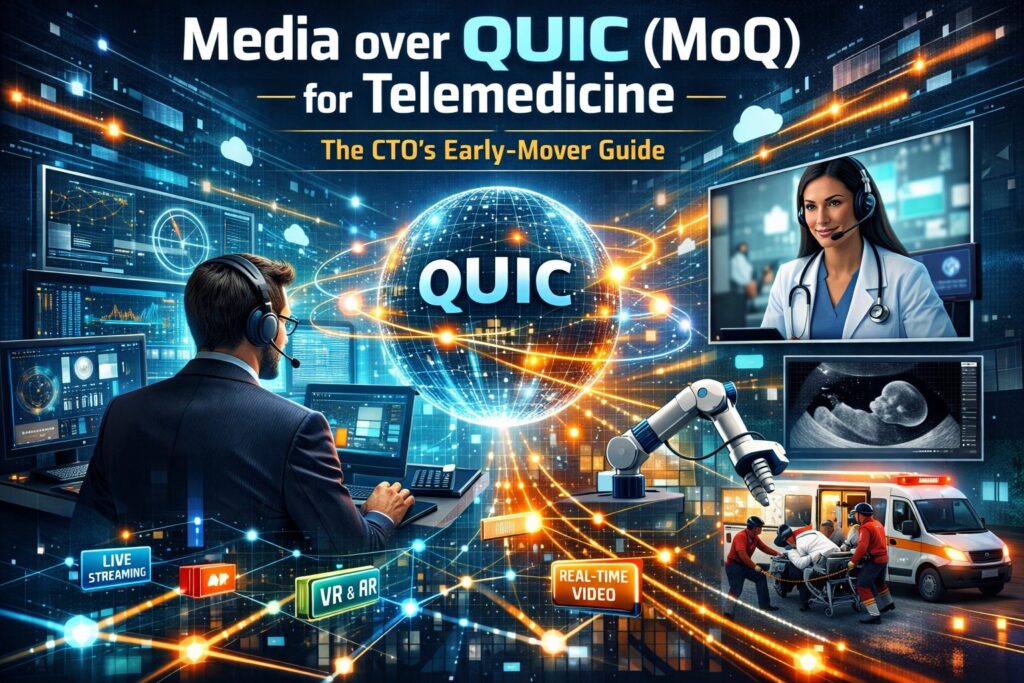
Is Media over QUIC Good Enough for Telehealth Video, or Do I Still Need WebRTC?

Is Media over QUIC Good Enough for Telehealth Video, or Do I Still Need WebRTC?

For a two-way telehealth consultation in 2026, WebRTC is still the answer — and in healthcare the case is stronger than in generic video, not weaker. A clinical conversation needs sub-250ms interactivity, and it needs an auditable story about where patient media is decrypted and who can touch it. WebRTC’s peer-to-peer and SFU models give […]

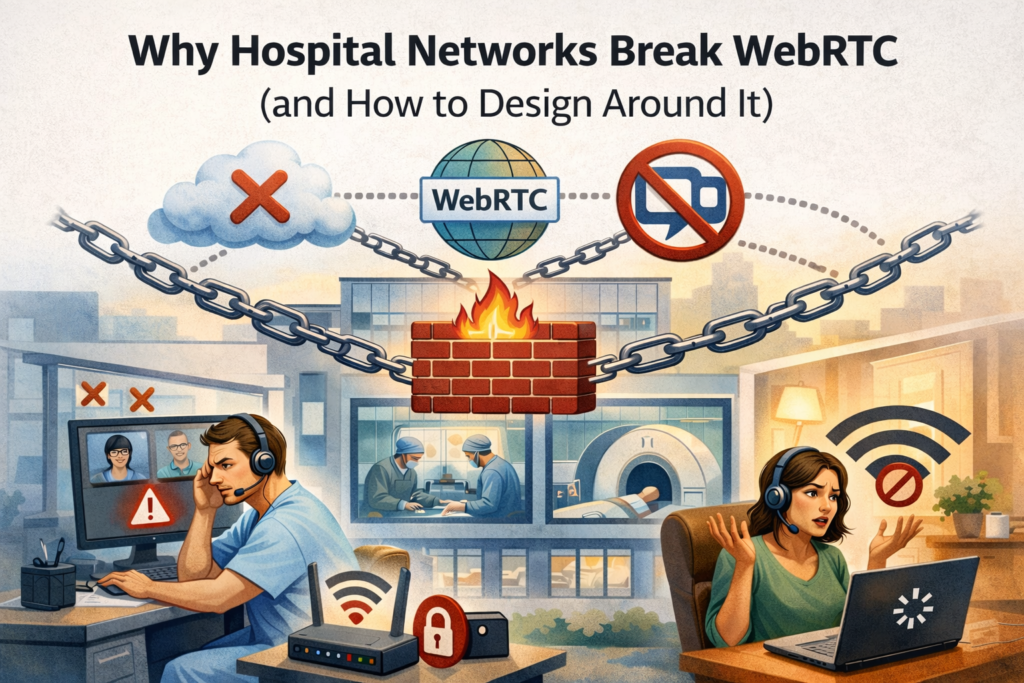
Why Hospital Networks Break WebRTC (and How to Design Around It)

Why Hospital Networks Break WebRTC (and How to Design Around It)

WebRTC has revolutionized real-time communication for healthcare applications, from telemedicine consultations to remote patient monitoring. However, enterprise healthcare networks present unique challenges that can render even the most sophisticated WebRTC implementations ineffective. Understanding these constraints and designing resilient solutions is critical for delivering reliable healthcare communication systems. The Promise and Reality of WebRTC in Healthcare […]

Group Therapy Video Calls: Why 6 Participants Is a Hidden Scaling Cliff

Group Therapy Video Calls: Why 6 Participants Is a Hidden Scaling Cliff

Group therapy sessions represent one of the most challenging use cases for WebRTC video conferencing platforms. Unlike corporate meetings, where participants can tolerate occasional quality degradation, therapy sessions demand consistent audio clarity and reliable visual connection — the foundation of therapeutic rapport. However, many healthcare organizations discover too late that their video platform performs beautifully […]

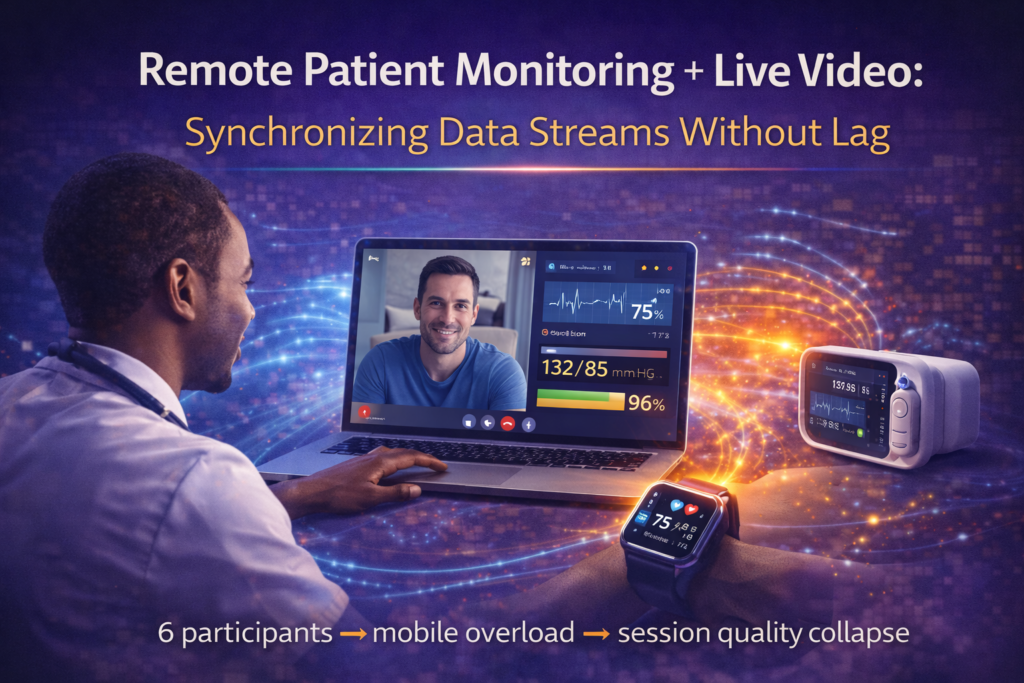
How to Keep Remote Patient Monitoring Synchronization Within 50ms

How to Keep Remote Patient Monitoring Synchronization Within 50ms

Remote patient monitoring has evolved beyond simple data collection. Modern telemedicine platforms combine live video consultations with real-time streaming of vital signs — heart rate, blood oxygen, ECG waveforms, glucose levels — creating a comprehensive view of patient health. However, achieving seamless synchronization between video feeds and sensor data streams presents significant technical challenges that […]

How to Build Multi-Tenant Telehealth Architecture

How to Build Multi-Tenant Telehealth Architecture

Building a telehealth application for a single clinic is straightforward. Building a multi-tenant telehealth architecture that serves hundreds of clinics across multiple states — each with unique workflows, compliance requirements, and branding — while maintaining security, performance, and operational efficiency, is an entirely different challenge. Most telehealth architecture content focuses on single-provider scenarios: one database, […]

Why Telehealth Platforms Fail at Enterprise Scale

Why Telehealth Platforms Fail at Enterprise Scale

Most telehealth platforms begin with a focused product vision, typically centered on video consultations, patient scheduling, and clinical documentation. Then reality hits. The hospital network wants FHIR-based EHR integration. The enterprise clinic operates a Practice Management System that does not allow for negotiation of its data model. The sales team needs patient interactions to flow […]

The Hidden Infrastructure Costs of Telehealth Platforms (And How to Control Them)

The Hidden Infrastructure Costs of Telehealth Platforms (And How to Control Them)

Most telehealth founders carefully plan for the obvious expenses — development time, software licensing, and marketing costs. Then the AWS bill arrives three months after launch and resets every assumption. Infrastructure costs in healthcare software have a way of compounding silently, driven by compliance requirements, data retention obligations, and the particular demands of real-time medical […]

How to Choose Telemedicine Video Infrastructure

How to Choose Telemedicine Video Infrastructure

Video infrastructure is one of the most consequential technology decisions a telemedicine CTO makes — and one of the most frequently regretted. The teams that regret it fall into two camps. The first bought a third-party video SDK, scaled to the point where vendor constraints became product constraints, and found themselves locked into a platform […]

P2P vs SFU for Telemedicine: When Direct Connections Beat Media Servers

P2P vs SFU for Telemedicine: When Direct Connections Beat Media Servers

Every telemedicine video platform eventually confronts the same architectural fork: should media flow directly between participants, or should it route through a server? It sounds like a purely technical question. It isn’t. The answer affects your compliance posture, your infrastructure costs, your call quality under degraded network conditions, and your ability to add features like […]

Why Telehealth Platforms Are Quietly Moving Beyond WebRTC

Why Telehealth Platforms Are Quietly Moving Beyond WebRTC

A protocol transition is coming in real-time communications, and most telehealth engineering teams haven’t begun thinking about it yet. That’s understandable — WebRTC still works, your stack is stable, and there are always more urgent things to build. But the decisions telemedicine CTOs make about protocol architecture in the next 12–24 months will determine how […]

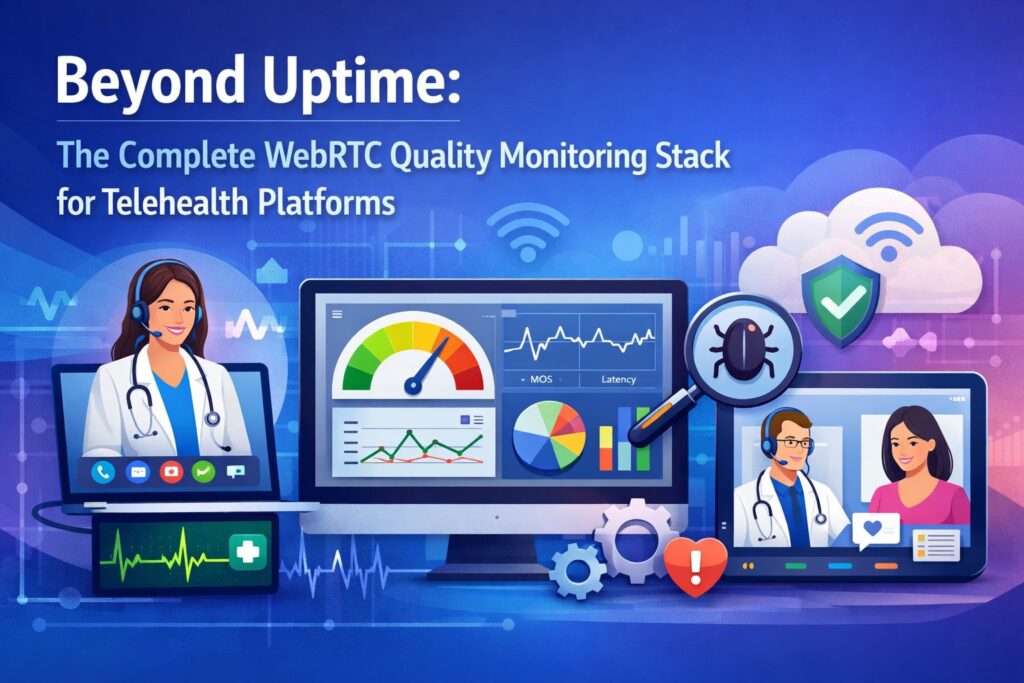
What Telehealth Platforms Miss About Call Quality Monitoring

What Telehealth Platforms Miss About Call Quality Monitoring

Most telehealth engineering teams know their platform is “up.” What they don’t know — until a clinician files a complaint or a patient drops off mid-visit — is whether it’s working well. The gap between “the server is running” and “calls are clinically usable” is where telehealth quality problems live. WebRTC quality is inherently variable: […]

The Telehealth Migration Playbook: How to Move Off Twilio or Vonage Without Breaking Your Product

The Telehealth Migration Playbook: How to Move Off Twilio or Vonage Without Breaking Your Product

If you’re reading this, you’re probably already past the “should we migrate?” question. Maybe Twilio sent a deprecation notice on a product you rely on. Maybe your per-minute costs crossed a threshold that’s hard to justify. Maybe Vonage’s acquisition by Ericsson has you worried about roadmap continuity. Or maybe you’ve simply hit a ceiling — […]

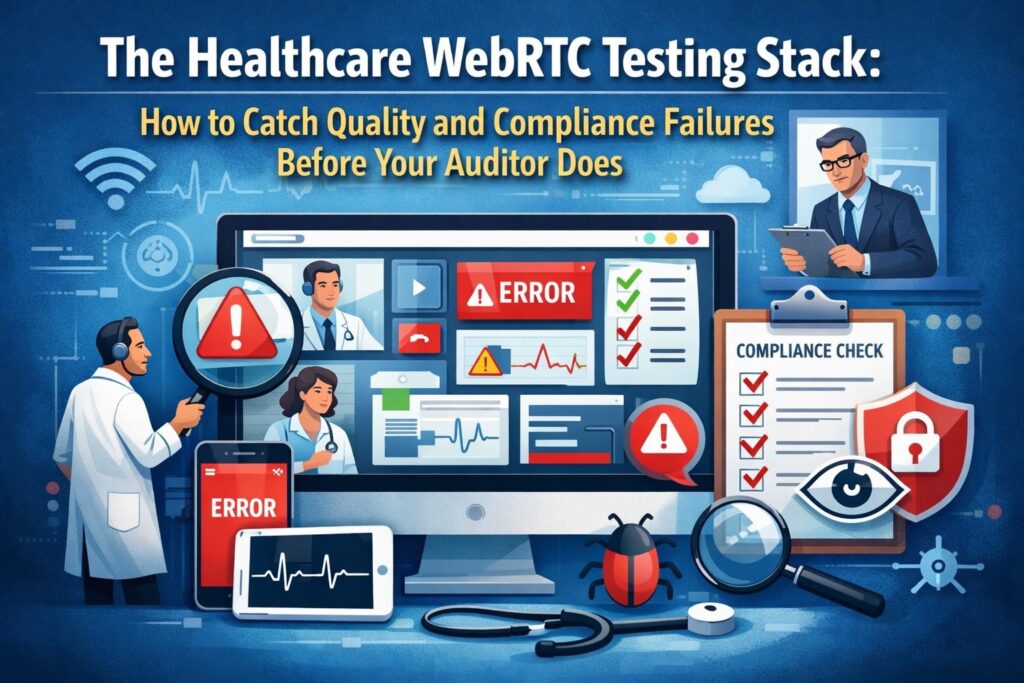
The Healthcare WebRTC Testing Stack: How to Catch Quality and Compliance Failures Before Your Auditor Does

The Healthcare WebRTC Testing Stack: How to Catch Quality and Compliance Failures Before Your Auditor Does

Most WebRTC testing content covers one problem: Does the call work? Functional tests, load tests, and network simulation — the engineering discipline of verifying that audio and video flow reliably between participants. In healthcare, that’s half the job. The other half is compliance: does the call handle PHI correctly? Does your recording pipeline store data […]

WebRTC for Rural Telemedicine: Low-Bandwidth Architecture Patterns

WebRTC for Rural Telemedicine: Low-Bandwidth Architecture Patterns

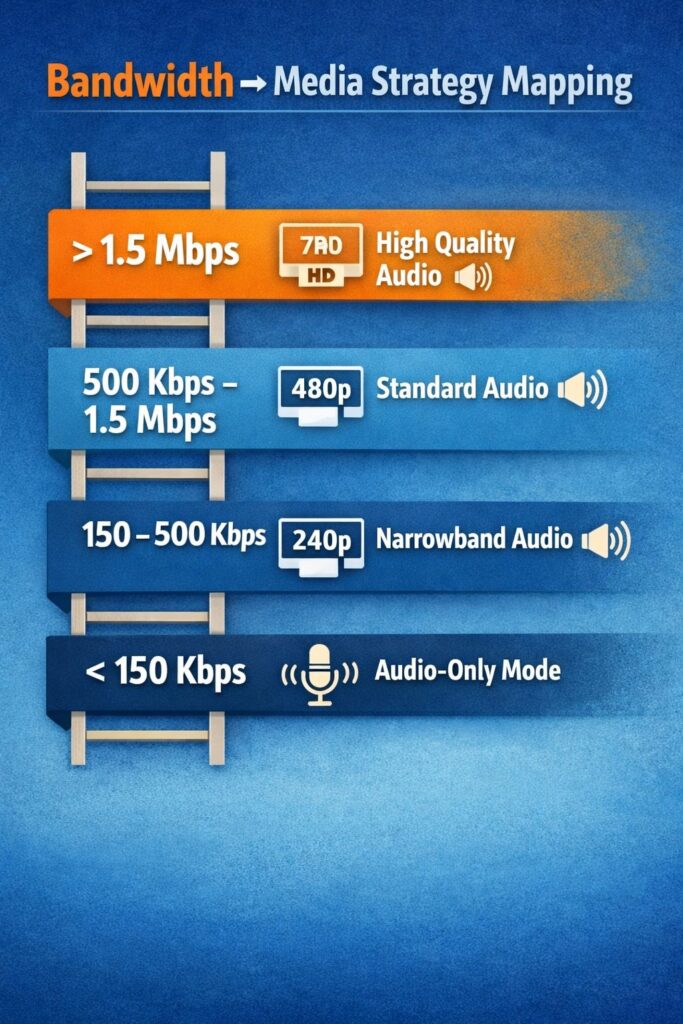
How to design real-time video consultation systems that work reliably under constrained network conditions Reliable internet connectivity is a luxury that many rural and remote communities often lack. Yet, these are often the populations with the greatest need for healthcare access — individuals who may have to travel hours to reach the nearest clinic. Telemedicine […]

Telehealth Platforms: Legacy to Cloud-Native Architecture 2026

Telehealth Platforms: Legacy to Cloud-Native Architecture 2026

Telehealth has become a cornerstone of modern healthcare, but many platforms still rely on legacy monoliths or fragile WebRTC setups. In 2026, these outdated architectures struggle to meet the demands of scalability, security, and seamless integration. Modernizing to cloud-native architectures isn’t just a technical upgrade — it’s a strategic move to deliver better patient experiences, […]

How to Achieve Low Latency and High Stability in Telehealth Video Calls (Real Engineering Techniques)

How to Achieve Low Latency and High Stability in Telehealth Video Calls (Real Engineering Techniques)

Telehealth video calls almost always struggle with quality — freezes, audio delays, dropped sessions, and blurry video frustrate both patients and providers. This is not a UX issue; it is a real-time systems engineering challenge. Achieving sub‑150 ms latency and carrier‑grade stability in telemedicine requires deep WebRTC expertise, careful network design, and continuous monitoring. This […]

A CTO’s Guide to EHR/EMR and FHIR Integrations: Costs, Timelines, Architecture Patterns

A CTO’s Guide to EHR/EMR and FHIR Integrations: Costs, Timelines, Architecture Patterns

Integrating Electronic Health Records (EHR) and Electronic Medical Records (EMR) systems via FHIR standards stands as the most complex challenge in telehealth development, often blocking project timelines and inflating costs. This guide equips CTOs with essential insights on costs, timelines, and architecture patterns to mitigate risks and ensure seamless interoperability. Trembit, a trusted technology partner […]

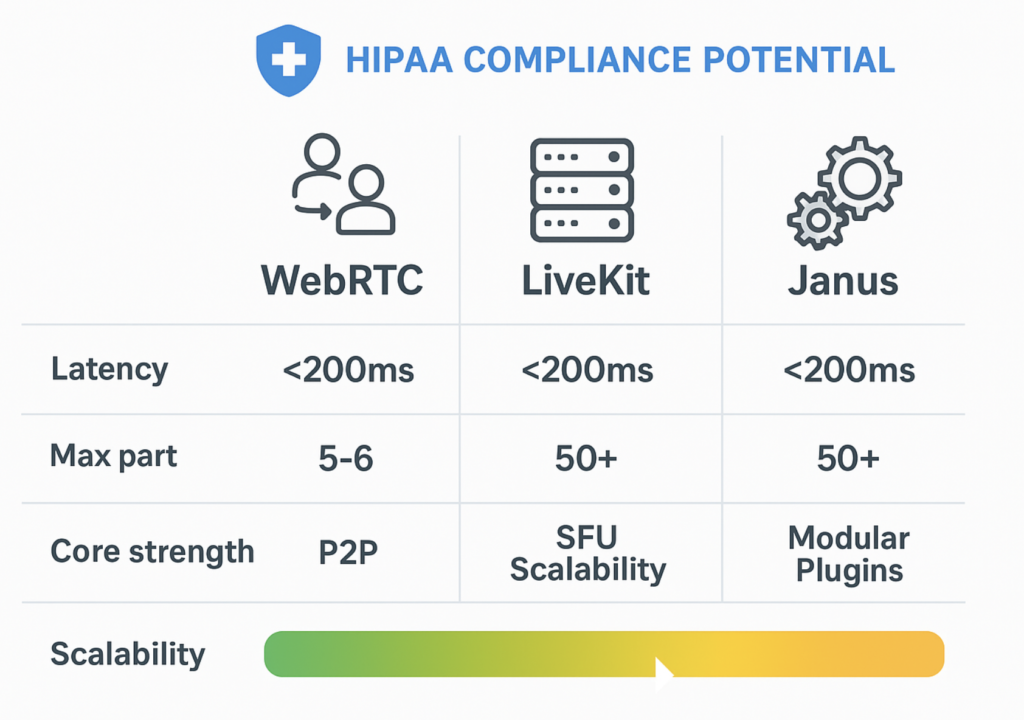
WebRTC vs. LiveKit vs. Janus for Telehealth Video Consultations: A Practical Comparison for CTOs

WebRTC vs. LiveKit vs. Janus for Telehealth Video Consultations: A Practical Comparison for CTOs

In the rapidly evolving world of telehealth, delivering seamless, secure, and scalable video consultations is a top priority for healthcare providers. CTOs tasked with selecting the right video infrastructure often face a confusing array of options. Among these, WebRTC, LiveKit, and Janus stand out as prominent choices—but which one fits best? At Trembit, with extensive […]

The Hidden Technical Pitfalls That Slow Down Telemedicine Platforms — and How to Avoid Them in 2026

The Hidden Technical Pitfalls That Slow Down Telemedicine Platforms — and How to Avoid Them in 2026

Telemedicine platforms power modern remote healthcare — but beneath smooth user interfaces lie systemic technical weaknesses that slow down performance, increase operational costs, and put compliance at risk. CTOs facing integration gaps, video latency, and security vulnerabilities often struggle because these issues are deeply architectural, not superficial. This article highlights the hidden pitfalls and offers […]

Choosing the Right SFU: Janus vs. Mediasoup vs. LiveKit for Telemedicine Platforms

Choosing the Right SFU: Janus vs. Mediasoup vs. LiveKit for Telemedicine Platforms

For a telemedicine platform, the SFU (Selective Forwarding Unit) choice comes down to three options: Janus (modular, plugin-based, the most control and the most self-build), mediasoup (a lower-level media-routing library for teams with deep WebRTC engineering capacity), or LiveKit (a complete platform with official SDKs and an optional managed cloud, the fastest path to a compliant production build). The honest verdict […]