WebRTC gets genuinely expensive in one narrow place: large one-to-many broadcast, where every viewer needs its own relayed stream, the SFU — the server that forwards media to each participant — has to be provisioned for peak concurrency, and cascading between regions bills the same bytes more than once. Below roughly 1,000 concurrent viewers per […]
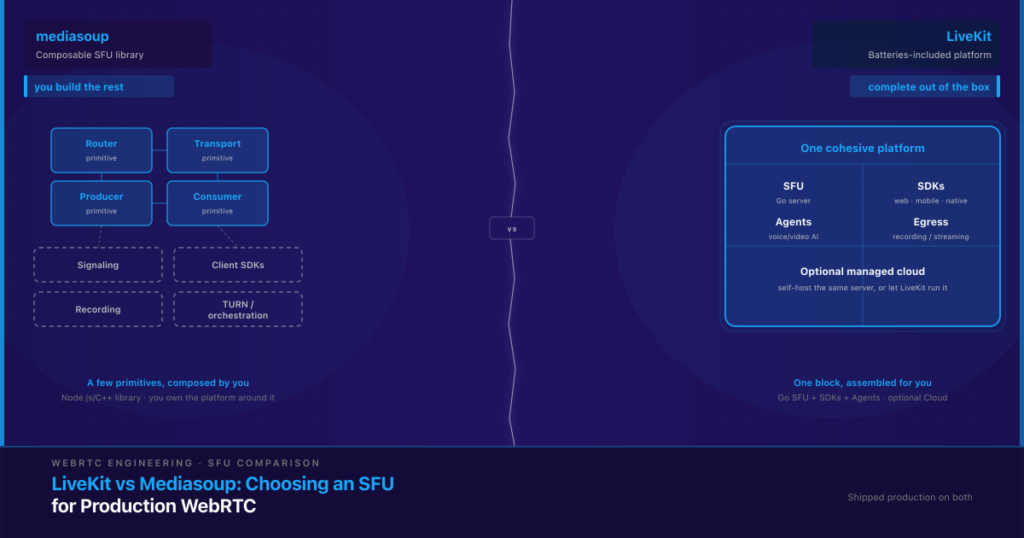
LiveKit and Mediasoup are both open-source Selective Forwarding Units (SFUs) for building real-time WebRTC video and voice, but they sit at different levels of the stack. LiveKit is a batteries-included platform: a Go SFU plus official client SDKs, room and participant management, recording/streaming (egress), an AI-agents framework, and an optional managed cloud. Mediasoup is a […]
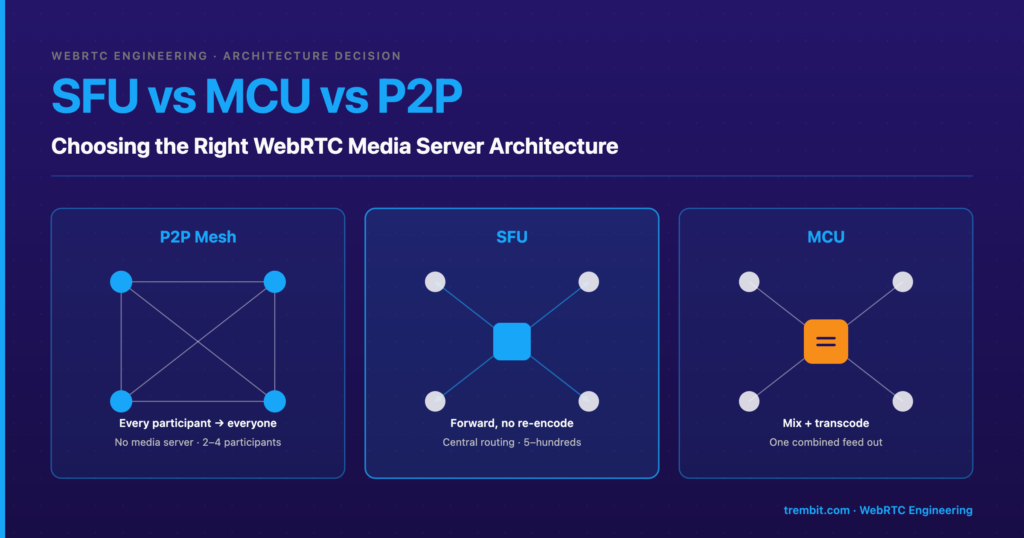
SFU, MCU and P2P (mesh) differ in one thing: where the media flows. In P2P mesh, every participant sends a separate copy of their stream to every other participant, so in a 6-person call each device uploads 5 streams. That is why mesh stops scaling after a handful of people. An SFU (Selective Forwarding Unit) takes one upload […]
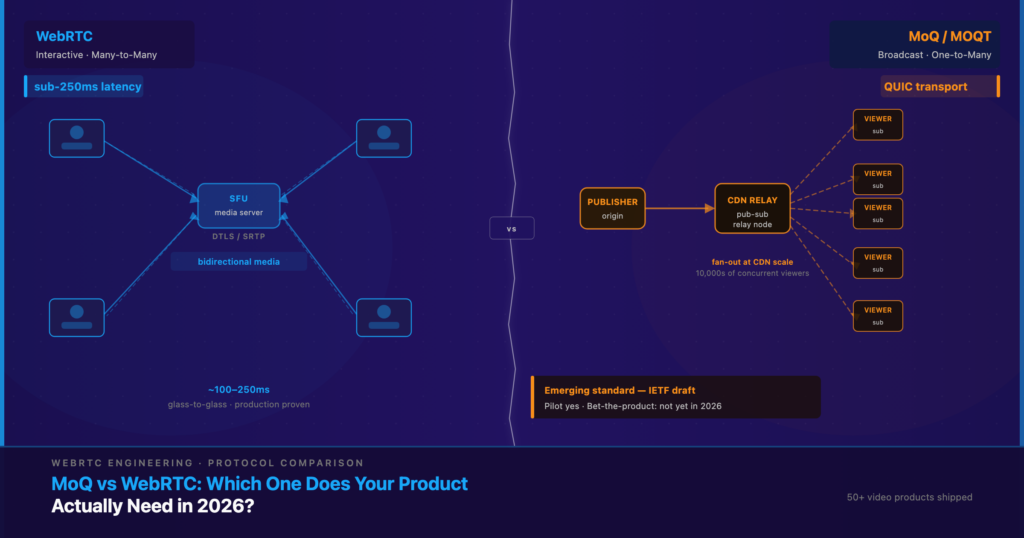
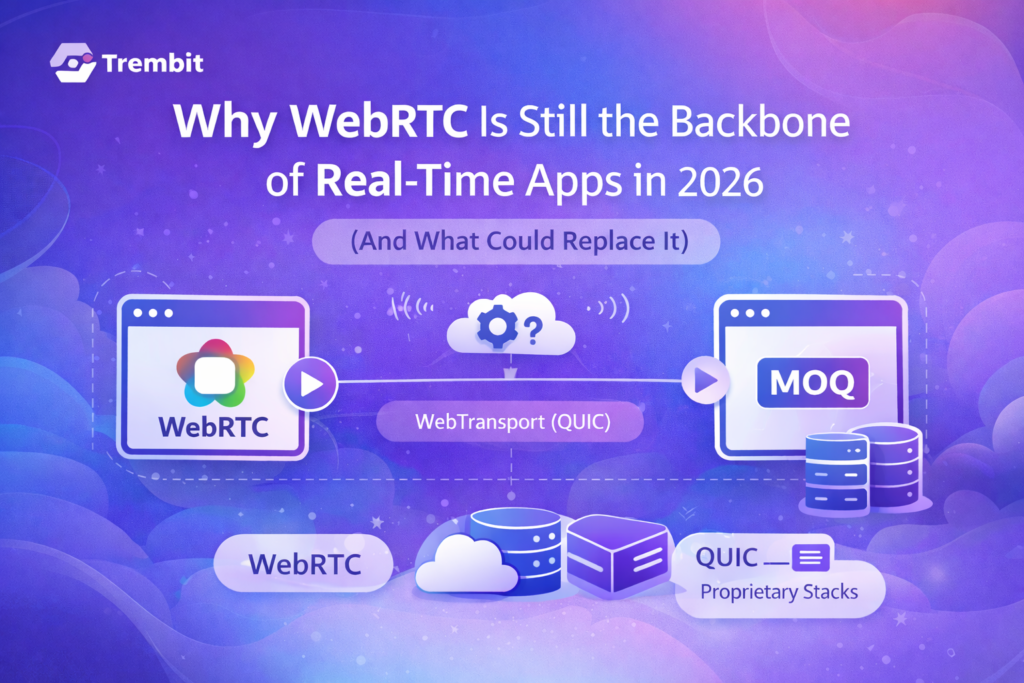
WebRTC is the browser-native protocol for interactive, two-way real-time communication — calls, telehealth, conferencing — with proven sub-250ms latency. MoQ (Media over QUIC) is an emerging IETF standard built on QUIC for scalable one-to-many streaming, unifying live, time-shifted, and on-demand delivery through a publish-subscribe relay model. They solve different problems. As of 2026 they coexist […]
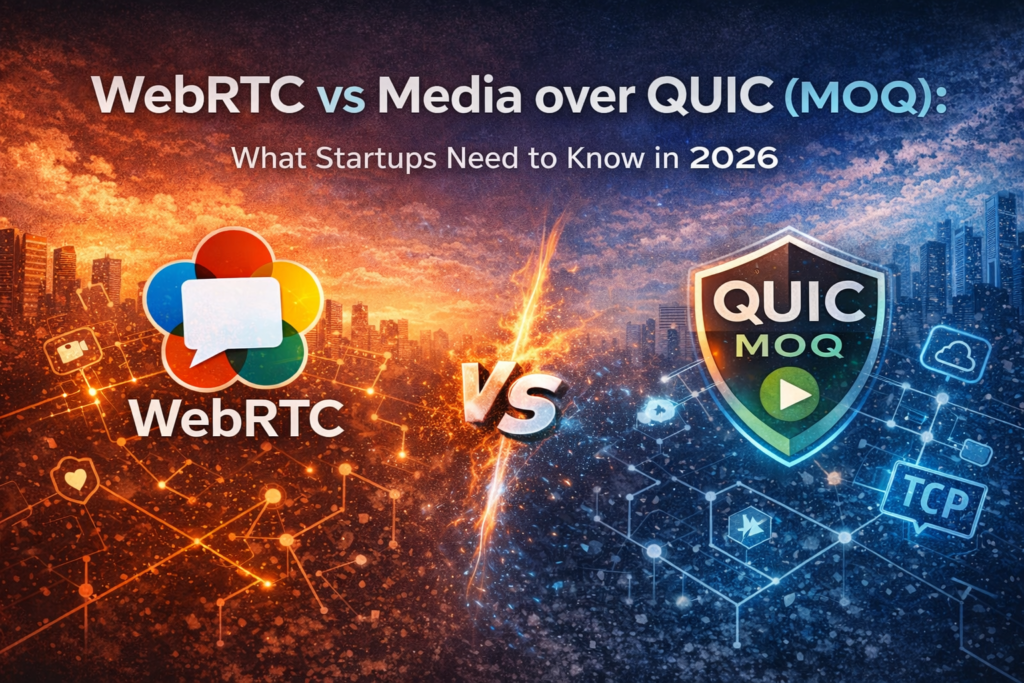
“Should we build on WebRTC or wait for MOQ?” That’s the question we heard three times last month from startup CTOs planning their video platforms. Each time, our answer surprised them. The short version: in 2026, you’re almost certainly building on WebRTC. But the longer answer — about when MOQ makes sense, where WebRTC breaks, […]
“So… are we still betting on WebRTC?” Last month, during a discovery call with a SaaS founder, we heard that exact question. The team was planning a major upgrade of their video collaboration platform. They wanted to know whether WebRTC was still the right foundation. They had read about MOQ and QUIC. They had seen […]
“Should we switch to AV1 for our video platform?” we’ve heard this question at least a dozen times in the past six months from product managers looking to optimize their WebRTC applications. The answer keeps surprising them: probably not yet. Despite years of hype, better compression numbers that look amazing on paper, and backing from […]
What is WebRTC and why it matter for businesses In today’s fast-paced business world, real-time communication is more important than ever. Enter WebRTC (Web Real-Time Communication), a powerful technology that’s revolutionizing how we connect online. Whether you’re considering video conferencing solutions, customer support chat systems, or interactive collaboration tools, understanding WebRTC is important for making […]
Introduction Imagine connecting face-to-face with anyone in the world instantly, without special software. Whether it’s a business meeting, a telehealth consultation, or a virtual classroom, real-time communication using WebRTC has become integral to our daily lives. The demand for seamless, high-quality interactions is driving innovation in how we connect online. Enter WebRTC, a groundbreaking technology […]
Introduction Imagine being able to have a face-to-face conversation with anyone in the world, instantly and without any special software. Whether it’s a business meeting, a telehealth consultation, or a virtual classroom, real-time communication has become an integral part of our daily lives. The demand for seamless, high-quality interactions is higher than ever, driving innovation […]
If your business needs to implement media streaming capabilities, there is an important component that needs to be considered without which this activity cannot be carried out. We are talking about the WebRTC server. Since there are several types of such servers and even more offers on the market, it can be difficult to assess […]
There is hardly anyone who has not heard of Skype. It has become synonymous with real-time video calls. You need to install specific software on your device to use this or a similar communication solution. But what if you can avoid loading your computer or phone with another program? What if you could connect with […]
Building WebRTC video conferencing that works for a handful of people is easy — the browser does most of the work for you. Building it for a hundred people in the same room is where things fall apart. The peer-to-peer model that makes WebRTC so simple at small scale collapses once everyone has to send […]