AI Development

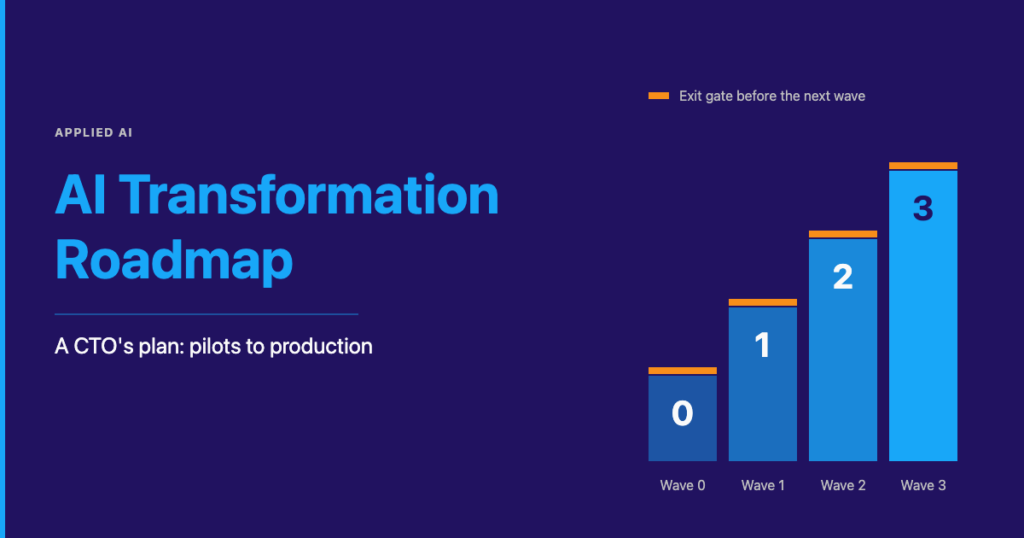
AI Transformation Roadmap: A CTO’s Practical Plan for Moving from Pilots to Production

AI Transformation Roadmap: A CTO’s Practical Plan for Moving from Pilots to Production

A CTO’s plan for moving AI from pilots to production: readiness checks per workflow, wave-based sequencing with exit gates, legacy options and governance.

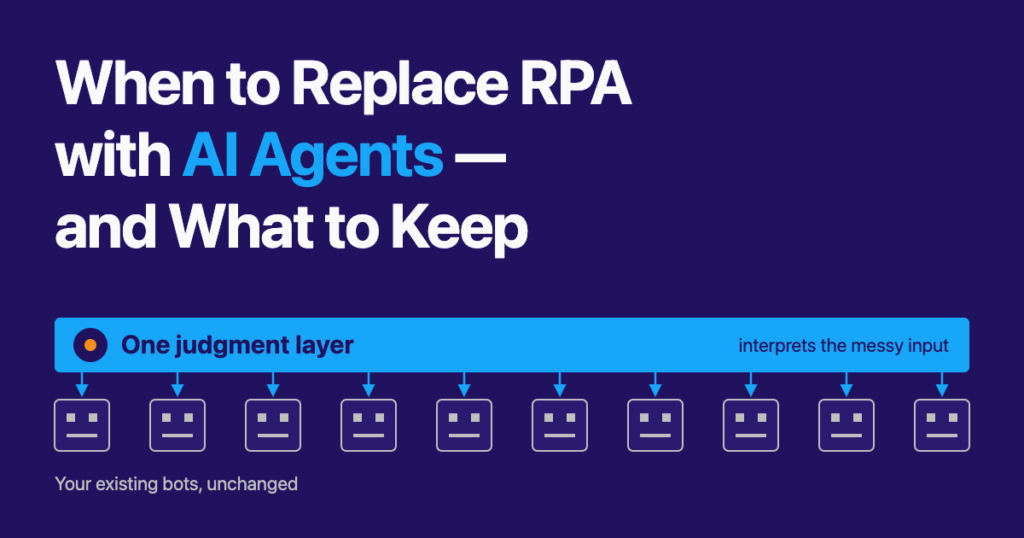
When to Replace RPA with AI Agents — and What to Keep

When to Replace RPA with AI Agents — and What to Keep

A decision guide for teams that already run RPA: which bots to migrate, which to keep, the real maintenance tradeoff, and how to sequence it.

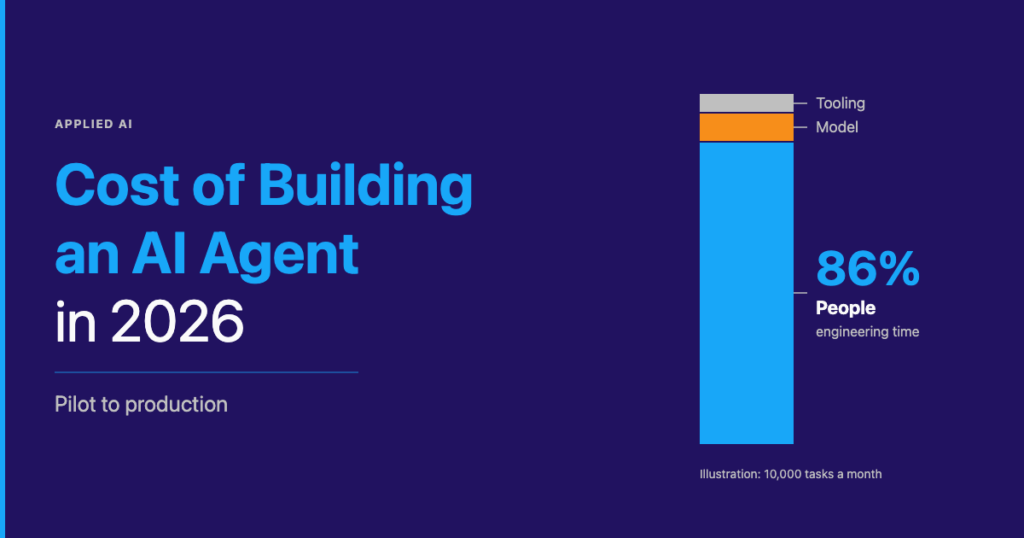
Cost of Building an AI Agent in 2026: Pilot to Production

Cost of Building an AI Agent in 2026: Pilot to Production

What an AI agent costs to build and run in 2026: effort by stage, monthly model and tooling costs, a worked 10,000-task example and the costs estimates miss.

Multi-Agent Orchestration: What Actually Breaks When LLM Agents Coordinate in Production

Multi-Agent Orchestration: What Actually Breaks When LLM Agents Coordinate in Production

Multi-agent LLM systems fail for predictable reasons — shared state, runaway loops, cost blowups. What actually breaks, and how to design around it.

WebRTC Data Channels: How to Sync AI Metadata in Real Time

WebRTC Data Channels: How to Sync AI Metadata in Real Time

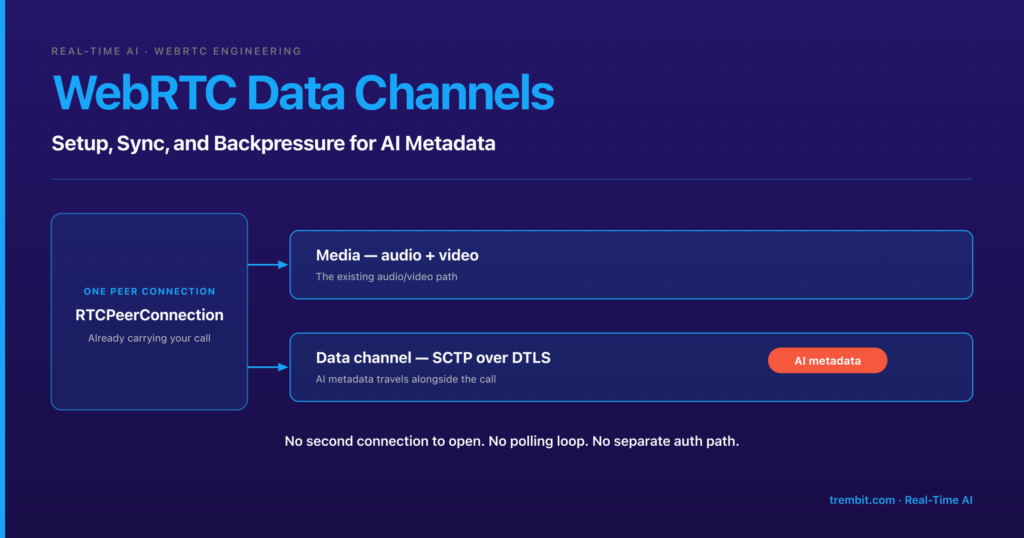
How to set up a WebRTC data channel, choose a reliability mode, keep it in sync with video, and handle backpressure — spec-grounded, not vendor blogs.

AI Video Enhancement in a WebRTC Stack: The GPU Trade-Off Guide

AI Video Enhancement in a WebRTC Stack: The GPU Trade-Off Guide

“AI video enhancement” in a WebRTC product almost always means one of three things: noise suppression (cleaning up what a participant’s microphone picks up), background removal or replacement (blurring or swapping what’s behind them), and super-resolution (upscaling a low-bitrate or low-resolution video track). They get sold as one feature set. They are not one engineering decision. Noise suppression and basic background […]

AI Document Processing for FinTech: What It Takes to Build a Decision-Grade Pipeline

AI Document Processing for FinTech: What It Takes to Build a Decision-Grade Pipeline

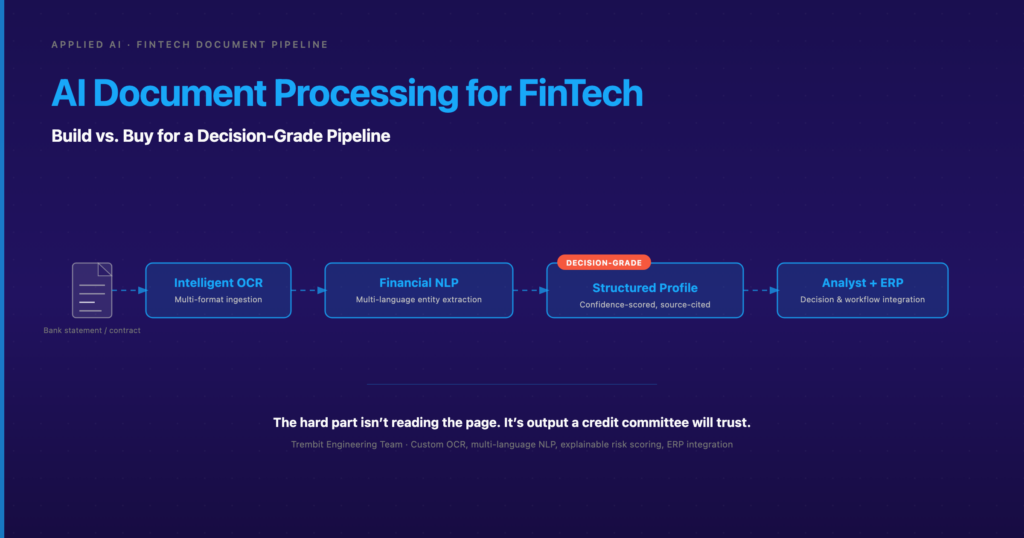
AI document processing for FinTech is the use of custom OCR, natural language processing, and machine learning to turn unstructured financial documents — bank statements, leasing contracts, loan applications, KYC files — into structured, decision-grade data that underwriting, risk, and compliance teams can act on with confidence. It goes further than generic OCR, which reads […]

Real-Time Video Analytics on a Live Stream: Auto-Highlights for Sports, Commerce, and Events

Real-Time Video Analytics on a Live Stream: Auto-Highlights for Sports, Commerce, and Events

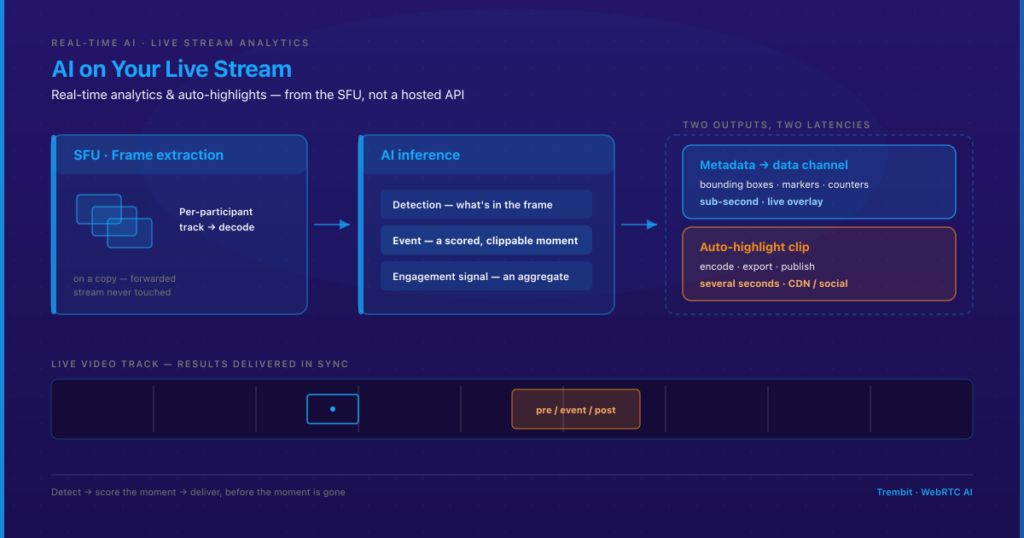
Real-time video analytics on a live stream means running AI inference on frames while the broadcast is still in flight — detecting objects and events, scoring which moments matter, and delivering the results (bounding boxes, highlight markers, engagement counts) back to viewers or an ops dashboard in sync with the video. Unlike post-broadcast highlight editing, it works […]

AI Agents for Business: What They Actually Automate (and What They Don’t)

AI Agents for Business: What They Actually Automate (and What They Don’t)

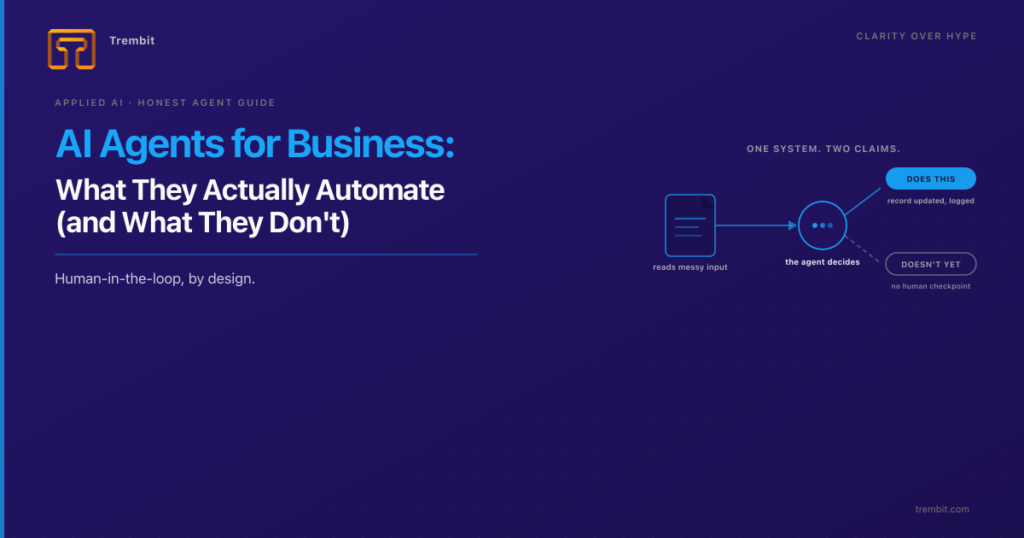
An honest look at what AI agents reliably automate for businesses today — and where the hype outruns reality. No vendor spin.

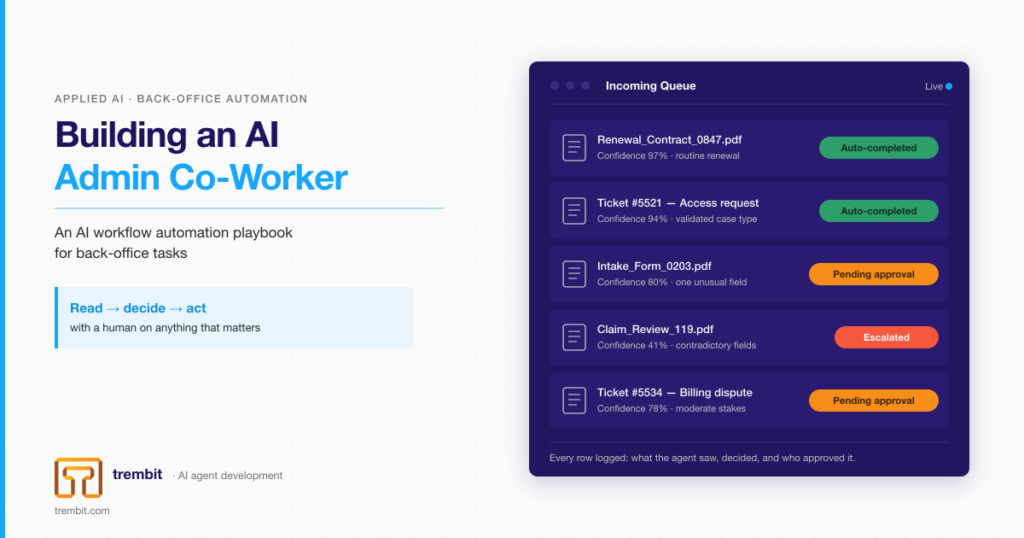
Building an AI “Admin Co-Worker”: Back-Office Automation with Human-in-the-Loop

Building an AI “Admin Co-Worker”: Back-Office Automation with Human-in-the-Loop

A step-by-step playbook for building an AI admin co-worker: automate back-office tasks with human-in-the-loop checkpoints, guardrails, and audit trails.

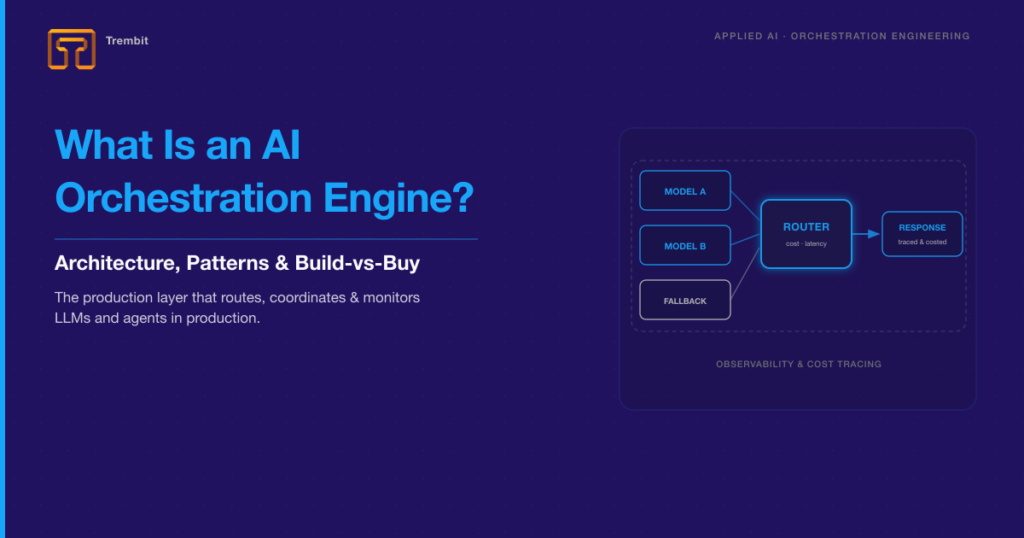
What Is an AI Orchestration Engine? Architecture, Patterns, and Build-vs-Buy

What Is an AI Orchestration Engine? Architecture, Patterns, and Build-vs-Buy

By the Trembit Engineering Team · Last updated: 2026-07-08 An AI orchestration engine is the production layer that sits between your application and its models. It routes each request to the right model, handles fallback and retries when one fails, manages the RAG and context pipeline, coordinates multi-step and multi-agent workflows, enforces guardrails, and gives […]

Do You Really Need 4K? How AI Upscaling Is Changing Video Quality Decisions

Do You Really Need 4K? How AI Upscaling Is Changing Video Quality Decisions

“We’re thinking about upgrading to 4K for our video platform.” That’s what a startup CTO told us last month. His team was planning significant infrastructure investment to support higher resolution streams — more storage, more bandwidth, more server capacity. Our response surprised him: “What if you don’t need to send 4K at all?” In 2026, […]

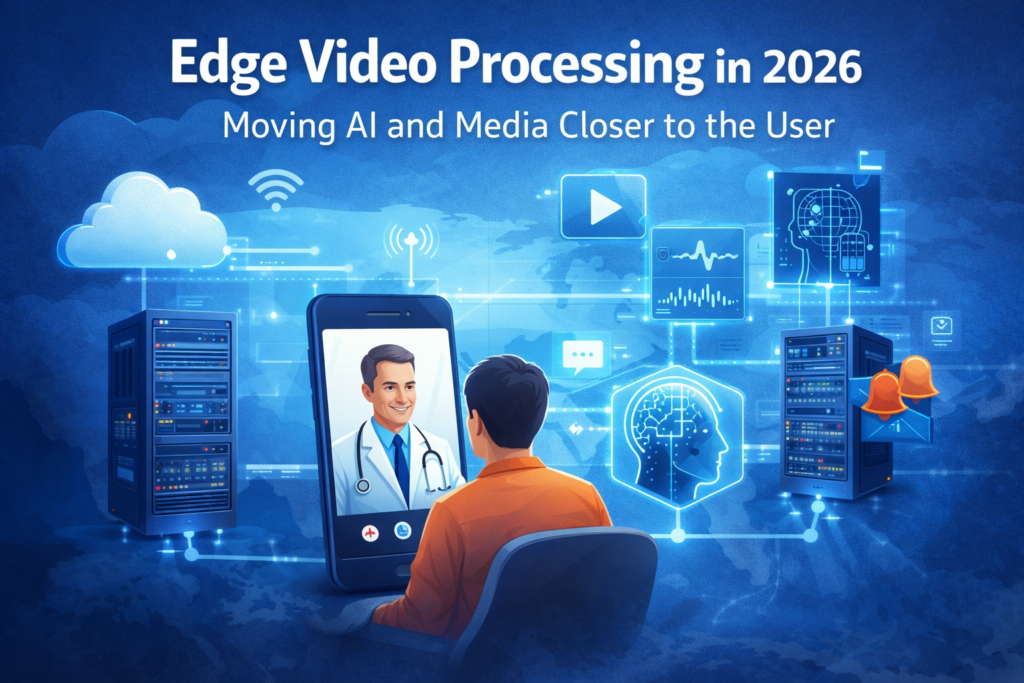
Edge Video Processing in 2026: Moving AI and Media Closer to the User

Edge Video Processing in 2026: Moving AI and Media Closer to the User

A telehealth startup recently discovered that its video consultations worked beautifully in Seattle but struggled in rural Montana. Latency spiked to 800ms, doctor-patient conversations felt unnatural, and patient satisfaction scores dropped. The diagnosis? All video processing happened in a single AWS region, thousands of miles from half their users. The solution wasn’t faster internet — […]

Generative AI in WebRTC Pipelines — Without the Latency Cost

Generative AI in WebRTC Pipelines — Without the Latency Cost

Real-time communication demands split-second responsiveness. A video call feels natural when latency stays below 300 milliseconds. Exceed 500 milliseconds, and conversations become awkward — speakers talk over each other, pauses feel unnatural, and engagement drops. These tight latency constraints created a problem when generative AI entered the picture. The OpenAI Realtime API’s WebRTC integration enables […]

Why AI Upscaling Beats Better Codecs for Live Video in 2026

Why AI Upscaling Beats Better Codecs for Live Video in 2026

The conventional wisdom in video streaming has been straightforward: better quality requires better codecs. AV1 promised 30-40% bandwidth savings over H.264, and the industry has invested billions in making it a reality. GPU manufacturers added hardware support, browsers implemented decoders, and platforms began migrations. Yet in 2026, a different approach is reshaping video optimization — […]

Why WebRTC + AI Architectures Fail at Scale (and What Actually Works)

Why WebRTC + AI Architectures Fail at Scale (and What Actually Works)

The convergence of WebRTC and AI promised revolutionary real-time experiences. Voice agents respond in milliseconds. Video streams enhanced by neural networks. Intelligent routing adapts to network conditions in real time. Yet across production deployments in 2025, engineering teams encounter the same failure patterns repeatedly. Systems that work brilliantly in demos collapse under real load. Latency […]

How AI Analytics Helps Streaming Platforms Predict and Reduce Viewer Churn

How AI Analytics Helps Streaming Platforms Predict and Reduce Viewer Churn

In the extremely competitive world of streaming services, retaining viewers is as crucial as attracting them. With plenty of available options, users can easily switch platforms, making viewer churn a significant concern. Artificial Intelligence (AI) analytics emerges as a powerful merge, enabling streaming platforms to predict and mitigate churn fast and precisely. Understanding Viewer Churn […]

AI-Powered Video Streaming: Enhancing User Experience and Monetization

AI-Powered Video Streaming: Enhancing User Experience and Monetization

The video streaming industry is evolving rapidly, and artificial intelligence (AI) is at the heart of this transformation. AI redefines how audiences engage with digital content – from optimizing content delivery to personalizing user experiences and revolutionizing ad monetization. In this article, we will prospect how AI-powered solutions continuously enhance video streaming and maximize revenue […]

AI-Powered Workflow Automation: From Repetitive Tasks to Smart Decisions

AI-Powered Workflow Automation: From Repetitive Tasks to Smart Decisions

In today’s fast-paced digital landscape, businesses must continuously optimize their workflows to remain competitive. AI-powered workflow automation transforms how organizations handle repetitive tasks, freeing employees to focus on strategic, high-value work. From data processing to customer interactions, AI-driven automation drives business operations more efficiently, accurately, and intelligently. Beyond productivity, this directly lowers operating costs — […]

The Cost-Saving Benefits of AI in Business Process Automation

The Cost-Saving Benefits of AI in Business Process Automation

How AI Helps Businesses Reduce Costs and Improve Efficiency Artificial Intelligence (AI) is now transforming business process automation by streamlining operations, reducing manual intervention, and increasing accuracy. Traditional workflows often suffer from inefficiencies, human errors, and high labor costs, which impact a company’s bottom line. AI-driven automation offers a strategic solution by enabling real-time decision-making, […]