Real-Time Video & Streaming

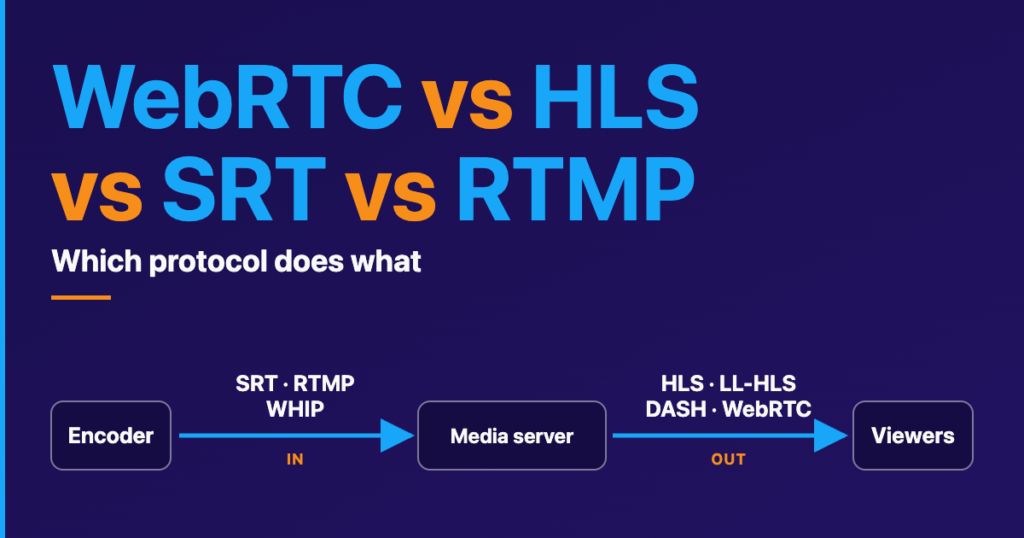
WebRTC vs HLS vs SRT vs RTMP: Which Protocol Does What

WebRTC vs HLS vs SRT vs RTMP: Which Protocol Does What

SRT and RTMP carry a stream in; WebRTC, LL-HLS and HLS carry it out. A role-by-role comparison of latency, scale, DRM and firewall behavior.

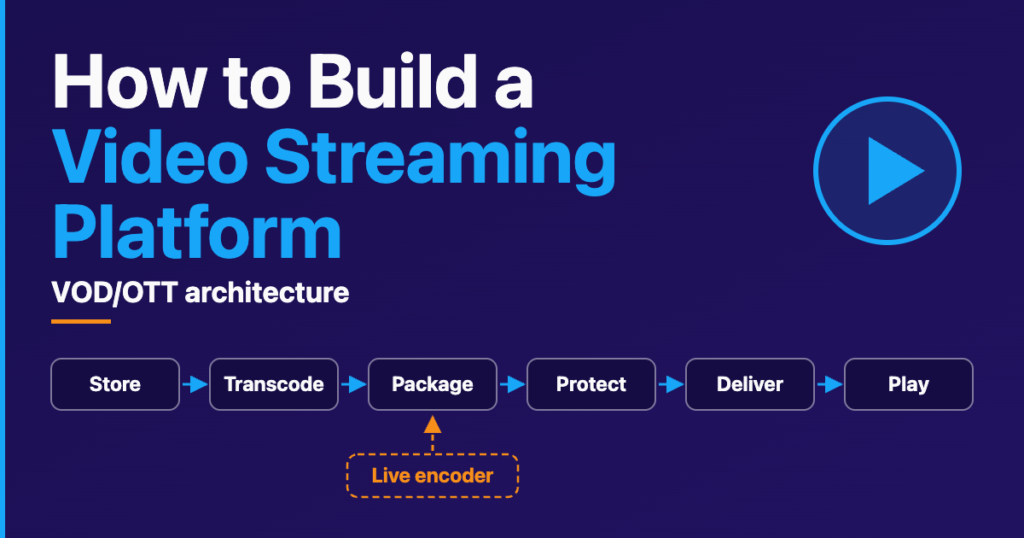
How to Build a Video Streaming Platform: VOD/OTT Architecture

How to Build a Video Streaming Platform: VOD/OTT Architecture

How a VOD/OTT streaming platform fits together: transcoding, packaging, DRM, CDN and player, plus where live streaming plugs into the same stack.

Designing a Coin Economy for Pay-Per-Minute Video Calls

Designing a Coin Economy for Pay-Per-Minute Video Calls

Pay-per-minute video calls: how a coin balance is debited, warned and settled when either side hangs up, the network drops or coins run out.

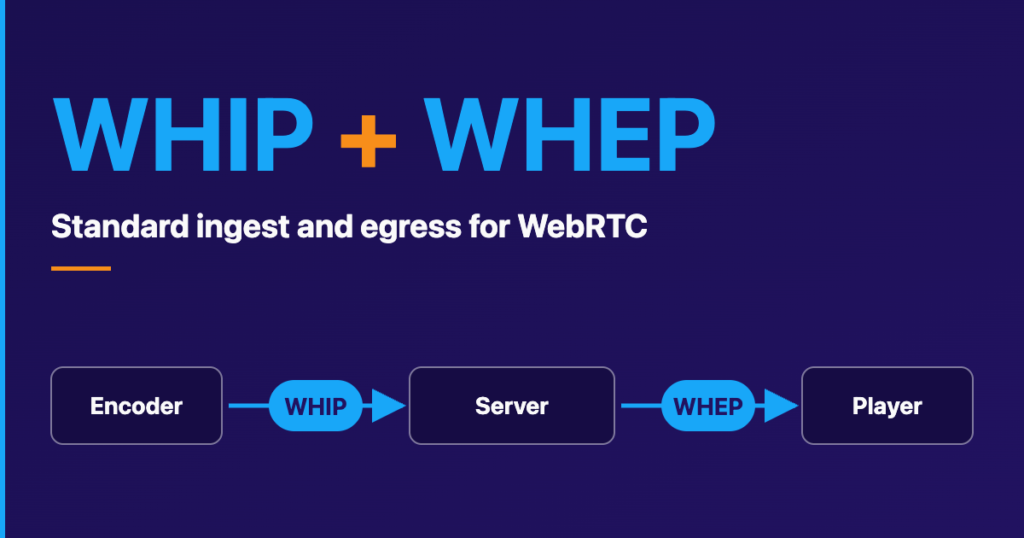
WHIP and WHEP Explained for CTOs: Standard Ingest and Egress for WebRTC

WHIP and WHEP Explained for CTOs: Standard Ingest and Egress for WebRTC

WHIP (RFC 9725) and WHEP (IETF draft) define WebRTC ingest and playback over plain HTTP. How they work, who supports them, and what to build or buy.

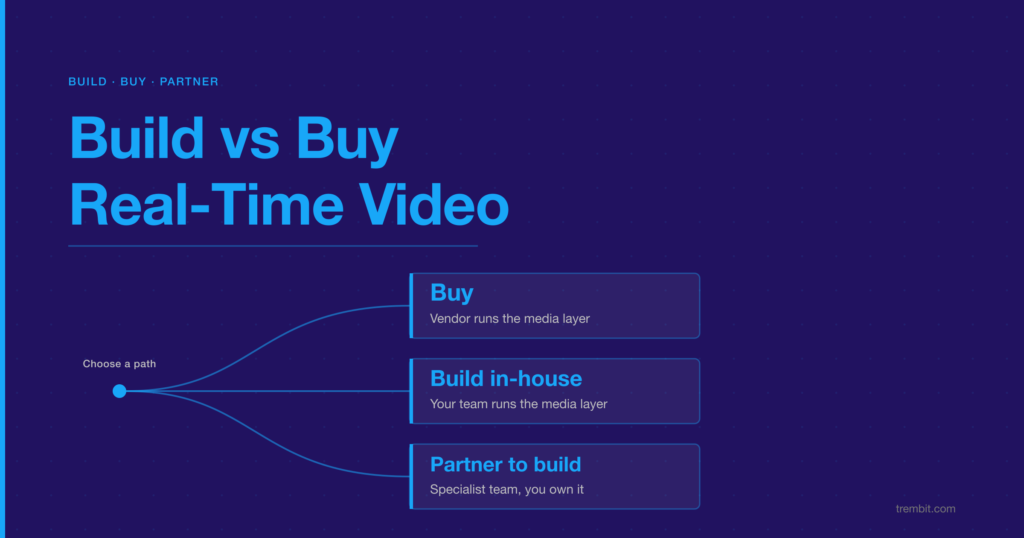
Build vs Buy Real-Time Video: CPaaS, In-House, or a Specialist Partner?

Build vs Buy Real-Time Video: CPaaS, In-House, or a Specialist Partner?

Build vs buy real-time video, compared: 8 video APIs, 5 open-source media servers, HIPAA, GDPR and KBV rules, and when each path wins. Checked Sep 2026.

Top Live Streaming App Development Companies (2026)

Top Live Streaming App Development Companies (2026)

Compare the top live streaming app development companies of 2026 — latency tier, protocols, interaction features, and proof points for buyers.

Is WebRTC Too Expensive to Scale, and Does MoQ Fix That?

Is WebRTC Too Expensive to Scale, and Does MoQ Fix That?

WebRTC gets genuinely expensive in one narrow place: large one-to-many broadcast, where every viewer needs its own relayed stream, the SFU — the server that forwards media to each participant — has to be provisioned for peak concurrency, and cascading between regions bills the same bytes more than once. Below roughly 1,000 concurrent viewers per […]

LiveKit vs Mediasoup: Picking the Right SFU for Your Product

LiveKit vs Mediasoup: Picking the Right SFU for Your Product

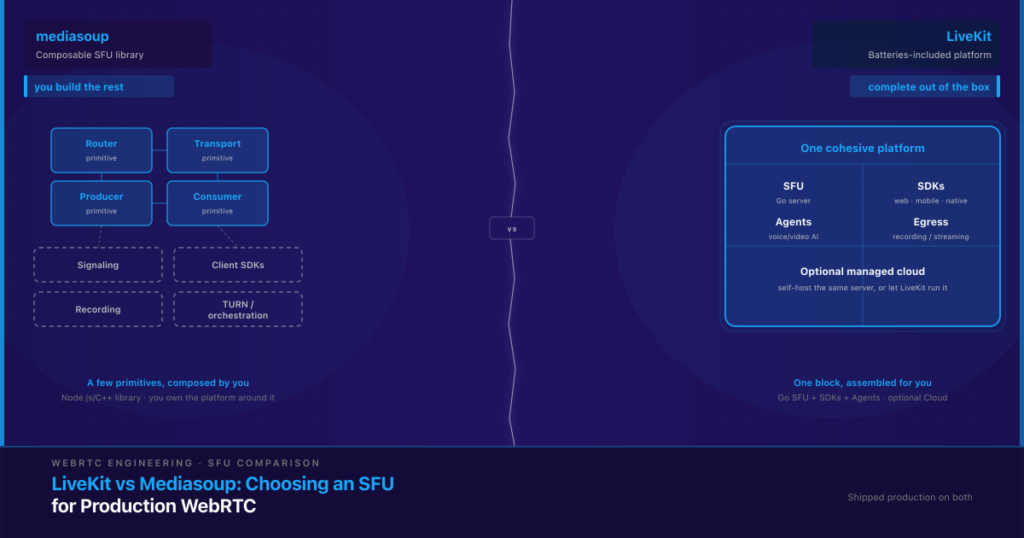
LiveKit and Mediasoup are both open-source Selective Forwarding Units (SFUs) for building real-time WebRTC video and voice, but they sit at different levels of the stack. LiveKit is a batteries-included platform: a Go SFU plus official client SDKs, room and participant management, recording/streaming (egress), an AI-agents framework, and an optional managed cloud. Mediasoup is a […]

SFU vs MCU vs P2P: Choosing the Right WebRTC Media Server Architecture

SFU vs MCU vs P2P: Choosing the Right WebRTC Media Server Architecture

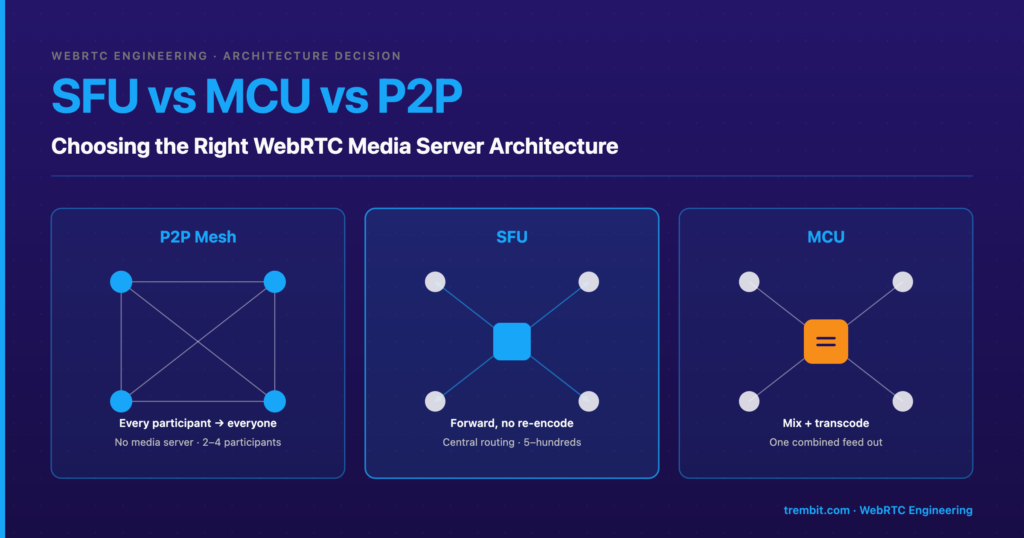
SFU, MCU and P2P (mesh) differ in one thing: where the media flows. In P2P mesh, every participant sends a separate copy of their stream to every other participant, so in a 6-person call each device uploads 5 streams. That is why mesh stops scaling after a handful of people. An SFU (Selective Forwarding Unit) takes one upload […]

MoQ vs WebRTC: Which One Does Your Product Actually Need in 2026?

MoQ vs WebRTC: Which One Does Your Product Actually Need in 2026?

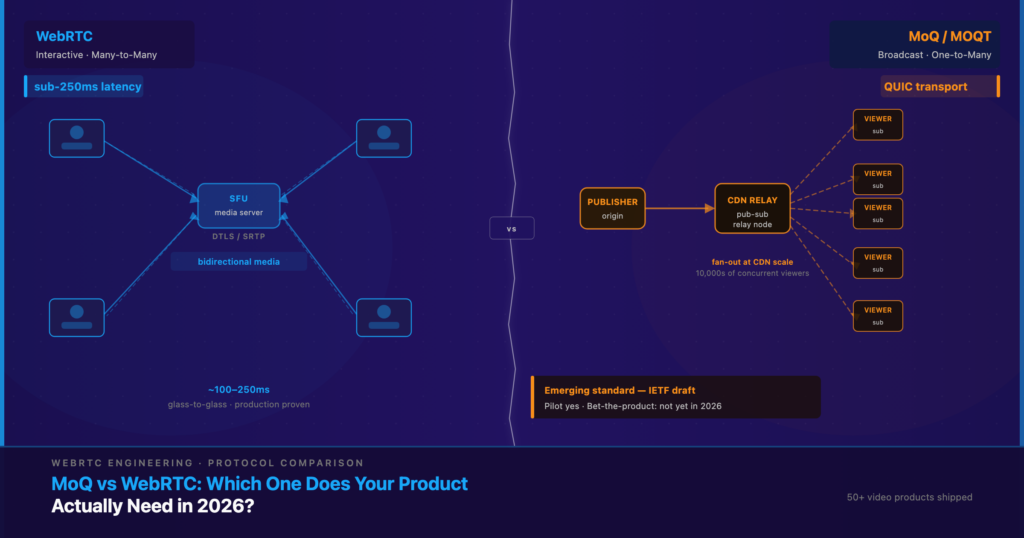
WebRTC is the browser-native protocol for interactive, two-way real-time communication — calls, telehealth, conferencing — with proven sub-250ms latency. MoQ (Media over QUIC) is an emerging IETF standard built on QUIC for scalable one-to-many streaming, unifying live, time-shifted, and on-demand delivery through a publish-subscribe relay model. They solve different problems. As of 2026 they coexist […]

Migrating Off Twilio Video: End-of-Life Status and a WebRTC Migration Playbook

Migrating Off Twilio Video: End-of-Life Status and a WebRTC Migration Playbook

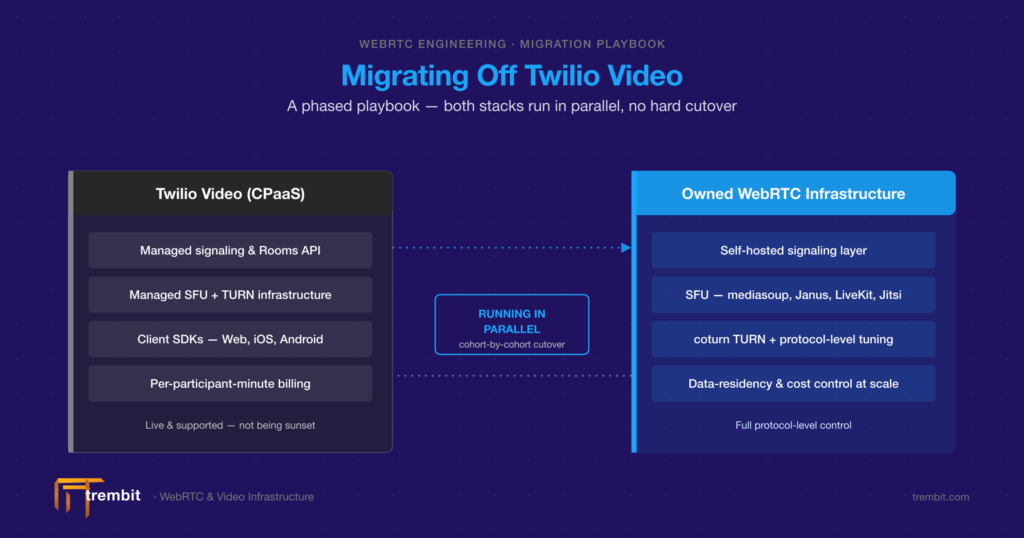
Is Twilio Programmable Video shutting down? No. Twilio first announced an end of life for Video in late 2023, set the date at December 5, 2026 in March 2024, and then reversed the decision on October 21, 2024: Video “will remain a standalone product.” It is still sold with a free trial, and Twilio shipped […]

How to Rescue a Broken WebRTC Codebase: A Protocol-Level Diagnosis Playbook

How to Rescue a Broken WebRTC Codebase: A Protocol-Level Diagnosis Playbook

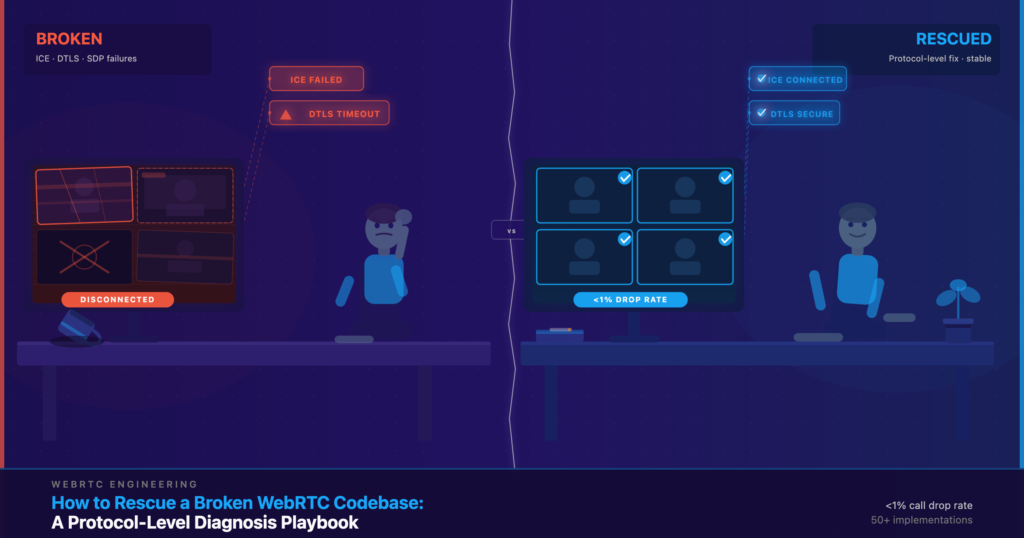
A WebRTC rescue is what happens when a live video product is failing — calls drop, connections hang on “connecting,” audio goes one-way — and the team that owns the code can’t find the root cause. Usually the codebase was inherited or built by a team that has moved on, and the engineers left holding it are […]

WebRTC vs Media over QUIC (MOQ): What Startups Need to Know in 2026

WebRTC vs Media over QUIC (MOQ): What Startups Need to Know in 2026

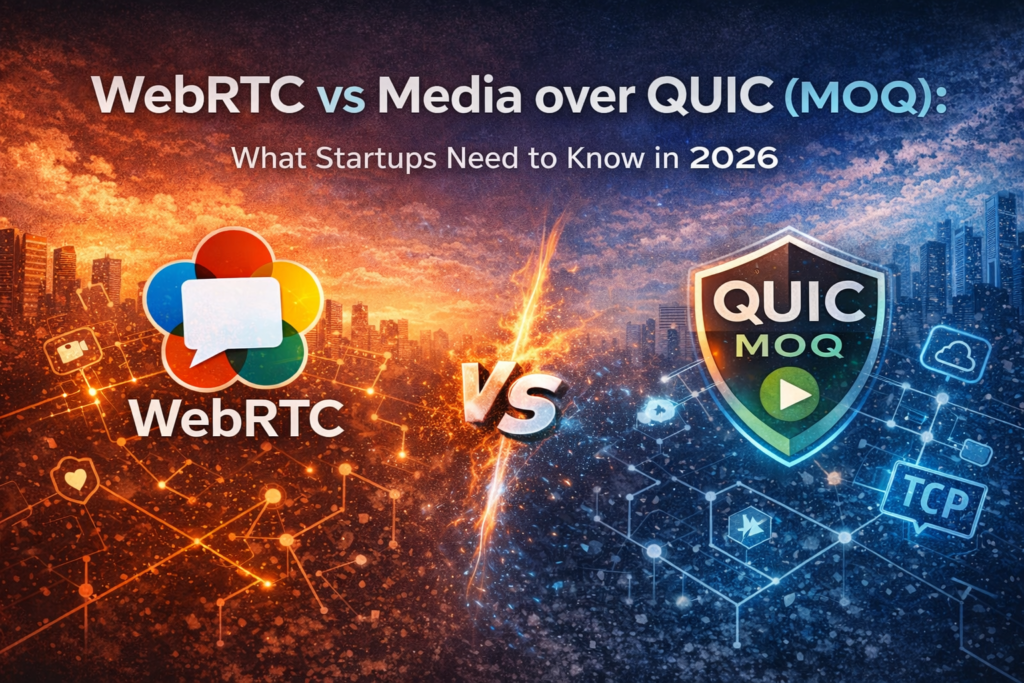
“Should we build on WebRTC or wait for MOQ?” That’s the question we heard three times last month from startup CTOs planning their video platforms. Each time, our answer surprised them. The short version: in 2026, you’re almost certainly building on WebRTC. But the longer answer — about when MOQ makes sense, where WebRTC breaks, […]

Why WebRTC Is Still the Backbone of Real-Time Apps in 2026 (And What Could Replace It)

Why WebRTC Is Still the Backbone of Real-Time Apps in 2026 (And What Could Replace It)

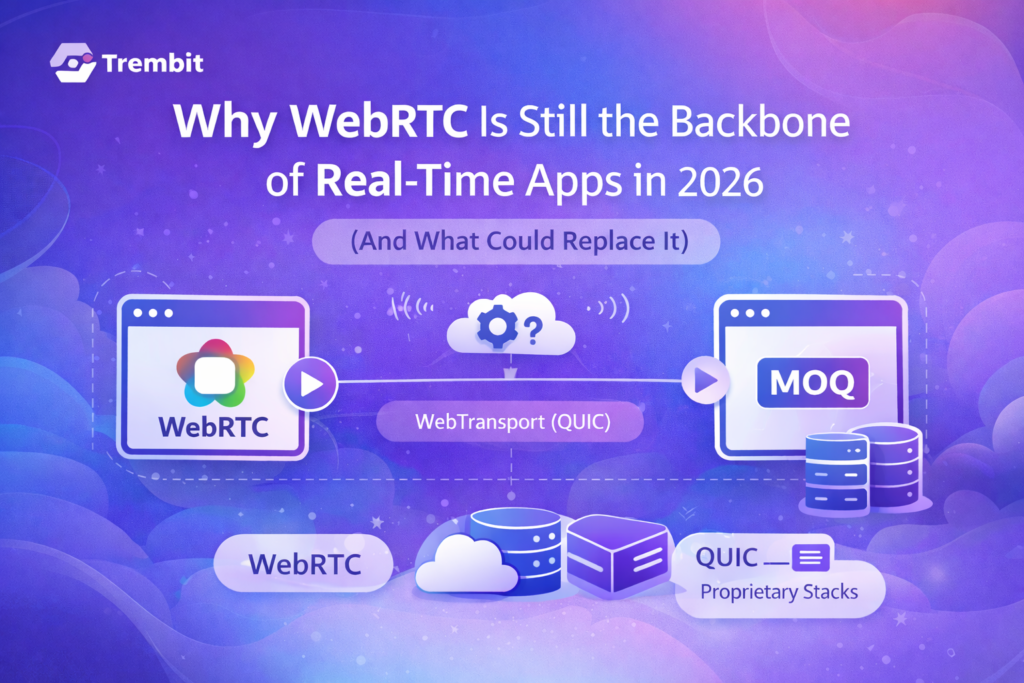
“So… are we still betting on WebRTC?” Last month, during a discovery call with a SaaS founder, we heard that exact question. The team was planning a major upgrade of their video collaboration platform. They wanted to know whether WebRTC was still the right foundation. They had read about MOQ and QUIC. They had seen […]

AV1 in 2026: Why the ‘Next-Gen Codec’ Still Isn’t Dominant

AV1 in 2026: Why the ‘Next-Gen Codec’ Still Isn’t Dominant

“Should we switch to AV1 for our video platform?” we’ve heard this question at least a dozen times in the past six months from product managers looking to optimize their WebRTC applications. The answer keeps surprising them: probably not yet. Despite years of hype, better compression numbers that look amazing on paper, and backing from […]

Ultra-Low Latency Streaming: When WebRTC Is Mandatory (And When It’s Overkill)

Ultra-Low Latency Streaming: When WebRTC Is Mandatory (And When It’s Overkill)

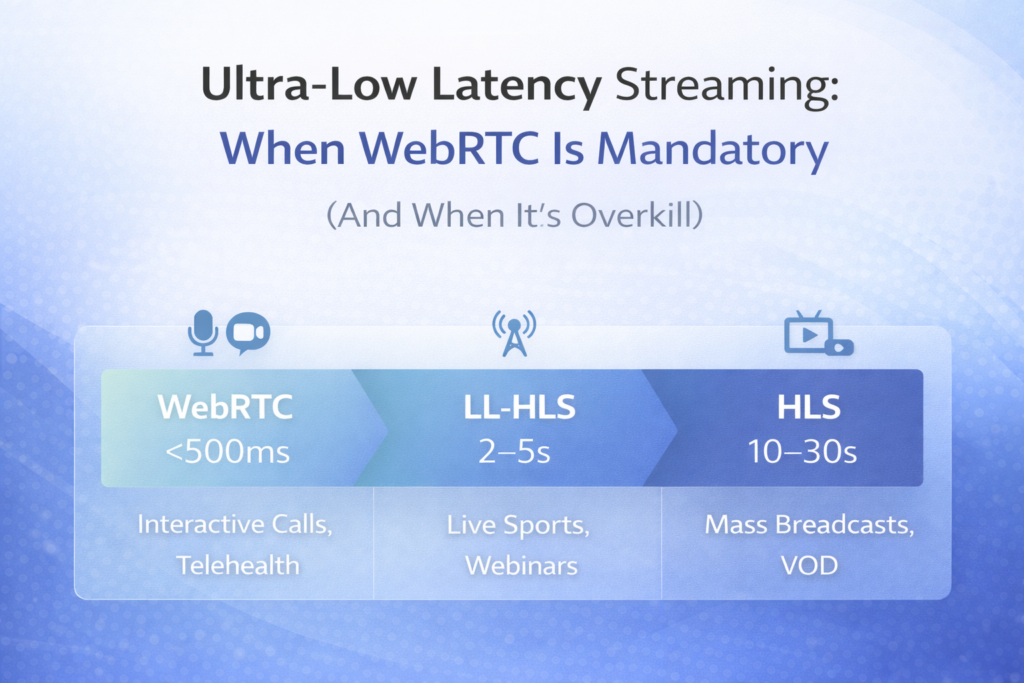
“We need sub-second latency for our live streaming platform.” That’s what the founder told us last week. When we asked what they were building, they said it was a sports broadcasting app for casual viewing — not betting, not interactive, just watching games. Our next question surprised them: “Why do you need sub-second latency for […]

Why WebRTC Projects Fail: 5 Common Problems in Production

Why WebRTC Projects Fail: 5 Common Problems in Production

You’ve built a real-time communication feature that includes video calls, screen sharing, and live collaboration. It worked in the demo. But now users are dropping calls, mobile devices fail to connect, and your engineering team has spent three sprints chasing ghosts in a codebase nobody fully understands anymore. This is the moment many CTOs reach […]

How to Predict WebRTC Call Failures Early

How to Predict WebRTC Call Failures Early

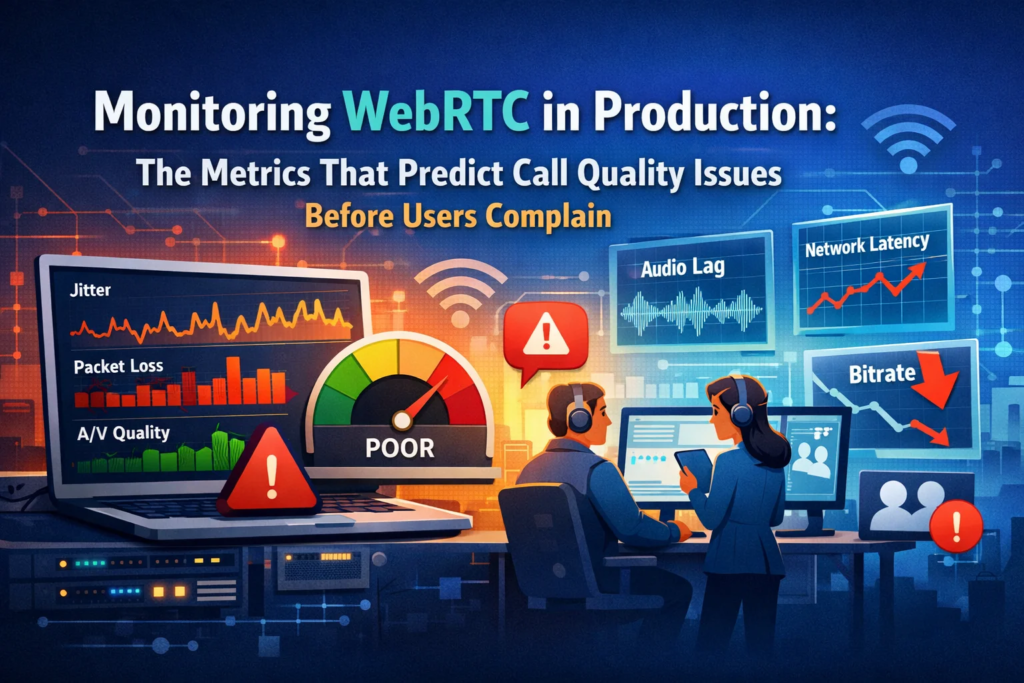
The worst way to find out your WebRTC platform has a quality problem is from users. By the time someone files a support ticket or leaves a negative review, dozens of other users have quietly given up, refreshed the page, or — in healthcare — abandoned the consultation entirely. Reactive monitoring in real-time media systems […]

How US Startups Can Benefit from Live Streaming App Development Services

How US Startups Can Benefit from Live Streaming App Development Services

Introduction to Trembit: Your Partner in Live Streaming App Development At Trembit, we specialize in building world-class live streaming applications tailored to the unique needs of startups. With over a decade of expertise in video streaming, AI integration, and scalable cloud architectures, Trembit helps US startups move from vision to product launch quickly, cost-effectively, and […]

Top European Companies Specializing in VOD Streaming App Development

Top European Companies Specializing in VOD Streaming App Development

In today’s fast-moving digital world, Video on Demand (VOD) streaming apps have become essential for businesses looking to deliver engaging content experiences. The European VOD market is experiencing rapid growth, fueled by mobile streaming adoption, the rise of niche content platforms, and supportive EU digital regulations. Traditional broadcasters are shifting to OTT, while new entrants […]