WebRTC has revolutionized real-time communication for healthcare applications, from telemedicine consultations to remote patient monitoring. However, enterprise healthcare networks present unique challenges that can render even the most sophisticated WebRTC implementations ineffective. Understanding these constraints and designing resilient solutions is critical for delivering reliable healthcare communication systems. The Promise and Reality of WebRTC in Healthcare […]
The promise of telemedicine is simple: deliver healthcare anywhere, at any time, with the same quality as an in-person visit. However, achieving this promise creates a fundamental tension between two critical requirements — HIPAA compliance and video performance. Healthcare organizations must simultaneously protect patient privacy through rigorous security measures while delivering the low-latency, high-quality video […]
Group therapy sessions represent one of the most challenging use cases for WebRTC video conferencing platforms. Unlike corporate meetings, where participants can tolerate occasional quality degradation, therapy sessions demand consistent audio clarity and reliable visual connection — the foundation of therapeutic rapport. However, many healthcare organizations discover too late that their video platform performs beautifully […]
Remote patient monitoring has evolved beyond simple data collection. Modern telemedicine platforms combine live video consultations with real-time streaming of vital signs — heart rate, blood oxygen, ECG waveforms, glucose levels — creating a comprehensive view of patient health. However, achieving seamless synchronization between video feeds and sensor data streams presents significant technical challenges that […]
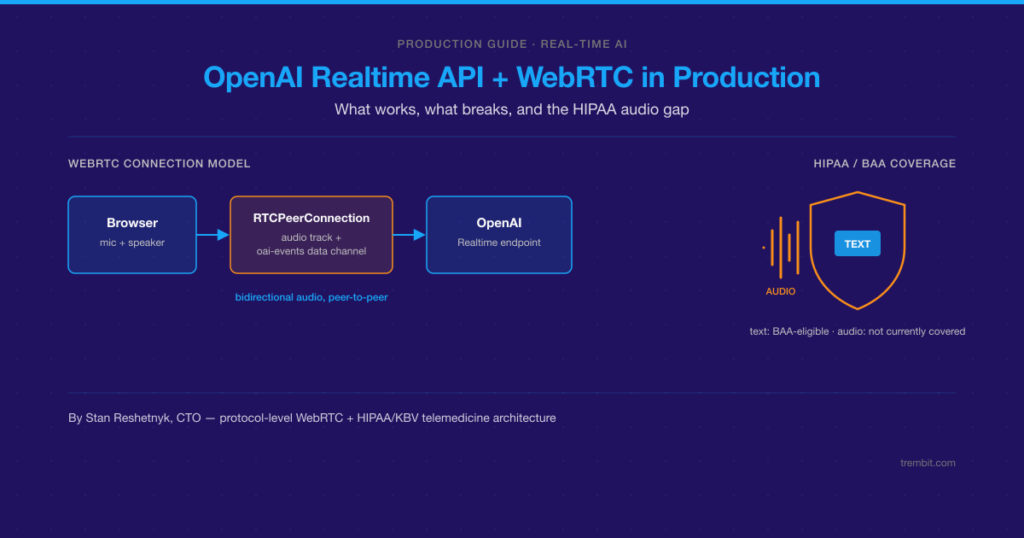
Real-time communication demands split-second responsiveness. A video call feels natural when latency stays below 300 milliseconds. Exceed 500 milliseconds, and conversations become awkward — speakers talk over each other, pauses feel unnatural, and engagement drops. These tight latency constraints created a problem when generative AI entered the picture. The OpenAI Realtime API’s WebRTC integration enables […]
The conventional wisdom in video streaming has been straightforward: better quality requires better codecs. AV1 promised 30-40% bandwidth savings over H.264, and the industry has invested billions in making it a reality. GPU manufacturers added hardware support, browsers implemented decoders, and platforms began migrations. Yet in 2026, a different approach is reshaping video optimization — […]
The convergence of WebRTC and AI promised revolutionary real-time experiences. Voice agents respond in milliseconds. Video streams enhanced by neural networks. Intelligent routing adapts to network conditions in real time. Yet across production deployments in 2025, engineering teams encounter the same failure patterns repeatedly. Systems that work brilliantly in demos collapse under real load. Latency […]
Video conferencing architecture spent a decade optimizing for one assumption: every participant is human. SFU routing, session management, and resource allocation all evolved around this human-centric model. Then AI participants arrived, and the architectural foundations cracked. AI agents don’t behave like humans. They stay connected for hours without breaks. They process audio in milliseconds. They […]
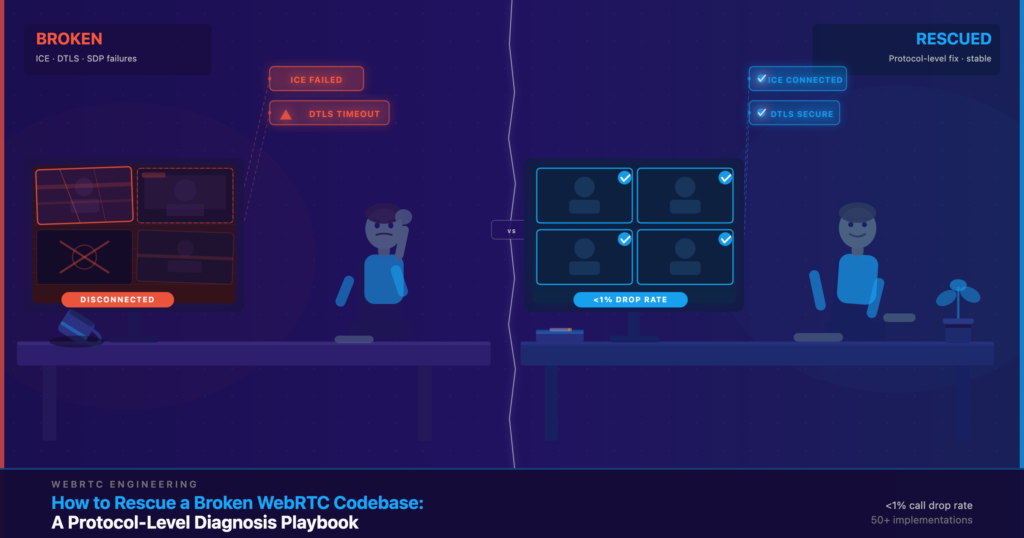
You’ve built a real-time communication feature that includes video calls, screen sharing, and live collaboration. It worked in the demo. But now users are dropping calls, mobile devices fail to connect, and your engineering team has spent three sprints chasing ghosts in a codebase nobody fully understands anymore. This is the moment many CTOs reach […]
The worst way to find out your WebRTC platform has a quality problem is from users. By the time someone files a support ticket or leaves a negative review, dozens of other users have quietly given up, refreshed the page, or — in healthcare — abandoned the consultation entirely. Reactive monitoring in real-time media systems […]
Every WebRTC conversation eventually arrives at the same question: what is this actually going to cost us? It’s a reasonable question that gets surprisingly evasive answers. Vendor pricing pages show “contact us for enterprise pricing.” Blog posts compare sticker prices without accounting for egress fees, support tiers, or the engineering hours required to hold a […]
Most telehealth engineering teams know their platform is “up.” What they don’t know — until a clinician files a complaint or a patient drops off mid-visit — is whether it’s working well. The gap between “the server is running” and “calls are clinically usable” is where telehealth quality problems live. WebRTC quality is inherently variable: […]
Most WebRTC testing content covers one problem: Does the call work? Functional tests, load tests, and network simulation — the engineering discipline of verifying that audio and video flow reliably between participants. In healthcare, that’s half the job. The other half is compliance: does the call handle PHI correctly? Does your recording pipeline store data […]
How to design real-time video consultation systems that work reliably under constrained network conditions Reliable internet connectivity is a luxury that many rural and remote communities often lack. Yet, these are often the populations with the greatest need for healthcare access — individuals who may have to travel hours to reach the nearest clinic. Telemedicine […]
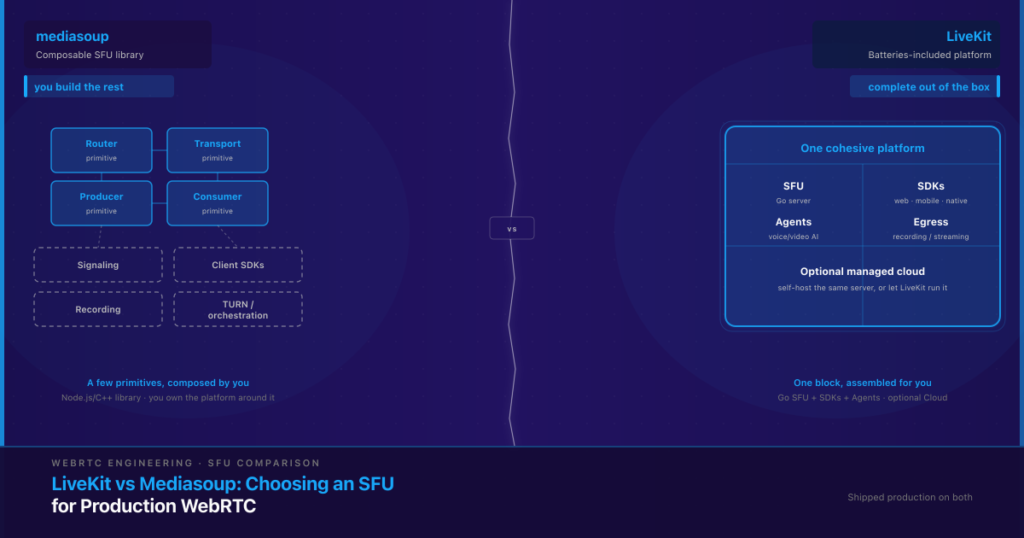
In the rapidly evolving world of telehealth, delivering seamless, secure, and scalable video consultations is a top priority for healthcare providers. CTOs tasked with selecting the right video infrastructure often face a confusing array of options. Among these, WebRTC, LiveKit, and Janus stand out as prominent choices—but which one fits best? At Trembit, with extensive […]
To build HIPAA-compliant video consultations with WebRTC and LiveKit: encrypt media in transit with DTLS-SRTP and at rest with AES-256, enforce MFA and role-based access control, sign a Business Associate Agreement (BAA) with every vendor that touches PHI, and keep immutable audit logs of access. WebRTC mandates transport encryption; HIPAA compliance comes from how you […]
Telemedicine is no longer just a convenient option — it’s an essential part of modern healthcare delivery. From video consultations to AI-powered diagnostics, healthcare providers in the UK are seeking partners who can deliver compliant, user-friendly, and scalable telehealth solutions. If you’re a hospital, clinic, or health-tech startup looking to build a telemedicine platform, finding […]
The explosion of real-time, user-generated content platforms like TikTok, Clubhouse, and Instagram Live has permanently changed how people communicate, entertain, and even shop. These platforms didn’t just benefit from social momentum—they were architected for scalability, low latency, and intelligent content management from the start. If you’re building the next big thing in video or voice-first […]
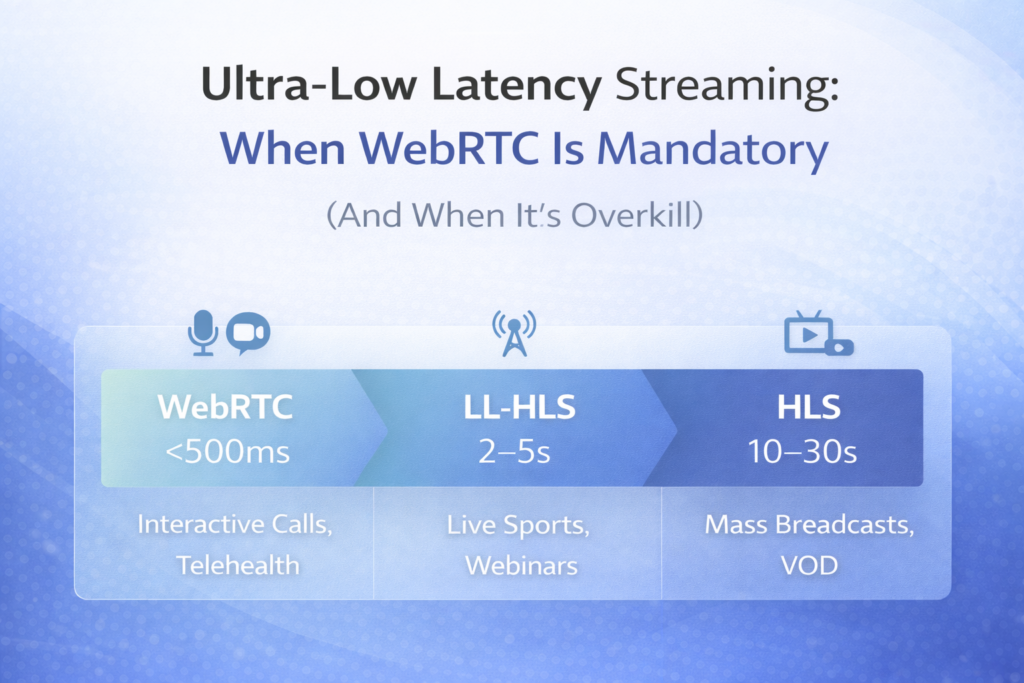
Low-latency video streaming is the backbone of real-time interaction in modern social networking apps. From live shopping and influencer broadcasts to collaborative video chats and gaming, user expectations around speed and responsiveness are higher than ever. In this article, we explore best practices for achieving low-latency streaming, how to architect for scale, the role of […]
As real-time video becomes the backbone of modern digital experiences — from telehealth to online dating, remote work to virtual events — WebRTC (Web Real-Time Communication) has solidified its place as the go-to technology for low-latency, browser-based video streaming. In 2025, European businesses are turning to WebRTC-based solutions more than ever, prioritizing GDPR compliance, scalability, […]